Full Article
about Arandiga
Ocultar artículo Leer artículo completo
The church tower pokes above cereal fields like a punctuation mark in a run-on sentence. From the A-1211 you can spot it three kilometres out—a mudéjar brick spire announcing Arándiga long before the first stone houses appear. At 462 m above sea level the village sits just high enough for the air to feel thinner than the valley floor below, but not so high that olive trees give up. Instead they lean at comic angles, shaped by the cierzo wind that barrels down the Ebro corridor without asking permission.
Turn off the main road and tarmac narrows to a single lane with pull-ins. Wheat stubble scratches against the hire-car doors; red dust works its way into door seals and will later reappear on British driveways. The village proper begins where the speed limit drops to 20 km/h and a hand-painted sign advertises chuletas de cordero every Sunday—though only if the butcher’s niece can be persuaded to open the freezer.
A morning circuit
Park by the irrigation trough; no metres, no app, no traffic wardens. The plaza is a rectangle of cracked concrete shaded by three plane trees and a mobile-phone mast disguised as a eucalyptus. The bar—simply Bar on a scrap of tin—has its metal shutter half up, which passes for an invitation. Inside, Antonio is foaming milk for a café con leche while arguing with the radio about barley subsidies. A tostada costs €1.40 and comes with a grated-tomato topping that tastes like a warmer, saltier version of Branston.
From the bar it is forty steps uphill to the fifteenth-century church, past houses stitched together from brick, rubble stone and whatever timber was salvaged after the Civil War. Some façades carry stone shields worn smooth; others are patched with cement the colour of weak tea. A ginger cat supervises building work that stopped in 2009 when the grant ran out. The church door stands open, revealing an interior that smells of candle wax and damp plaster. The tower can be climbed, but the key hangs in the presbytery and the priest only appears on alternate Saturdays—plan accordingly.
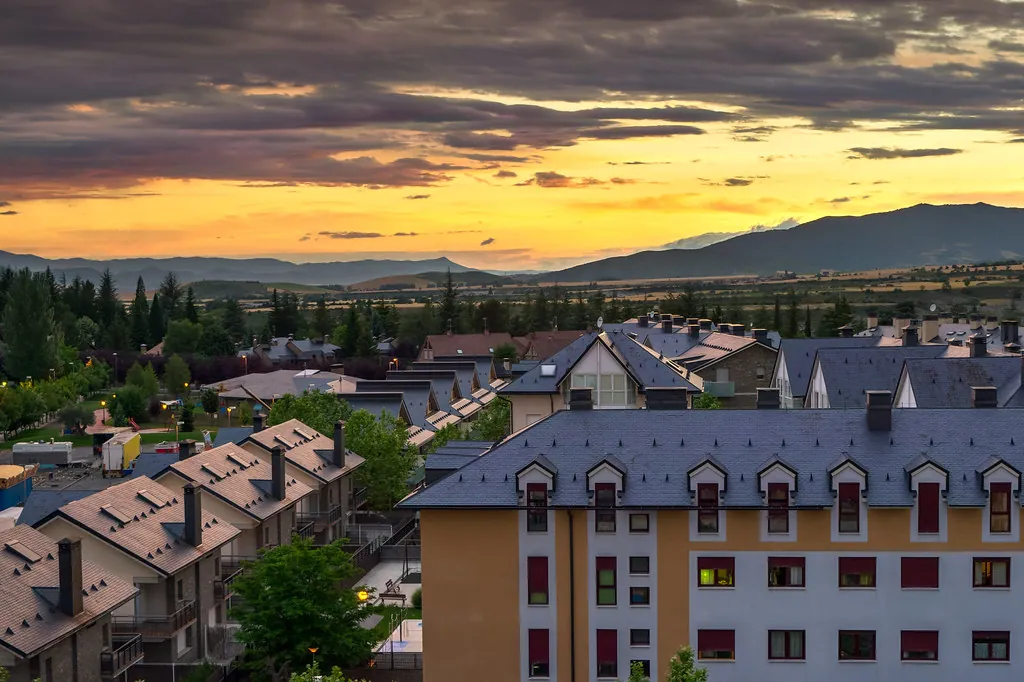
Behind the apse a lane narrows into a footpath that elbows between vegetable plots. Here the ground falls away and the view opens: almond orchards in neat grids, a solar farm glittering like a misplaced lake, and the ridge of the Sierra de Vicort 30 km to the north. In April the almonds foam white; by late May the petals lie like confetti on the soil and the real work of summer begins.
Afternoon heat tactics
July and August are negotiating tools for locals: temperatures brush 38 °C by 11 a.m., at which point dogs, tractors and even the church bell retreat indoors. The sensible schedule is the one your grandparents kept in Spain circa 1975—start early, siesta hard, resume after six. If you must walk, head east on the camino that follows the rambla (dry riverbed) towards Villarroya de la Sierra. The path is wide enough for a combine harvester, offers zero shade, and delivers skylarks instead of shade. Carry two litres of water per person; the nearest fuente broke during a drought in 2017 and no one has got round to mending it.
Should clouds build, photograph quickly—summer storms here arrive with the theatricality of a Gilbert and Sullivan finale, purple curtains of rain sweeping across plains while the village remains bathed in sun. Within twenty minutes the roads run like chocolate and the smell of wet earth drifts through bedroom windows.
Eating (and stocking up)
Arándiga has no supermarket, only a tienda-social that unlocks when Pilar finishes her shift at the bakery in Calatayud. Opening hours are posted on a cardboard square taped inside the window; they are accurate ± two hours. Stock up in Calatayud before you arrive: bread, ham, tomatoes, wine from the co-op on Avenida de Valencia where a five-litre plastic garrafa of Garnacha costs €9 and fits neatly in a suitcase if you’re prepared to explain “cooking ingredient” at customs.
For a sit-down meal, weekend asados are advertised on WhatsApp groups. Locals bring their own meat, pay the butcher €5 to butterfly a lamb shoulder, then queue for the communal oven. The result—ternasco, pink, herb-crusted, eaten at 3 p.m.—is closer to Welsh shoulder than anything Mediterranean. Expect potatoes roasted in the dripping, a salad of iceberg and tinned asparagus, and wine served in water glasses. Vegetarians should make friends with the mayor’s sister; she grows courgettes the size of rolling pins and is happy to trade for English tea bags.
Beds for the night
Accommodation totals three options. Casa Rural La Luna occupies a corner house where the street width doubles; inside, beamed ceilings sit 30 cm above the average British head and the Wi-Fi password is written on the back of a religious calendar. Air-conditioning is a portable unit that sounds like a DC-3 taking off, but nights drop to 18 °C even in August so windows work just as well. €90 per night for the whole place, sleeps seven, English-speaking host called Becky who moved from Leeds in 2004 and can direct you to the nearest cashpoint (20 km).
If La Luna is booked, OwnerDirect lists a stone cottage on the edge of the village with a garden that ends where the wheat begins. The owner keeps two geese named after Spanish cabinet ministers; they will honk at dawn and then again whenever a car passes. Bring earplugs or political curiosity.
The third choice is not to stay at all—use Arándiga as a lunchtime halt on a driving loop that includes the mudéjar towers of Torralba de Ribota and the wine museum in Calatayud. You can see everything in 90 minutes, drink two coffees, photograph the tower against a cobalt sky and still reach Zaragoza for supper.
Seasons and access
Spring is the kindest months: green wheat, almond blossom, daytime 22 °C, nights cool enough for a jumper. Autumn reverses the colours—stubble fields the shade of digestive biscuits, sky rinsed clean after harvest. Winter brings the opposite of British gloom: brilliant sun, air sharp enough to slice ham, but also the risk of a northerly filament that drags temperatures below freezing. The A-1211 is salted and cleared, yet rental companies in Zaragoza still charge a snow-tyre premium from November to March. Check the small print or you’ll discover a €60 surcharge next to the “airport convenience fee”.
Reaching the village without a car is possible in theory—Monday-to-Friday bus from Calatayud at 13:25, returning 06:40 next day—but the timetable assumes you want to spend 17 hours counting cats. Taxis cost €40 each way and must be booked the previous afternoon; the operator speaks rapid Aragonese Spanish and has been known to confuse Arándiga with Arandas del Valle, 110 km in the wrong direction. Repeat the postal code twice.
Parting shot
Leave around five, when the sun flattens into the cereal horizon and the tower glows the colour of burnt biscuits. Tractors trundle home with headlights full of dust; someone fires up a generator; the church bell strikes the hour, then adds an extra stroke for tradition. There are no souvenir shops, no audio guides, no hashtag campaigns—just the smell of earth cooling after heat and the knowledge that tomorrow the same routine will begin again, whether visitors come or not.