Full Article
about Arcos de las Salinas
Ocultar artículo Leer artículo completo
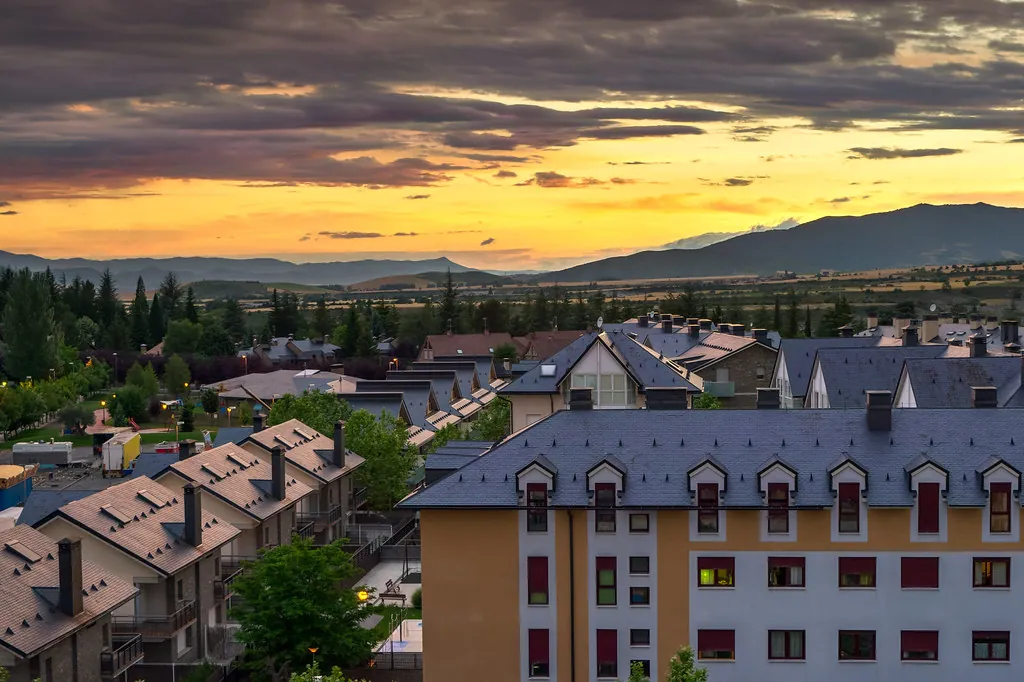
At 1,660 m above sea level, Arcos de las Salinas is high enough for your ears to pop on the final climb. The last stretch of the AV-201 from Teruel corkscrews through pine and juniper until the road suddenly flattens onto a ridge. Ahead, a stone bell tower rises like a ship’s mast above a sea of grey-brown roofs. Mobile signal dies, the temperature drops five degrees, and the only sound is the wind scraping across the Javalambre plateau. You have arrived—deliberately, because no one ends up here by accident.
A village that never bothered with a makeover
Arcos counts barely a hundred souls, yet it feels lived-in rather than museum-sealed. Houses are built from the same limestone they stand on; their wooden balconies sag just enough to show age without peril. The parish church of the Immaculate Conception reopened in 2022 after four decades shut—inside, the lime-washed walls carry the patchy ghosts of old frescoes and the faint smell of extinguished candles. No audio guide, no gift shop, just a wooden door that creaks open when the key-keeper finishes her coffee.
Stone arches—originally medieval walkways between family compounds—still span the narrow lanes. They are not sign-posted; you duck beneath them as you wander from the tiny Plaza Mayor towards the mirador at the village edge. There, the land falls away in folds of broom and Scots pine, revealing the Gúdar range rolling south-east like a crumpled blanket. On a clear day you can pick out the white domes of the Javalambre Astrophysical Observatory ten kilometres away, though night is when the real show begins.
Walking, breathing, looking up
Four way-marked trails leave the upper village, none longer than 12 km. The easiest, Sendero de las Salinas, drops gently west for 2 km to the ruins of Moorish salt pans that gave the settlement its name. Spring water, heavy with brine, once fed shallow evaporation ponds; today the low stone walls glow ochre at sunset and larks use them as launching pads. Take the circular variant back through pine plantation and you’ll meet exactly no one—bar the occasional shepherd on a quad bike checking mastiffs the size of small ponies.
Higher up, the PR-TE-48 climbs to the Cucharón summit (1,950 m) in a steady two-hour pull. The path is stony but well-cairned; boots are sensible, yet the gradient never punishes. From the top you can trace the old pack-mule route that once hauled salt north to Zaragoza, now a faint scar across the scrub. If snow has fallen—possible any time between November and April—carry micro-spikes; the ridge catches the Atlantic weather and drifts fast.
Darkness arrives quickly at this altitude. Walkers often remark that the Milky Way looks “three-dimensional,” a quality the locals take for granted. The Galáctica visitor centre, five minutes by car towards the observatory, opens its roof telescope to the public on new-moon weekends. Booking online is free; sessions are bilingual and finish with hot chocolate strong enough to keep you awake for the drive back. Even without the telescope, standing on the village edge at 2 a.m. is enough: zero light pollution, shooting stars every few minutes, frost forming on car roofs even in August.
What you’ll eat—and when you’ll eat it
There is no restaurant, only two bar-house hybrids that open when the owners feel like it. Call at the counter by six o’clock or they won’t thaw the trout. The fish come from a small farm outside the village, simply grilled and scattered with toasted almonds; delicate, almost sweet, and a safe choice for anyone who finds Spanish anchovies alarming. Migas—fried breadcrumbs with scraps of bacon and pepper—arrive in a clay dish the size of a Yorkshire pudding tray; they taste like Christmas stuffing that has taken up flamenco. Local Teruel ham is sliced see-through and costs half what you would pay in Valencia; the flavour is milder than Parma, closer to good Wiltshire cured pork. Wine is from Cariñena, an hour away: garnacha that drinks like a gutsy Rioja without the price tag.
The only shop doubles as the bakery. Doors open 9-11 a.m., bread sold out by 9.30. If you need milk for tea, buy it the night before; Sunday mornings are a retail desert. Self-caterers should stock up in Teruel—there is a Mercadona beside the A-23 before the mountain road begins.
Practical grit before the romance
Fuel: the last petrol station is 75 km away in Teruel. Top the tank, check tyre pressures, and pack snow chains between December and March—the AV-201 is fully tarmacked but climbs above the snowline. Cash: no ATM, no card minimum in the bars, so bring notes. Mobile data: patchy on Vodafone and O2; EE fares slightly better. Download offline maps while you still have 4G. Accommodation: three village houses rent rooms (around €60 a night). Heating is by pellet stove; hosts explain the switchgear because you will need it—night-time temperatures dip below freezing in May.
When to come—and when to stay away
May and early June bring wildflowers and daylight warm enough to sit outside at 8 a.m.; the village well drips with moss and the air smells of thyme and pine resin. September offers the same clarity plus the fiesta of San Miguel: a procession, a brass band that has seen better valves, and a communal paella cooked in a pan wide enough to double as a paddling pool. August works if you crave silence more than coolness—days hit 28 °C in the sun but nights still demand a fleece. Winter is spectacular, yet potentially isolating: when snow blocks the access road the council grades it “sometime after lunch.” Book refundable accommodation and carry food for an extra day.
Arcos de las Salinas will not change your life, sell you a fridge magnet, or post itself on social media. It will give you altitude, silence, and a night sky you last saw on a school geography camp. Bring groceries, patience, and a coat—then forget the time. The village already has.