Full Article
about Asin
Ocultar artículo Leer artículo completo
The church bell strikes noon, yet only two tables are occupied at the single bar. A farmer in mud-splattered boots nurses a cortado while discussing barley prices with the barman. Outside, the temperature reads 28 °C, but up here at 584 m the air carries a dryness that makes the heat bearable—one of the quiet advantages of altitude in inland Spain.
Asín perches above the cereal ocean of Cinco Villas, 60 km north-west of Zaragoza. The drive from the autopista takes just under an hour after leaving the A-68 at Gallur, yet the final 15 km on the CV-204 feel longer than they are. The road narrows, wheat fields press in, and every crest reveals another roll of ochre hills. Mobile reception flickers out; Spotify buffers, then surrenders. By the time the stone houses appear, the village has already begun its work of slowing visitors down.
A grid of stone and silence
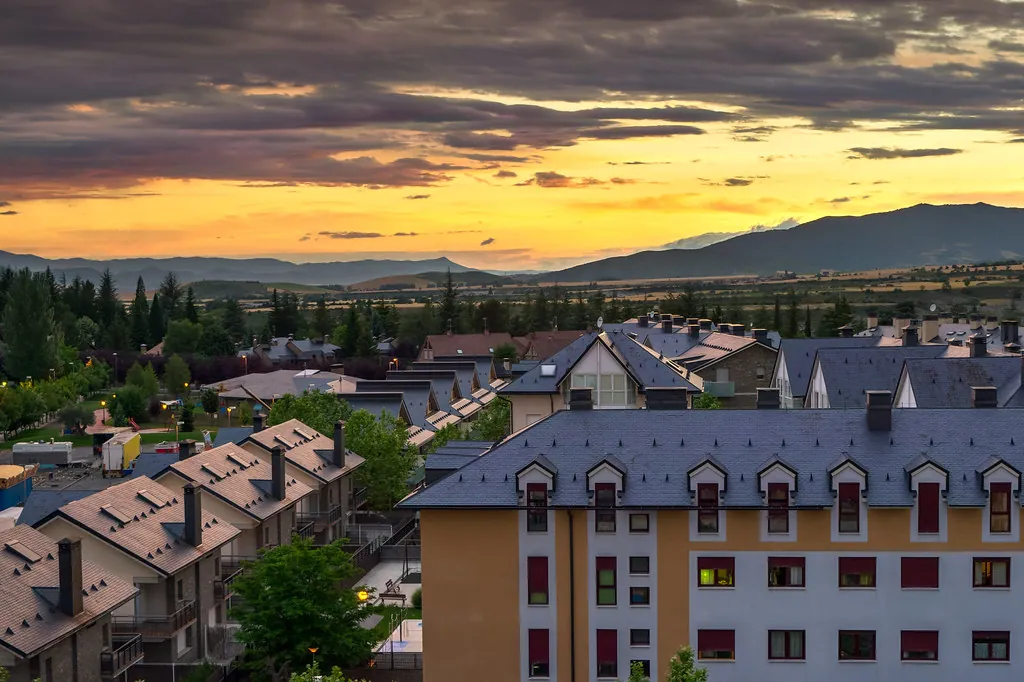
Fewer than 110 people live here year-round. Their houses—granite below, brick above, timber balconies painted the colour of ox blood—form a compact rectangle around the 16th-century parish church of San Esteban. No souvenir shops, no boutique hotels, not even a cash machine. What you get instead is a complete, lived-in example of a modest Aragonese farming settlement. Walk the two principal streets—Calle Mayor and Calle de la Iglesia—in twenty minutes and you will have passed every public building the place possesses: the ayuntamiento (open Tuesday mornings only), the medical post (Thursday mornings), the panadería (opens at 07:00, closes when the bread runs out), and the aforementioned bar, which doubles as the village’s social security office after 20:00.
The church door is usually unlocked. Inside, the nave smells of beeswax and dust; the altar retablo, gilded in 1734, still bears cracks from a 1952 earthquake. Drop a euro in the box and the sacristan, if he’s around, will switch on the lights so you can see the fresco of Saint Stephen’s martyrdom, its blues faded to the shade of a British winter sky.
Walking the rim of the plateau
Asín sits on a limestone shelf; step beyond the last house and the ground falls away in wheat-coloured waves. Three waymarked footpaths leave from the upper edge of the village. The shortest, the 4 km Ruta de las Balsas, loops past two stone water tanks built for transhumant sheep in the 1920s. Spring brings green finches and the rare great bustard; in October the stubble smoulders as farmers burn off straw, and the air tastes of burnt toast. Take water—there is none en route—and expect to meet more tractors than people.
Those after a longer haul can continue south-east along the GR-90 long-distance path towards Biota, dropping 300 m to the banks of the Río Arba. The descent is gentle but relentless; the return climb, on a June afternoon touching 34 °C, feels considerably less polite. Mid-October to mid-November offers the kindest temperatures and the added theatre of migrating honey buzzards riding the thermals above your head.
What passes for lunch
Asín has no restaurant. The bar serves toasted sandwiches, tortilla cut from a wheel kept under a glass dome, and plates of local chorizo at €3 a pop. If you want a proper meal, drive ten minutes to Ejea de los Caballeros, where Casa Patata does a three-course menú del día including wine for €14. Better still, phone ahead to Casa Notario in neighbouring Asín de Broto (confusingly, a different village 12 km away) where Fernando cooks shoulder of lamb slow enough to make a Yorkshireman weep, but only for guests staying the night. His five-room house has Wi-Fi fast enough for Zoom and views that justify the €90 B&B rate. El Torreón Mágico, on the edge of Asín proper, offers four attic rooms in a converted grain tower; children like the spiral staircase, parents like the blackout shutters that deliver nine hours of unbroken sleep.
When the village swells
For fifty weekends a year Asín murmurs. Then, on the third weekend of August, the population quadruples. The fiestas de San Esteban begin with a foam party in the polideportivo—exactly as tacky as it sounds—followed by a procession in which the saint’s statue is carried through streets strewn with rosemary. Outsiders welcome, but don’t expect visitor infrastructure: portable loos line the plaza, and every spare bedroom is commandeered by returning grandchildren. Book accommodation early or plan to stay in Ejea and taxi in; after midnight the single road back to the autopista is patrolled by Guardia Civil with breathalysers.
Spring has its own mini-invasion. The romería of the Virgen de la Peña, held on the first Sunday of May, draws pilgrims from five villages to a hillside chapel 3 km away. The walk begins at 08:00; by 10:00 the brass band has run out of puff and the priest hitches a lift in a 4×4. If you’re invited to join, bring a stick—the path crosses three fields of barley that leave itchy seeds in your socks.
The honest verdict
Asín will not change your life. It offers no epic views, no Michelin stars, no Instagram moments unless you count sunset over a wheat field. What it does provide is a rare level hush: no motorway, no railway, no disco. On a clear night you can read by starlight and hear your own heart. Come if you need that kind of reset, but don’t expect to fill more than half a day without strapping on boots. And bring cash— the bar’s card reader broke in 2019 and nobody has bothered to replace it.