Full Article
about Azlor
Ocultar artículo Leer artículo completo
The church bell strikes noon, and Azlor's single café fills with farmers in dusty boots. They've finished the morning's work—perhaps checking on almond trees that cling to the hillsides, or inspecting wheat fields that ripple like the sea across the Somontano plateau. This is rural Aragon stripped bare: no gift shops, no tour buses, just 154 souls living much as their grandparents did.
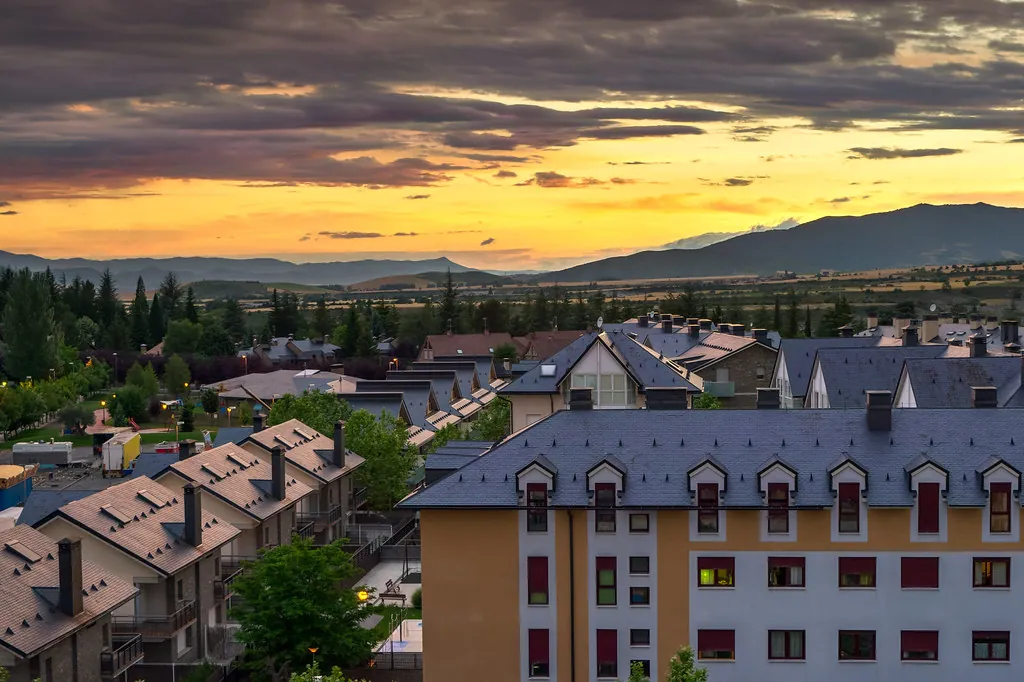
At 496 metres above sea level, Azlor sits high enough to catch the breeze that sweeps across Huesca province, yet low enough to escape the harsh winters of the Pyrenean foothills. The village sprawls rather than stacks—a collection of stone and brick houses that follow the contours of the land, their terracotta roofs weathered to a uniform rust by decades of sun and occasional snow.
The Architecture of Everyday Life
San Pedro's church dominates the modest skyline, its squat stone tower more functional than decorative. Built in medieval times and tweaked over centuries, it embodies the pragmatic spirit of Somontano religious architecture. Thick walls keep worshippers cool during scorching summers; small windows frame views of fields that have fed generations.
Wander beyond the church square and you'll find houses that wear their age honestly. Limestone walls bulge slightly with the weight of years. Wooden balconies sag under terracotta pots of geraniums. Ironwork gates bear the patina of countless rainy seasons—because yes, it does rain here, though rarely enough to satisfy the farmers. These aren't museum pieces but working homes, where satellite dishes jostle for space with traditional haylofts and modern cars squeeze into stone-built garages originally designed for mules.
The village layout reveals its agricultural DNA. Narrow lanes wide enough for a single tractor connect to broader tracks that once handled ox-carts loaded with grain. Even the houses themselves tell the story: ground floors designed for animals, first floors for living, attics for storing produce. Many still follow this pattern, though the livestock have been replaced by tools, bicycles, and the inevitable pool table that seems compulsory in Spanish rural garages.
Walking Through Changing Seasons
Spring transforms the surrounding landscape into a patchwork quilt. Almond blossoms appear first—delicate white flowers that transform bare branches into clouds. By late March, wheat shoots push through reddish soil, creating a green haze across the hills. Local farmers judge the season's promise by these early signs, their predictions more accurate than any weather app.
Summer brings fierce heat. Temperatures regularly top 35°C, sending sensible visitors into siesta mode between 2pm and 5pm. The wise explore early or late, following ancient paths that connect Azlor to abandoned hamlets and isolated chapels. These aren't mountain hikes—gradients remain gentle, distances manageable. A typical walk might take you to the Ermita de San Juan, two kilometres south, where ruined walls frame views across cereal fields that stretch to distant blue hills.
Autumn paints the landscape in ochres and golds as harvest approaches. The air smells of dry earth and ripening grain—an aroma that catches in the throat and triggers some primal recognition of agricultural cycles. This is perhaps the finest season to visit, when temperatures moderate and photographic opportunities abound. Morning mist pools in valleys while hilltop villages float like islands above the clouds.
Winter strips everything back to essentials. Trees stand skeletal against grey skies; fields lie ploughed and waiting. Snow falls occasionally, rarely settling for long but transforming the village when it does. Those 154 residents huddle in cafés that become social centres, arguing over cards and discussing rainfall statistics with the passion that Britons reserve for football.
The Taste of Somontano
Food here follows the agricultural calendar religiously. Migas—fried breadcrumbs with garlic and various additions—appears regularly, a thrifty dish that transformed stale bread into sustenance for field workers. Local restaurants (and by local, read "within 20 kilometres") serve cordero asado—roast lamb that melts from the bone, its flavour intensified by animals that grazed on wild herbs.
The region's wine deserves attention. Somontano's designation of origin produces bottles that punch well above their price point. Local cooperatives offer tastings without the pretension found in more famous regions. A decent bottle might cost €6-8, complex enough to satisfy serious drinkers but approachable for casual visitors. The local favourite seems to be a robust red made from Parraleta grapes—an indigenous variety that nearly vanished before dedicated growers revived it.
Olive oil flows like liquid gold through local cuisine. Visit the cooperative in nearby Barbastro to refill your own bottles from massive stainless-steel tanks. The oil—fruity, slightly peppery—transforms simple tomato bread into something memorable. Buy almonds too, if visiting in season. Local varieties include the prized Marcona, sweeter and more delicate than standard supermarket offerings.
Practicalities Without Pretence
Reaching Azlor requires wheels. From Huesca, follow the A-22 towards Barbastro for 50 kilometres, then navigate country roads that demand concentration but reward with views. The journey takes roughly an hour—longer if you stop to photograph the landscape unfolding below. Public transport? Forget it. This is driving country, where independence equals mobility.
Accommodation options remain limited. No hotels exist within the village itself; nearest choices cluster around Barbastro, twenty minutes distant. Consider self-catering cottages in neighbouring hamlets, where prices hover around €80-120 nightly for two-bedroom properties. Book ahead during August, when Spanish families return to ancestral villages and every bed fills with cousins, aunts, and the occasional British expat seeking authentic Spain.
Bring walking boots regardless of season. Village streets combine ancient cobbles with modern concrete—uneven surfaces that punish flimsy footwear. Pack layers too; altitude means temperature swings between blazing midday sun and cool evening breezes. And download offline maps before arrival. Mobile signals prove patchy beyond village boundaries, though that might be exactly what you're seeking.
Azlor won't suit everyone. Nightlife means watching stars appear above black hills. Shopping extends to the village's single grocery store, open sporadically. Rain can strand you indoors for days; summer heat might drive you to siesta madness. Yet for those seeking Spain's rural essence—where tradition trumps tourism and authenticity isn't a marketing slogan—this modest village offers something increasingly precious: a place where daily life continues regardless of whether visitors arrive.