Full Article
about Bagues
Ocultar artículo Leer artículo completo
The church bell strikes noon and the only reply is a pair of goats scratching their flanks against a stone bench. At 827 m above sea level, Bagues hangs on a fold of dry-stone terraces, fifteen permanent souls scattered among forty-odd houses. No ticket office, no gift shop, not even a bar to soften the wind that barrels up the Barranco de Bagues. What the village does offer is a free masterclass in how Aragón’s mountain hamlets survived centuries of border wars, wolf packs and the slow leak of people to Zaragoza.
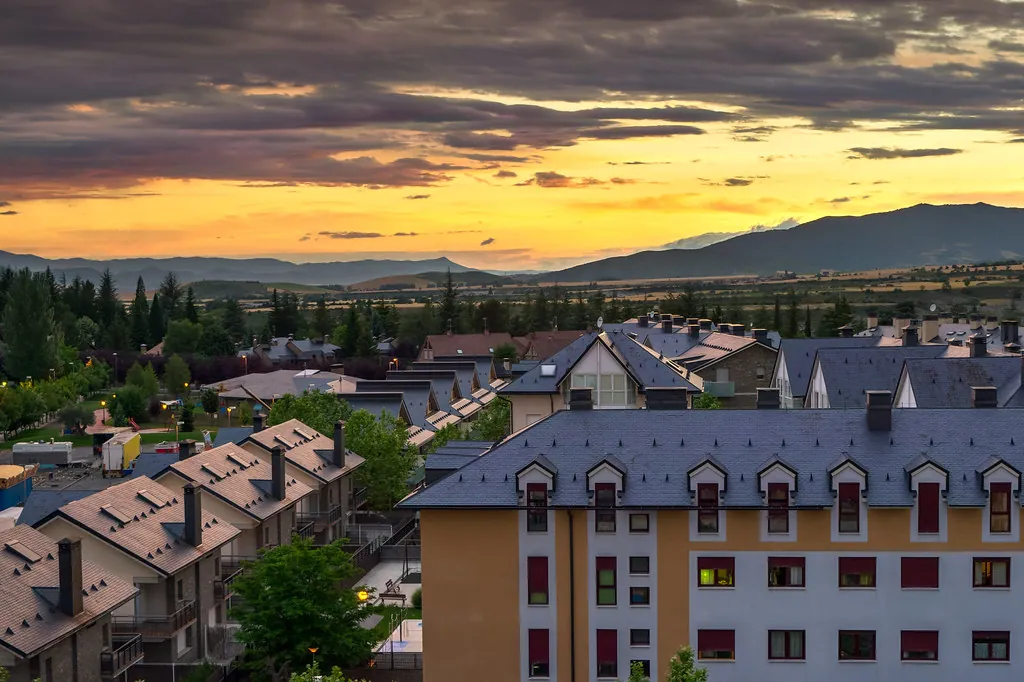
Stone absorbs heat fast. By mid-morning the alleyways glow like bread ovens, yet step inside a house and the temperature drops six degrees. Walls a metre thick, tiny windows set deep into the masonry, staircases tacked on to the outside to save interior space—every trick learned from Moorish and Roman builders before anyone dreamed of putting the place on Airbnb. The handful of newer builds stick out like plasters: white render, solar panels, the occasional satellite dish. Otherwise the palette is ochre, rust and the bruised grey of weathered slate.
Walking Without Way-marks
A track leaves the upper houses, passes a stone cistern and splits. Left heads along a ridge where griffon vultures turn lazy circles; right dips into holm-oak scrub that rattles with praying mantis. Neither option is signed, so print an OS-style map or download the ICC cartography before leaving Zaragoza—phone reception dies two kilometres out. Distances feel shorter than they are because the views open suddenly: whole valleys of almond and abandoned grain terraces, then the Pyrenean front range sliding into view like a row of shark teeth. A steady ambler can reach the ruined ermita of Santa Margarita in forty minutes; allow another twenty to reach the col where corrugations of Sierra de Leyre dominate the northern sky. Carry water; there are no fountains after May.
Winter alters the contract. The same track ices over, north-facing gullies hold snow until March, and the single access road from Jaca is chained at night during heavy spells. December brings a different reward: the place to yourself, wood-smoke threading through stone roofs, and night skies dark enough to measure Jupiter’s moons with binoculars. Come prepared. A hatchback with summer tyres will not manage the final 4 km if the wind drifts.
Food Appears Only When Invited
There is no shop, no bakery, no Saturday market. The last village store closed in 1998; locals drive fifteen minutes to Ayerbe for milk and gossip. Self-catering is the default rule, so stock up in Jaca where the Mercadona on Avenida de la Jacetania sells everything from teabags to tempranillo. The only commercial food within reach is at Casa Amparo in Piedrafita, a farmhouse restaurant with handwritten English translations and a €14 menú del día that might start with migas—fried breadcrumbs laced with chorizo and grapes—followed by ternasco, the young lamb that tastes milder than Welsh salt-marsh hogget. Book ahead; Amparo cooks for whoever rings before 11 a.m., then switches the fryers off.
Fiesta days briefly reverse the exodus. Around 15 January half the emigrés return for the blessing of San Antonio. Bread, oil and salt are carried to the church, animals are marked with charcoal, someone uncorks a demijohn of clarete wine that stains the snow pink. The scene is closer to parish fête than Andalusian fair: no flamenco dresses, just thick coats, handshakes and gossip about almond prices. August repeats the exercise with barbecued sardines and a disco run off a portable generator that rattles until three. Both events fit into a single evening; by morning the village is silent again.
Getting Up Here and Staying Over
Zaragoza airport, 1 h 45 min away on the A-23 and A-21, is served daily from Stansted and three times a week from Manchester on Ryanair. Collect a hire car—essential, because the daily bus from Jaca stops at Linas de Marcuello, 7 km below the village, and does not run on Sundays. The final approach corkscrews through pine plantations where wild boar root at dusk; dip your lights and keep speed low, the tarmac is narrow and stone walls forgive nothing.
Accommodation is limited to two self-catering apartments: La Terraza del Centro (two bedrooms, wood-burner, roof terrace with plastic chairs) and an older studio tucked under the church. Both are listed under “Alojamientos Rurales” on the regional website; neither has reception, so ring when you reach the stone cross at the entrance and someone will trot down with keys. Expect €80 a night, towels included, heating extra in winter. Bring slippers—stone floors are cold even in May.
Why Bother?
Because the British obsession with “authentic Spain” usually lands on a plaza packed with stag parties. Bagues offers the opposite: no souvenir stalls, no restaurant touts, no ticketed heritage. What you get instead is a lesson in proportion. The houses are sized for humans and livestock, the horizons match your stride, and the night sky still belongs to constellations rather than drones. Visit once and you will probably tick it off; stay three days and you start measuring other places against the hush that falls after the goats head home.