Full Article
about Ballobar
Ocultar artículo Leer artículo completo
The church bell in Ballobar strikes noon just as a combine harvester rumbles past the olive-oil cooperative, kicking up dust that settles on the 16th-century stone walls. Nobody looks up. This is everyday theatre in a village that sits 154 metres above sea level yet feels suspended between centuries: GPS-perfect tractors guiding laser-levelled furrows while grandmothers lean from wrought-iron balconies to swap the price of apricots.
Ballobar has no cathedral, no castle, no postcard plaza. What it owns is space—flat cereal steppe that runs to the horizon southward, and to the north a sudden blade of rust-red cliffs where the Cinca River has sawn a gorge through the Aragonese tableland. Stand on the Calle del Pilar at dusk and you can watch both geographies glow: wheat stubble turning bronze on one side, the cliff face flaming ochre on the other. It is the sort of view that makes you slow the car, then stop entirely.
A village built for grain, not tourists
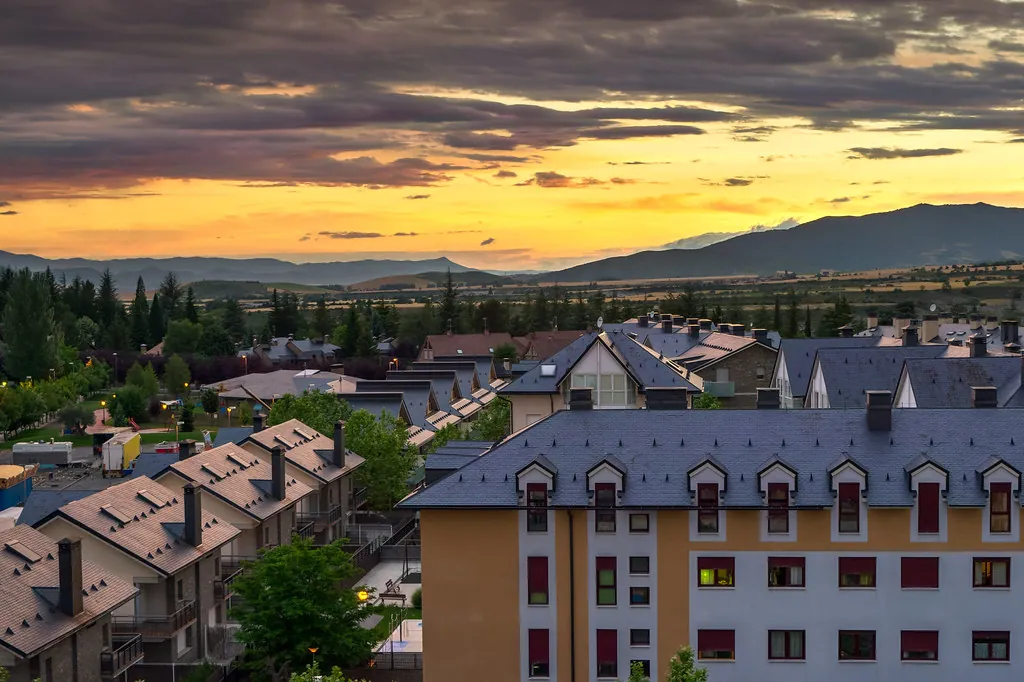
The street plan is a simple grid thrown across the plain like a draughtboard. Stone and adobe houses sit shoulder-to-shoulder, their ground-floor arches once wide enough for carts now framing parked Citroëns. Timber beams are darkened by a century of stove smoke; upper balconies sag just enough to remind you that craftsmanship here was always practical, never ornamental. Peek through an open portal and you’ll see the classic Aragonese patio: a wellhead in the centre, a single lemon tree, bicycles propped against a wall painted the exact colour of overripe peaches.
The parish church of San Pedro anchors the eastern edge. It is not big—three naves, a modest baroque retable, a bell tower you can climb if you ask at the ayuntamiento first. Inside, the coolest place in summer, the stone floor dips where generations have knelt for harvest-mass. Look up and you’ll spot a patch of 14th-century fresco revealed during a 1970s rewiring job: faded blues and greens, the pigments of river and sky that painters once ground from local minerals.
River, cliffs and cereal oceans
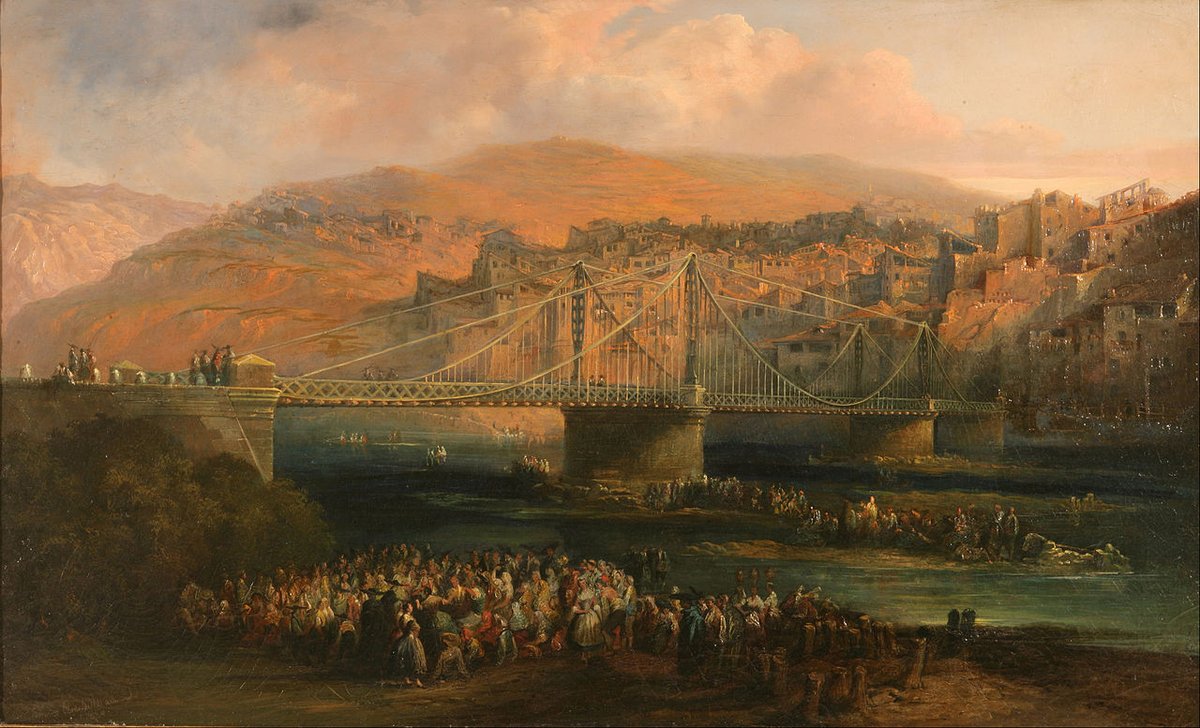
Five minutes’ drive north, the tarmac drops sharply onto the CL-602, a minor road that suddenly feels Alpine. Here the Cinca has carved a 200-metre gorge whose walls reveal Jurassic layers—purple, mustard, chalk-white—like a slice of psychedelic Victoria sponge. Lay-bys are signed as miradores; pull in and you’ll share the view only with red-billed choughs riding thermals and, in spring, bee-eaters flaring emerald as they hawk insects above the water.
Down at water level the river spreads into gravel shoals where herons stalk frogs and local teenagers learn to cast for carp. Fishing licences cost €8 a day from the regional website; print them before arrival because mobile signal dies in the gorge. The footpath that shadows the bank is flat, shaded by poplars, and ideal for an evening stroll after the day’s heat. Expect kingfishers, not crowds—on a July weekday you’ll meet more tractors than people.
Cyclists, walkers and the art of doing very little
Terrain this level tempts even the saddle-shy. A 28-kilometre loop heads east along irrigation ditches to the hamlet of Torrente de Cinca, returning via almond orchards and a disused railway line now paved for bikes. The surface is smooth enough for hybrids; bring water—bars are scarce once you leave Ballobar. If legs protest, shorten the circuit: pedal 6 km to the cliffs, lock the bike to a fence (no racks, nobody steals), and follow the sheep track that zig-zags to a sandstone promontory nicknamed El Castillejo. From here the village appears as a cubist puzzle of terracotta roofs, the Pyrenees a snow-flecked saw on the northern horizon.
Spring brings green wheat and flocks of storks; by late June the stalks turn gold and harvest dust hangs in the air like pale smoke. August is furnace-hot—35 °C by eleven o’clock—so sensible visitors adopt siesta hours, re-emerging at seven when the sky softens to bruised violet and swifts screech overhead.
Eating like you owe the waiter money
There is no restaurant in Ballobar itself, only a bar that opens at 6 a.m. for field workers and closes when the last domino falls. Order a caña and you’ll be handed a plate of home-cured longaniza gratis—spiced just enough to wake the palate, mild enough for children. For a full meal drive 12 minutes to nearby Torrente and the Mesón de Basito. Their menú del día (weekdays €14) runs to roast lamb, garden peppers and almond tart; house wine arrives in a glass bottle sealed with a foil cap, the Spanish equivalent of screw-top honesty.
Vegetarians do better at lunchtime: escalivada—aubergine, onion and red pepper slow-charred over vine cuttings—comes dressed with Aragonese olive oil so new it stains the plate green. Expect to pay €8-9 a dish; portions are farmhand-sized. Sunday lunch is popular with families from Fraga, so reserve or arrive before 2 p.m.
When the village throws a party
Fiestas here are calibrated to the agricultural calendar. The main burst happens around 29 June, the feast of San Pedro. Temporary fairground rides occupy the football pitch, brass bands march at a pace suggesting they’ve already sampled the vermouth, and teenagers in matching polo shirts steward fireworks that rattle greenhouse windows. Visitors are welcome but accommodation within the village is non-existent—book early in Fraga or Monzón (30 min) if you want a bed rather than a steering-wheel pillow.
Mid-August brings a smaller fiesta de agua—water fights, foam cannons, elders reminiscing about drought years. Winter is quiet except for 17 January when San Antonio Abad is honoured with a communal bonfire; locals grill sausages over the embers and the priest blesses pets in the plaza. Even the village cat turns up.
Getting there, staying there, leaving again
Ballobar sits halfway between Zaragoza and Lleida, handy if you’re motorhoming north toward the Pyrenees. Fly Ryanair or easyJet to Zaragoza from London-Stansted or Manchester, collect a hire-car, and you’re 75 minutes east on the A-23. There is no train, no bus worth mentioning—this is motoring country. Petrol is cheapest at the El Grado service area; fill up before the final 20 km because village pumps close at 8 p.m.
Overnighting inside Ballobar means knocking on doors and hoping someone rents a room—possible but chancy. Safer bases lie 15–25 minutes away: the Hotel Spa Ciudad de Binéfar (doubles from €75, rooftop terrace overlooking the citrus warehouses) or MasMonzón, a converted manor with castle views and a pool that stays open until October. Both offer secure parking; bring a phrasebook because reception English is patchy.
The honest verdict? Ballobar won’t keep you busy for a week. It will, however, slow your heartbeat for an afternoon, feed you sausage you didn’t know you liked, and hand you a river gorge the coach parties haven’t found. Arrive expecting nothing grander than the smell of fresh straw and the sound of a single church bell echoing off ochre cliffs, and you’ll leave understanding why some corners of Spain need neither fanfare nor fame.