Full Article
about Banon
Ocultar artículo Leer artículo completo
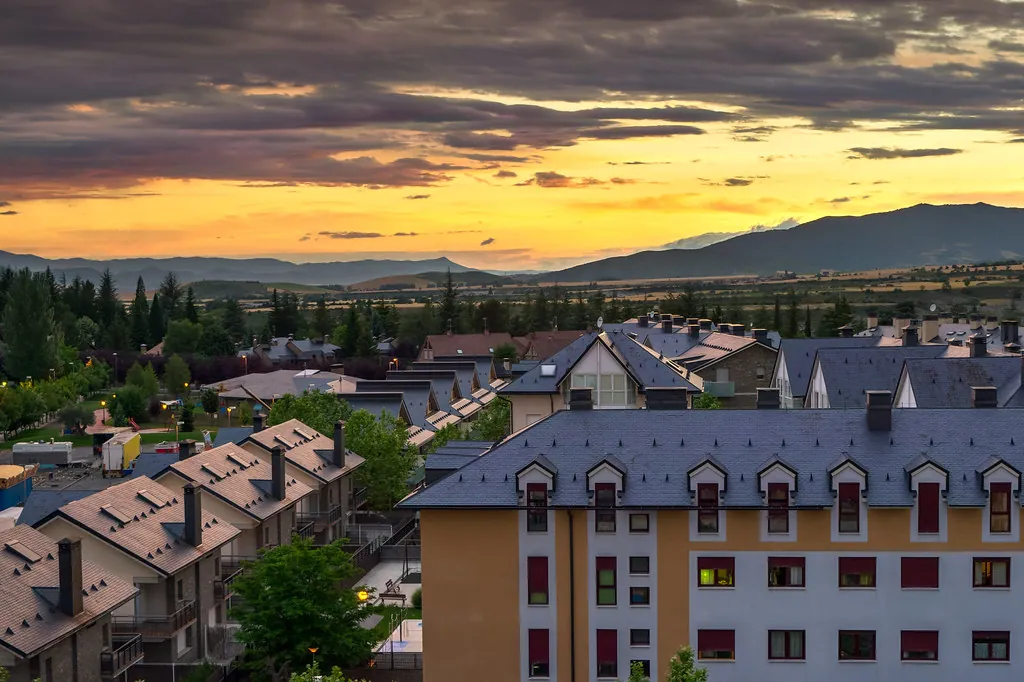
The church bell can be heard three kilometres out, across fields that roll like a calm brown sea. That single note, carried on thin air, is often the first sign that Banon exists at all. From the N-234 you turn onto a local road so narrow that wheat brushes both wing-mirrors, climb for ten minutes, and suddenly the village is simply there: stone and adobe houses shoulder-to-shoulder, roofs the colour of burnt toast, and not a single street that runs level for more than twenty metres.
Altitude does curious things. At 1,141 m the air feels scrubbed; diesel fumes from the valley don’t make it this high. On clear spring mornings the Sistema Ibérico shows its snow-dusted teeth forty kilometres north, while the Jiloca basin spreads southward in a patchwork of greens and ochres that change weekly as barley, wheat and saffron take turns to dominate the colour chart. Summer brings a dry, almost Alpine heat: 28 °C feels hotter than 35 °C on the coast because the sun is closer to your scalp and shade is rationed by narrow lanes. In December the mercury can drop to –8 °C; the same lanes become toboggan runs of packed snow and the village water tank sometimes freezes solid, cutting supply for half a day. Plan winter visits with a full windscreen-scraper and no tight schedule.
Stone, Slate and the Smell of Bread at Dawn
Banon’s houses were built for insulation, not admiration. Walls a metre thick keep interiors at 18 °C year-round; tiny upper windows reduce heat loss. Look closer and you’ll see the repairs: twentieth-century cement patching seventeenth-century stone, newer roof tiles overlapping ancient slabs of slate quarried at nearby Orihuela del Tremedal. The parish church of San Pedro Apóstol squats at the top of the hill rather than the centre, its square tower doubling as the village’s lightning conductor and mobile-phone mast. The door is usually unlocked; inside, the temperature drops another five degrees and the air smells of candle wax and grain dust blown in from the surrounding threshing floors.
There is no ticket office, no interpreted route, no gift shop. Instead you get the hiss of a butane heater that the sacristan has forgotten to turn off and, if you arrive before the 11 a.m. Sunday service, the sound of women comparing recipes in the porch. English is not spoken; a smile and the word “permiso” will get you everywhere.
Walking Without a Summit
The GR-24 long-distance path skirts the village, but the pleasure here is in the agricultural tracks that leave from every gate. One of the simplest circuits heads west past the cemetery, drops into the Rambla de Valdemadera and returns via the old linen mill—three kilometres, ninety minutes if you keep stopping to watch red-legged partridges scuttle through the stubble. Another track eastward reaches the abandoned village of La Aldehuela at four kilometres; stone walls still stand, but fig trees now grow in what were living rooms. These are not hikes that appear on glossy brochures; waymarking is a dab of faded paint every half-kilometre and the only facilities are whatever you carry. Wear boots after rain: clay soils stick like wet biscuit.
Spring brings the biggest skies. From late April to mid-May wheat shoots are ankle-high and the earth is dark; by June the same fields have turned a shimmering pale green that hurts the eyes under midday sun. Photographers do well in the first and last hour of light, when stone walls throw long shadows and the cereal heads catch the sun like tiny mirrors. Midday in July is useless for anything except siesta.
Food That Knows the Season
The village bar, Casa Roque, opens at seven for coffee and closes when the last customer leaves—sometimes midnight, sometimes three. There is no written menu. Mid-week lunch might be ternera estofada (beef stewed with clove and sweet paprika) plus bread baked 200 metres away; weekend supper could be ajoarriero, salt-cod and potato pounded into a thick brick-orange paste, served in the same clay bowl your grandmother would recognise. A three-course meal with wine costs between €11 and €14; card payments are accepted, but the machine is older than the barman and hates foreign chips, so bring cash. Vegetarians get eggs—prepared half a dozen ways—or they can negotiate a salad of lettuce so fresh it still holds the morning dew. Coeliacs should note that wheat is the local religion; gluten-free bread exists, but you need to order it a day ahead through the tiny grocery shop that opens 09:00–11:00 and 17:00–19:00.
If you are self-catering, Thursday is market day in nearby Calamocha (18 km). Stallholders will sell you a whole cordero lechal (milk-fed lamb) for €70, chopped and wrapped, or half a wheel of queso de Tronchón for €25. Banon itself has no supermarket, just a freezer chest in the bar and shelves of tinned asparagus in the grocery; plan accordingly.
When the Village Remembers How to Shout
For fifty weeks of the year Banon’s population is 157, median age around sixty. During the fiestas of San Roque, 14–17 August, the figure triples. Emigrants who left for Zaragoza or Barcelona in the 1960s return with grandchildren who have never seen a wheat field; the plaza becomes an open-air ballroom with a sound system run from a tractor battery. At 6 a.m. on the 16th a rocket explodes and half the village forms a brass band that marches through the streets barking out jotas until breakfast. Visitors are welcome to join the communal paella on the 15th—buy a €6 ticket from the Ayuntamiento doorway any time after 11 a.m. and turn up with your own spoon. By the 18th the streets are quiet again, littered only with confetti and the occasional lost sandal.
Winter festivals are more intimate. On 17 January bonfires for San Antón warm hands in the plaza; locals bring potatoes wrapped in foil to bury in the embers, then eat them with salt and olive oil while the priest blesses animals brought on lengths of rope. Snow is possible; if the road turns white the village WhatsApp group decides whether to cancel Mass, not the bishop.
Getting There, Staying There, Leaving
Banon lies 45 km north-west of Teruel. From the A-23 take exit 92 (Calamocha), then follow the TE-V-9035 for 24 km. The last 8 km are single-track with passing bays; descending drivers give way to uphill traffic, and livestock have absolute right of way. A small sign reads “Banon 3 km” just after you decide you are lost; GPS routinely underestimates travel time by twenty minutes. In winter carry snow chains—gritters reach the village eventually, not immediately.
Accommodation is limited. Casa Rural La Campana has three doubles (€65–€75, breakfast €7) in a restored house whose Wi-Fi struggles with anything more demanding than email. There is also a four-bed apartment above the bakery (€90 whole flat) where the smell of rising dough drifts up through the floorboards. Both require a two-night minimum at weekends and can be booked through the village website, which is in Spanish only; email responses arrive faster than phone calls. Camping is tolerated on the recreation ground if you ask the mayor, but there are no showers—use the municipal pool facilities, open July to August, €2 entry.
Public transport is theoretical. A weekday bus leaves Teruel at 14:15, reaches Banon at 16:00, and returns at 06:45 next morning. If you miss it, a taxi from Calamocha costs around €35. Most visitors come by car; the nearest fuel is in Monreal del Campo, 19 km away, and it closes at 21:00.
Silence, and the Bill That Comes With It
Banon will not entertain you. It offers instead a place where the loudest sound at 3 a.m. is a dog barking at a fox, and where the night sky is still dark enough to read the Milky Way without squinting. The trade-off is patchy phone coverage, a church bell that insists on striking the hour, and the certainty that if you forget to buy milk on Saturday the shop will not reopen until Monday. Accept the deal and you may find, somewhere between the cereal fields and the stone walls, that silence itself has a flavour—dry, slightly sweet, unmistakably high-plateau Spanish.