Full Article
about Bea
Ocultar artículo Leer artículo completo
Thirty-three souls live at 1,134 metres in Bea, and on a January morning you can count every chimney plume as the village wakes beneath a crust of frost. The thermometer read –8 °C when the baker from neighbouring Monreal del Campo dropped off yesterday’s bread at the solitary bar; by noon it might scrape 4 °C if the wind remembers to shift south. This is the Jiloca plateau, a place where the Meseta tilts toward the clouds and the phrase “empty Spain” stops being political rhetoric and becomes the crunch of your boots on frozen mud.
Stone, Straw and Silence
No one arrives here by accident. The A-23 motorway roars twenty-five minutes to the south, but the last nine kilometres wriggle uphill on the TE-V-9033, a lane barely wider than a Tesco delivery van. Stone walls squeeze the tarmac, and every bend reveals another house with its face turned away from the road. Granite quoins, straw-coloured adobe, oak beams grey as weathered ships’ timber: the architecture speaks of practicality rather than pride. Gates hang on wrought-iron hinges forged in Teruel foundries before the Civil War; many are locked now, their keys hanging in houses in Zaragoza or Valencia where the owners’ grandchildren work IT shifts.
Walk the four streets—Calle Mayor, Calle de la Iglesia, Calle del Horno, Calle de San Antón—and you will cover 400 metres end to end. The parish church of Nuestra Señora de la Expectación squats at the centre, tower short and bell openings blind without bells. Step inside and the air smells of candle wax and damp stone; the single nave is wide enough for a tractor, a measurement that matters when harvest thanksgiving rolls around. A fragment of fifteenth-century fresco survives on the south wall: ochre robes, faded blue sky, a saint whose eyes were scratched out sometime after 1936. No ticket desk, no audioguide, just a printed A4 sheet laminated and Blu-tacked to the pulpit asking for quiet.
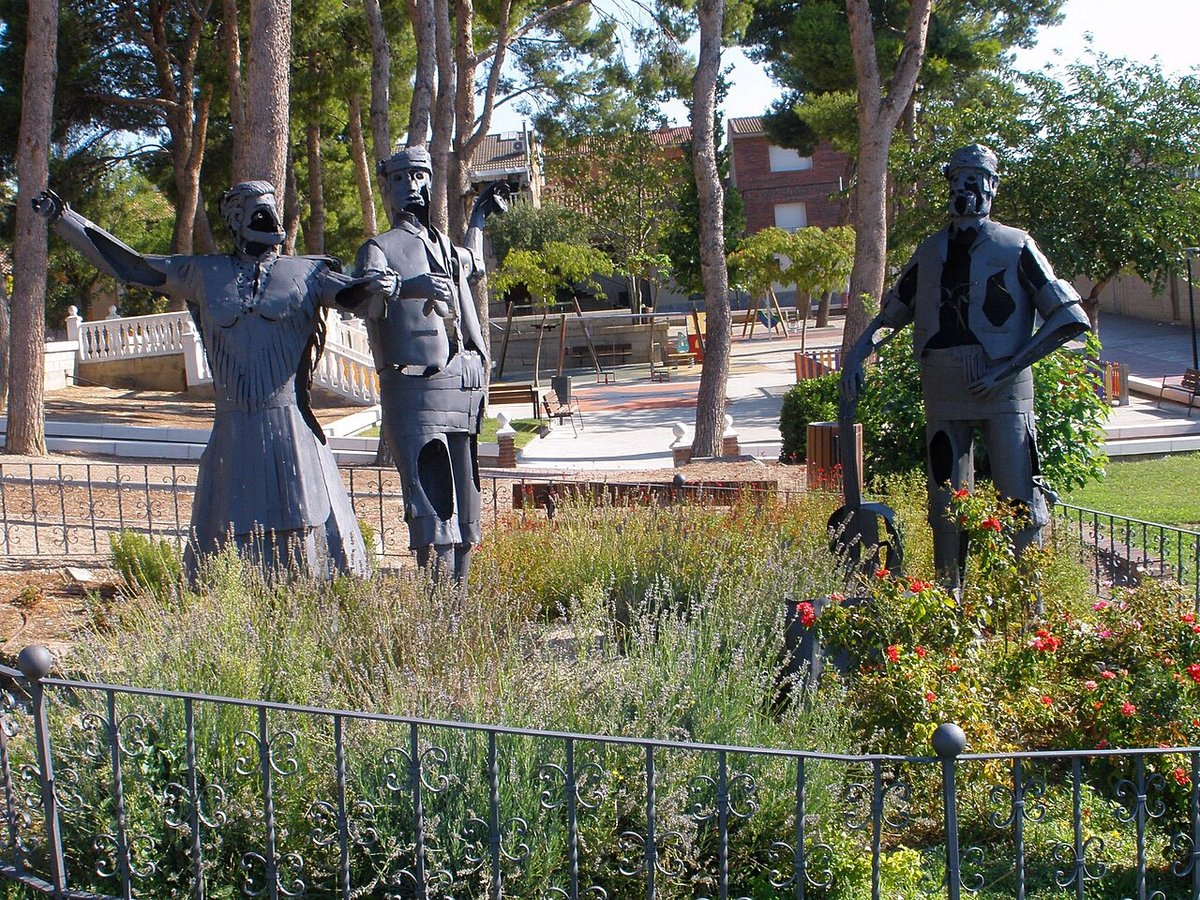
Outside, the plaza is a rectangle of compacted earth. Two benches, one missing a slat, face each other like awkward relatives. Sit long enough and someone will emerge—perhaps José trimming kindling, perhaps Pilar carrying a plastic bag of eggs still warm from the henhouse. Conversation starts with the temperature and slides, without preamble, into whose grandfather built which wall. The village archive is kept in living memory; paper records stop when the town hall closed in the 1970s.
Walking the Frozen Plateau
Leave the last houses behind and the path becomes a farm track, rutted by tractors fitted with chains. Wheat stubble pokes through snow like beard bristles; the only vertical features are pylons marching toward the Sierra de Cucalón ten kilometres west. This is cereal country—barley, durum wheat, oats—where fields are measured in fanegas, not hectares, and every plot has a name: “El Pradillo”, “La Loma del Muerto”, “Los Barrancos”. Walk north for forty minutes and you reach an abandoned masía, roof collapsed, threshing floor intact. Inside, swallows have nested on the remaining beam; their mud cups are empty now, occupants sunning themselves in Senegal.
Winter hiking here demands preparation. Mobile signal flickers in and out; download offline maps before leaving Calamocha, the nearest supply point. Carry water—streams are seasonal and often run brown with loam after rain. Wind chill can drop effective temperature by another five degrees; a lightweight down jacket stuffs easily into a daypack when the sun briefly wins. The reward is horizon in every direction, a relief for anyone fresh from Britain’s crowded trails where stiles queue up like commuters.
Birdlife compensates for the scarcity of trees. Scan the thermals and you’ll spot golden eagles circling high, buzzards lower down, and the occasional hen harrier skimming the stubble. Bring binoculars, but don’t expect hides or interpretation boards; a drystone wall makes an adequate windbreak while you wait.
Nightfall at 40 ° North
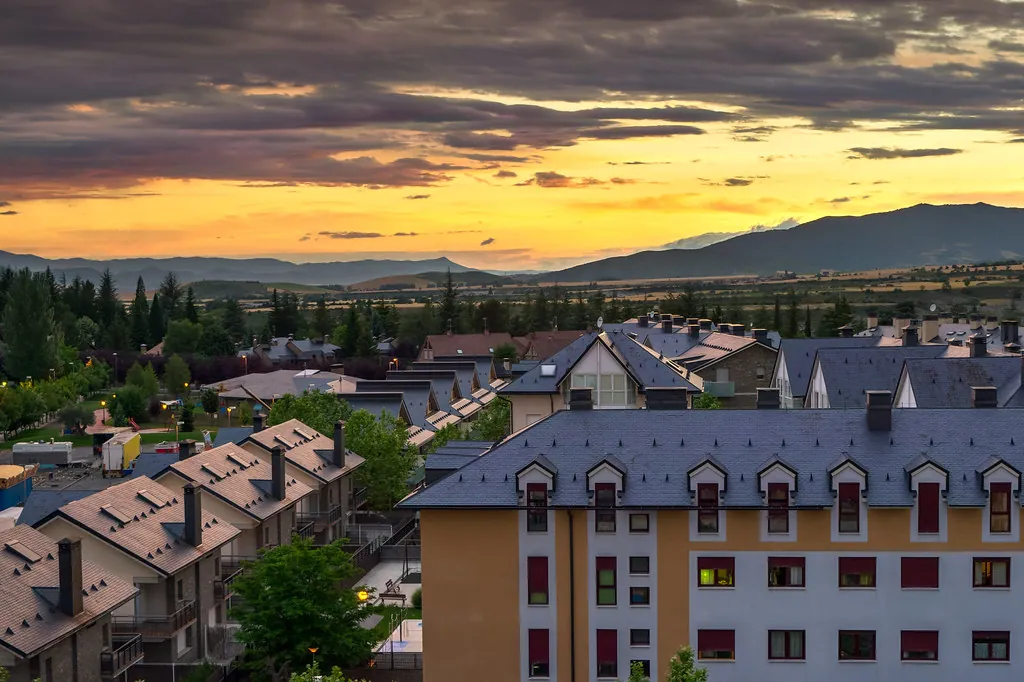
Dusk arrives fast. By five o’clock the temperature has fallen another degree and woodsmoke sharpens the air. Streetlights—four of them—hum into orange life, but they are low-wattage and the Milky Way still spills across the sky like spilled sugar. Light pollution is rated Bortle class 3; only the distant glow of Teruel city brushes the southern rim. British observers will recognise Orion, but Taurus sits higher here at 40 ° north latitude. A £20 star chart and red-torch app suffice; local villagers simply point and name—“La Osa Mayor, eh, la cazadora”.
If you stay overnight, remember that Bea offers no hotels. The nearest beds are in Calamocha (20 min drive) or the newly restored casa rural in Castejón de Tornos, eight kilometres away. Prices hover around €70 for a double, including breakfast of chorizo, local honey, and coffee strong enough to float a nail. Book ahead in Christmas week and during the August fiestas; otherwise you may find yourself knocking on the mayor’s door—literally, he keeps a spare key for stranded walkers.
When the Village Comes Home
For eleven months Bea whispers; in August it shouts. The fiestas patronales pull back anyone with roots: vans with Barcelona plates, estate cars full of Madrid kids staring at sheep. The plaza fills with folding tables, a sound system run off a petrol generator, and a bar kiosk selling Estrella Galicia at €2.50 a caña. On the final night a bagpipe band from Gijón—don’t ask why—marches the streets at 2 a.m., followed by villagers carrying paper lanterns. The population swells to 200; rubbish bins overflow; someone always ends up in the fountain. By dawn on the 17th the last Seat León bumps down the mountain and silence reasserts itself like a tide.
January brings the opposite ritual: San Antonio Abad. A bonfire of vine prunings and old pallets crackles in the plaza at first light. The village vet, now retired, blesses two dogs, a tractor and a mobility scooter. Afterwards everyone squeezes into the bar for anisette-laced coffee and migas—fried breadcrumbs streaked with liver and grapes. Tourist infrastructure it isn’t, but if you arrive with respectful curiosity you’ll be offered a plastic fork and a glass of rough red.
Getting There, Getting Out
No trains reach Bea. From London, fly to Zaragoza (Bristol, Stansted and Gatwick have seasonal services), hire a car and head southwest on the A-23 for 110 km. Petrol stations thin out after Daroca; fill up. In winter carry snow chains—Guardia Civil checkpoints appear when the road climbs above 1,000 m. Summer drivers face the opposite hazard: melting tar can throw sticky gravel onto windscreens.
Buses run twice weekly from Teruel to Calamocha, but the onward connection to Bea is more rumour than reality. Lift-sharing with locals via the WhatsApp group “Villages of Jiloca” works if your Spanish stretches to “¿Hay sitio para uno más?” Expect to pay €5 for petrol.
Leaving the Silence Behind
Drive away at dawn and the village shrinks in the rear-view mirror until only the church tower remains, a stone finger against a salmon sky. Further down the slope you re-enter the soundtrack of the twenty-first century: lorry tyres humming, a radio host debating football transfers, the ping of an incoming email. The cold air stays in your lungs longer than expected, a reminder that somewhere above the plain thirty-three people are feeding chickens, mending a roof, arguing over whose turn it is to sweep the plaza. Bea offers no souvenir shops, no Instagram moments framed in bougainvillea. What it does offer is a calibrated sense of scale: how small a human settlement can be, how large the sky, how quietly the centuries pass when left alone.