Full Article
about Belmonte de Gracian
Ocultar artículo Leer artículo completo
The thermometer drops six degrees between Zaragoza and Belmonte de Gracián. One moment you’re sweating in the Ebro basin; half an hour later you’re zipping up your jacket as the road climbs to 646 m and the air smells of almond blossom instead of diesel. That sudden shift is the first reminder that this is not the postcard Spain of coasts or cities, but the interior plateau where villages survive on cereals, vines, and the stubbornness of 183 people.
Stone, Clay, and the Sound of Nothing Much
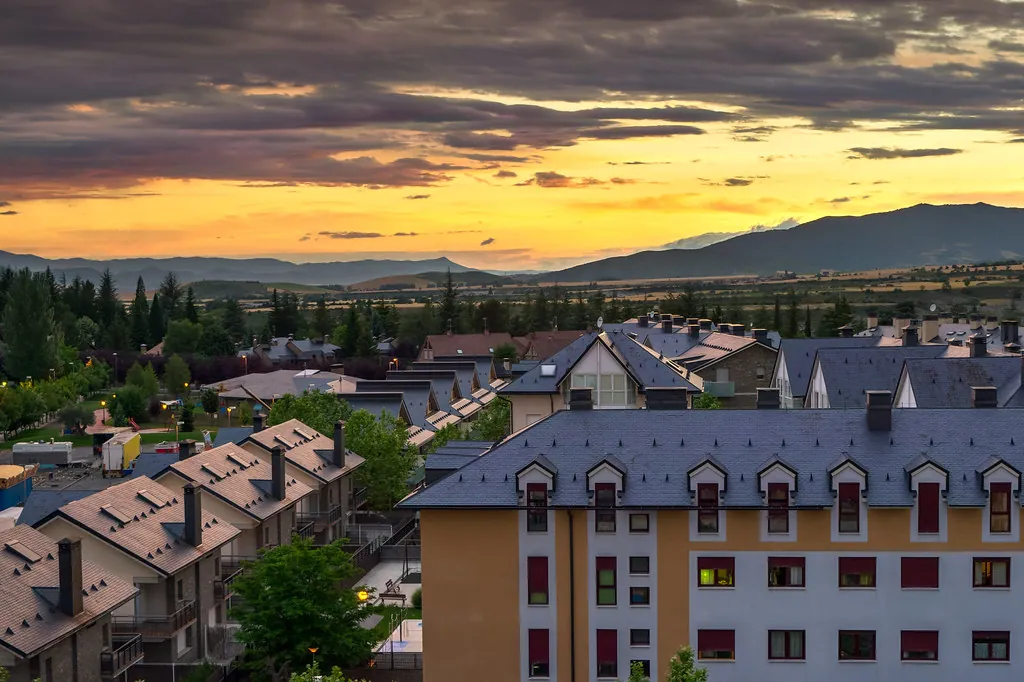
Belmonte’s streets are barely two cars wide, and nobody tests the theory because traffic consists of one daily delivery van and a farmer’s pick-up at 07:30. Houses are built from whatever the ground offered when they were needed: ochre stone at the bottom, clay bricks above, roofs pitched just enough to slide off the winter snow that falls two or three nights a year. Iron balconies sag under geraniums that somehow survive without daily watering; the soil here holds moisture longer than down in the valley.
The Natividad de Nuestra Señora church squats at the top of the slope, its bell tower repaired so many times since the 1400 s that the base is Romanesque, the middle Mudéjar, and the top hat a 1970 s brick job paid for with an EU grant. Inside, the air smells of candle wax and damp stone; the priest visits twice a month. Photography is allowed, but the light is so dim you’ll need steady hands or a very forgiving camera sensor.
Walk another hundred metres past the last house and you’re among vineyards planted on terraces barely wider than a wheelbarrow. The grapes go to the Calatayud D.O. cooperative twenty minutes away; the wine comes back labelled at £7 a bottle and disappears into local kitchens without ceremony. If you want a tasting, ask at the tiny shop that opens Tuesday and Friday mornings – the owner keeps an unlabelled crate under the counter and will rinse out an old water glass for you.
Walking Lines in the Earth
There are no way-marked trails, only the agricultural tracks that link fields to barns. A useful rule: if the path has tyre ruts, it eventually reaches a road; if it drops into a barranco, turn back before the phone signal dies. The easiest loop leaves the village past the cement cemetery gates, follows the ridge south for 3 km, then cuts back along the dry-stone wall that separates almond from barley. Spring brings purple Vicia cracca and the clacking of stone-curlews; October turns everything the colour of burnt paper and the only sound is your boots crunching last year’s pruned branches.
Serious walkers can link up with the GR-90 long-distance footpath at Villarroya de la Sierra, twelve kilometres away, but Belmonte itself is base-camp territory rather than mountain adventure. Come prepared: Ordnance Survey-style maps don’t exist at 1:25 000, so download the IGN “Mapa Topográfico Nacional” before you leave the UK and cache it offline. A compass still works even when Spanish roaming data gives up.
Night Comes with a Telescope
Street lighting switches off at midnight to save the council €43 a day. The result is a sky dark enough for the Perseids to feel like artillery practice. Walk five minutes beyond the last lamppost, let your eyes adjust for twenty, and the Milky Way appears as a definite stripe, not a poetic cliché. Amateur astronomers set up on the disused rail track bed that runs parallel to the A-2; the gravel is flat, there’s no traffic, and the nearest tree line is low enough to give an unobstructed horizon from northeast to southwest. Bring a red-filter torch and a spare battery – the night breeze drains power faster than you expect at this altitude.
What Passes for a Menu
Belmonte has no restaurant. Lunch is whatever Casa Román’s owner, Pilar, feels like cooking, served at a single table in the kitchen. You eat what the village eats: potaje de cardo (thickened with yesterday’s bread), cordero al chilindrón (lamb shoulder, sweet paprika, peppers that were hanging on the balcony last week), and a slice of cuajada so sharp it makes Yorkshire rhubarb taste tame. The price is €14 including wine, but you must book the previous evening because Pilar shops in Calatayud only on Mondays. Vegetarians get an omelette; vegans get commiserations and extra bread.
If you prefer self-catering, the village shop stocks UHT milk, tinned tuna, and tomatoes that still carry soil from the adjacent huerta. Fresh fish arrives frozen on Thursdays; the queue forms at 11:00 and is gone by 11:15. Bread comes up from the valley baker at 13:00 sharp – order before 10:00 or go without.
Getting There, Staying There, Leaving Again
From Zaragoza–Delicias bus station, the Calatayud line runs hourly; from Calatayud, a Monday-to-Friday service continues to Belmonte at 14:15 and 19:10 (€2.40, exact change only). The last return leaves at 06:50 next morning, which is why almost everyone arrives by hire car. The final 9 km from the A-2 junction twist through almond terraces; after heavy rain the surface washes into the ditch, so take the bends in second gear and pray nobody is coming the other way with a trailer.
Accommodation is essentially Casa Román (£70 a night for the whole house, three bedrooms, wood-burner, no Wi-Fi). Anything else involves driving twenty minutes to a roadside hostal on the N-II where lorries down-change at 03:00. Book Casa Román early if you want a weekend in May or September; half of Zaragoza seems to have discovered the place now that “rural” is code for “safe”.
Winter visits require realism. Night temperatures drop to –8 °C; the house heats with olive-wood logs that cost €6 a sack and burn for four hours. Snow chains are not optional in January – the regional plough reaches the village eventually, but “eventually” in Aragón can mean after lunch. Summer, by contrast, is tolerable until 14:00; then the sun ricochets off the stone and sensible people siesta behind two-foot walls until the shadow creeps back across the lane.
The Honest Verdict
Belmonte de Gracián will not change your life. It offers no epiphany, no Instagram peak, no craft-beer taproom. What it does provide is a calibrated sense of scale: how big the sky is when there are only 60 houses underneath it, how loud your own footsteps sound on a dirt track, how long an evening can stretch when the only distraction is a bottle of Garnacha and the certainty that tomorrow will taste almost exactly the same. If that sounds like boredom, book elsewhere. If it sounds like breathing space, bring sturdy shoes and an appetite for lamb.