Full Article
about Berbegal
Ocultar artículo Leer artículo completo
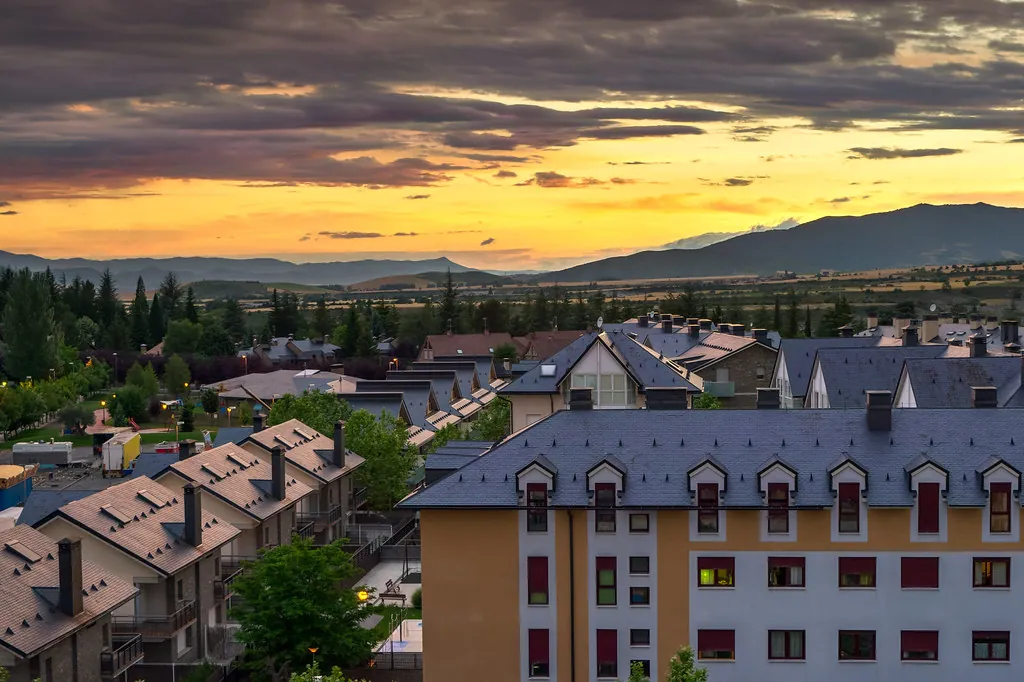
The church belltower catches your eye before anything else. It rises from a ridge at 500 metres, visible across miles of cereal fields that roll towards the Ebro Valley. Berbegal doesn't shout for attention; it simply waits, a compact knot of sandstone houses that has watched over this frontier between plain and mountain since medieval times.
A Village That Measures Time in Harvests
Three hundred souls call Berbegal home, though numbers swell when the wheat turns gold and the grape harvest begins. The rhythm here remains stubbornly agricultural. Dawn breaks over fields striped with vines and almond groves; by mid-morning, the narrow lanes fall quiet as workers head to the surrounding fincas. There's no supermarket, no petrol station, barely a mobile signal on windy days. What you get instead is space to breathe and horizons that stretch clear to the Pyrenean foothills.
The stone itself tells the story. Local sandstone, honey-coloured and soft enough to carve, forms every wall, arch and门槛. Walk the main street at sunset and the whole village glows like embers. Some houses wear fresh mortar; others slump gently, their wooden balconies sagging under terracotta pots of geraniums. Restoration comes slowly here, funded by summer returnees whose grandparents fled to Zaragoza or Barcelona during the lean decades.
Walking the Borderlands
Berbegal sits precisely where the Somontano wine region dissolves into the stubby pre-Pyrenean ranges. That location makes it a launch pad rather than a destination. Footpaths strike out east towards the Vero Canyon, west across the flat agricultural chessboard, south to the sandstone cliffs above Barbastro. None are waymarked to British standards; downloading a GPX file before leaving home isn't optional, it's essential. The reward is solitude. On a clear spring morning you might share a ten-kilometre loop with only a pair of booted hunters and their dogs.
Cyclists arrive with thicker tyres and lower expectations. Farm tracks weave between cereal plots, turning to sticky clay after rain. The serious climbing begins five kilometres north: a 400-metre pull up to the abandoned village of Alquézar, legs burning, views expanding with every pedal stroke. Carry two bottles; the next fuente is never guaranteed to work.
What Aragonese Cooking Actually Means
Forget tapas crawls and Instagrammable pintxos. Berbegal's kitchen tradition is stew-based, wine-fuelled, built for workers who spent eight hours behind a mule. The local bar (there is precisely one) opens at 7 am for coffee and brandy, serves lunch at 2 pm sharp, and might close by 9 pm if trade is slow. Expect ternasco – milk-fed lamb roasted until the skin crackles – alongside borrajas, a regional vegetable that tastes like spinach meets cucumber. A glass of Somontano red costs €2.50; the barman will refill your carafe from the barrel if you ask nicely.
Weekend menus appear only when the owner's cousin feels like firing up the oven. Phone ahead. Vegetarians should plan accordingly: the nearest supermarket with a reliable tofu supply is 25 minutes away in Barbastro. Self-caterers fare better at the Saturday market there, loading up on local goat cheese, saffron-spiked olives and the first artichokes of spring.
Seasons of Stone and Sky
May turns the surrounding hills electric green. Wild asparagus push through roadside scrub; locals wander with plastic bags and sharp knives, competitive secrecy governing the best spots. By July the palette shifts to burnt umber; temperatures touch 38 °C and the village empties during siesta hours. Visit then and you'll have the lanes to yourself, but carry water – shade is scarce and the stone radiates heat like a pizza oven.
September brings the grape harvest. Tractors groan under crates of garnacha and tempranillo; the air smells of crushed fruit and diesel. October light is photographer's gold: long shadows, wheat stubble glowing bronze, the first snow brushing distant Pyrenean peaks. Winter arrives abruptly. At 500 metres, Berbegal catches the cierzo, a wind that can knife through three layers of fleece. Roads north close with the first serious snow; without a 4×4, you're pinned until the plough appears.
When the Village Throws Off Its Quiet
Fiesta week, usually the third weekend of August, triples the population. Brass bands parade at volumes that make windows rattle; teenagers who've spent the year in Huesca or Zaragoza return to flirt across the plaza. The highlight is the toro de fuego – a papier-mâché bull loaded with fireworks that careers through the streets after midnight. Health-and-safety officers would have conniptions; participants simply drink more wine and run faster.
Easter proceeds with medieval gravity. Hooded penitents carry processional floats weighing half a tonne; the sandstone walls echo with drumbeats that haven't changed rhythm in centuries. Visitors are welcome but not catered for. Bring sturdy shoes – the cobbles are lethal when wet – and expect every bar to close during the main procession.
Getting Here, Staying Put
No train line serves Berbegal. The nearest AVE station is Zaragoza-Delicias, 110 kilometres away; car hire takes ninety minutes along the A-23 then the N-240, last twenty minutes on the A-1219 which corkscrews up from the valley floor. Buses run twice daily from Barbastro, timed more for schoolchildren than tourists. Miss the 2 pm return and you're hitch-hiking.
Accommodation is limited to three village houses restored as tourist rentals. Expect stone walls half a metre thick, wood-burning stoves and Wi-Fi that collapses whenever the wind shifts. Prices hover around €80 per night for a two-bedroom place, less if you book a full week. There's no reception desk; the key waits under a flowerpot or handed over by the baker, depending who answers the phone first.
The honest truth? Berbegal rewards travellers who don't need entertaining. Come with walking boots, a taste for robust red wine and a willingness to synchronise your stomach to Spanish meal times. Leave expecting nightlife or boutique shopping and you'll be back in Barbastro before nightfall. The village offers something simpler: an unfiltered shot of rural Aragonese life, served at altitude, with a view that stretches halfway to France.