Full Article
about Berrueco
Ocultar artículo Leer artículo completo
At 1,020 m above sea level, Berrueco’s altitude hits you before the view does. Step out of the car on a clear night in October and the air feels sharpened, as though someone has turned the contrast dial up on the sky. The Milky Way is not a poetic flourish here; it is simply the ceiling, unpolluted by streetlights, because there are only three and one of those flickers.
The village squats on a ridge above the Gallocanta lagoon, Europe’s largest natural salt lake and the continent’s most reliable crane motel. Between late October and February, 60,000 common cranes brake overhead at twilight, their bugle calls drifting uphill like a distant military band tuning up. You do not need to be a birder to stop what you are doing; the sound triggers something prehistoric in the sternum.
A map the size of a postcard
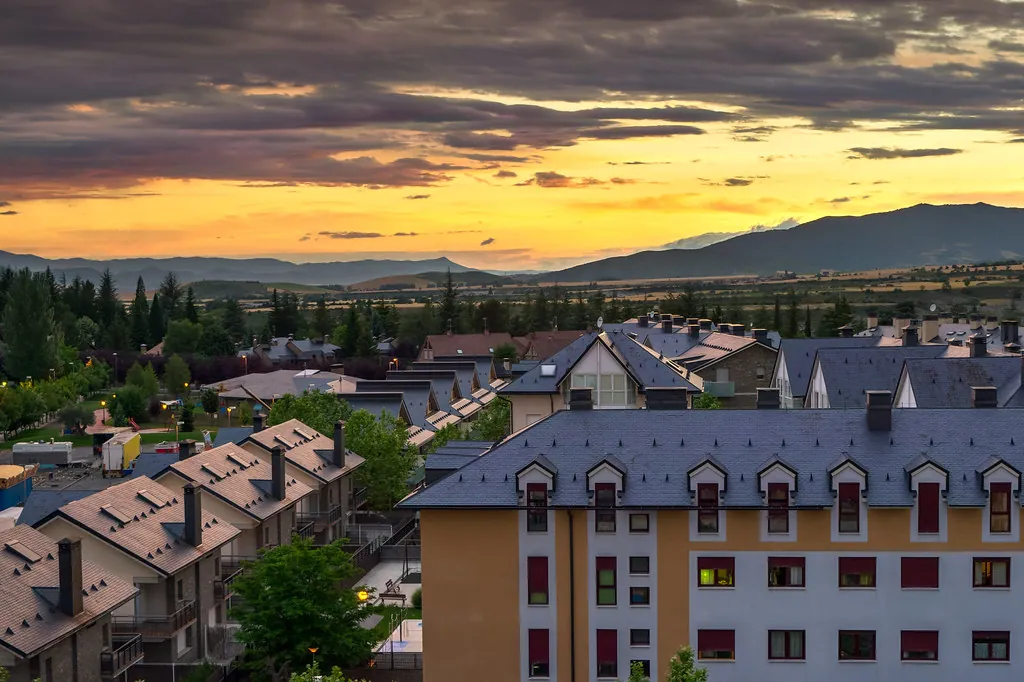
Berrueco contains 32 permanent residents, two streets, one church and no cash machine. You can walk from the ruined lookout tower at the top to the last wheat field at the bottom in twelve minutes, provided you pause to read the 1898 gravestone that leans against the church wall like a drunk. Houses are built from whatever the ground spat out: ochre limestone, splinters of slate, the occasional stubborn timber beam still bearing Roman numerals. Rooflines sag, walls swell, yet the whole place feels stubborn rather than derelict.
Inside the single bar, the counter is topped with zinc and the coffee machine is older than the barman’s grandfather. A cortado costs €1.20 and comes with a thimble of anise if the owner likes your accent. Lunch is whatever María has decided to cook: perhaps migas—breadcrumbs fried in olive oil with garlic and a handful of sweet grapes—followed by a plate of ternasco, Aragón’s milky lamb that tastes more like spring chicken than anything British butchers sell. The menu is written in biro on the back of an envelope; when the envelope is full, the day’s offerings are finished.
Roads that forget they are roads
The GR-90 long-distance footpath passes the village fountain, though the way-marking is so discreet you will swear you imagined it. A farm track strikes east towards the lagoon, dwindling into two ruts between wheat stubble. Follow it for forty minutes and you reach a hide made from pallets and donated screws; inside, a laminated sheet shows crane silhouettes in three languages, one of which is English spelled by someone who once met a Yorkshireman. Bring binoculars, but also bring patience: the birds land where they wish, and the water may have evaporated if Spain is mid-drought.
Westward, a stone-littered path climbs to the Castillo de Berrueco, a Moorish watchtower gutted by Napoleonic troops and finished off by local farmers needing masonry. From the summit, the plateau rolls south like a creased brown tablecloth all the way to Teruel. On a windy March afternoon the gusts taste of iron; in August the same walk happens at dawn or not at all, unless you enjoy sunstroke.
Seasons that argue with each other
Winter arrives abruptly. The first snow can fall in mid-November, turning the access road—already single-track and without cat’s eyes—into a toboggan run. Four-wheel drive is not showing off; it is the difference between breakfast in the village and breakfast in a ditch. Temperatures drop to minus twelve; pipes freeze, phones lose signal, and the crane-watchers stay in the purpose-built hostel five kilometres away where the heating works.
Spring is the brief compromise. From late April the wheat greens, stonecrops flower on every roof, and elderly residents emerge to lean against south-facing walls like lizards. Daytime temperatures hover around 18 °C; nights still require a fleece. This is the sweet spot for walking: mud has dried, snakes are still half-asleep, and the bar terrace catches the sun until 19:00.
Summer is fierce. At 35 °C the limestone reflects heat like a pizza oven; shade exists only on the north side of the church between 14:30 and 16:10. Spanish holidaymakers arrive with telescopes and serious lenses, booking the three rental houses that pass for tourist accommodation. Prices do not rise—there is no competition—but dinner starts at 21:30 because anything earlier is physiologically reckless.
Autumn brings the cranes back and the first smell of woodsmoke. Farmers burn the stubble, coating the sky in a haze that turns every sunset ochre. Mushrooms appear after the first storms; locals guard their porcini spots with the same enthusiasm a Devonian reserves a favourite trout pool.
How to get here without wishing you had not
Fly Ryanair from London-Stansted to Zaragoza (2 h 05 min, £38 return if you book while the football fixtures are still being argued over). Collect a hire car at the airport—petrol is cheaper than the UK, but fill the tank because the nearest station after Calatayud is 40 km of nervous glances. Take the A-2 west, exit at Daroca, then follow the signposts that shrink from bilingual to monolingual to almost apologetic. The final 12 km are on the N-211a, a road so empty you will remember the registration number of the only oncoming vehicle.
There is no public transport. A taxi from Zaragoza costs €120 and the driver will photograph you as evidence of eccentricity. Bring cash in twenties; the bar, the bakery van that visits on Thursdays, and the honesty box for local eggs all operate on metal, not plastic. Phone signal is patchy on Vodafone, non-existent on Three; download Google Maps offline and pray you do not need to argue with a sheep.
What can go wrong, probably will
Mist rolls up from the lagoon without warning; the village can vanish in ten minutes. If you are driving downhill at the time, the verge is softer than it looks and the farmer whose fence you just flattened will accept wine as compensation, but only if it is from Cariñena, not that foreign stuff from Rioja. The lagoon sometimes dries up completely; check Fundación Gallocanta’s weekly crane count before promising children a wildlife spectacular. Finally, remember the siesta: between 14:00 and 17:00 the village shuts tighter than a Bank Holiday in Northumberland. Arrive hungry at 15:30 and you will stay that way.
Leave early, drive slowly, and keep a spare jacket in the boot. Berrueco will not change your life, but it might recalibrate your ears. After a night when the loudest sound is your own pulse, the return to motorway Britain feels unnecessarily orchestral.