Full Article
about Bierge
Ocultar artículo Leer artículo completo
A Village That Measures Altitude, Not Time
Six hundred metres above sea-level, Bierge keeps time by tractors rather than clocks. The church bell of San Miguel Arcángel strikes the hours, yet the real rhythm comes from the surrounding Somontano vineyards—bud-break in April, veraison in August, harvest trucks rumbling through September's narrow lanes. With 264 permanent residents, this is farming country first, tourism destination second, and the distinction matters.
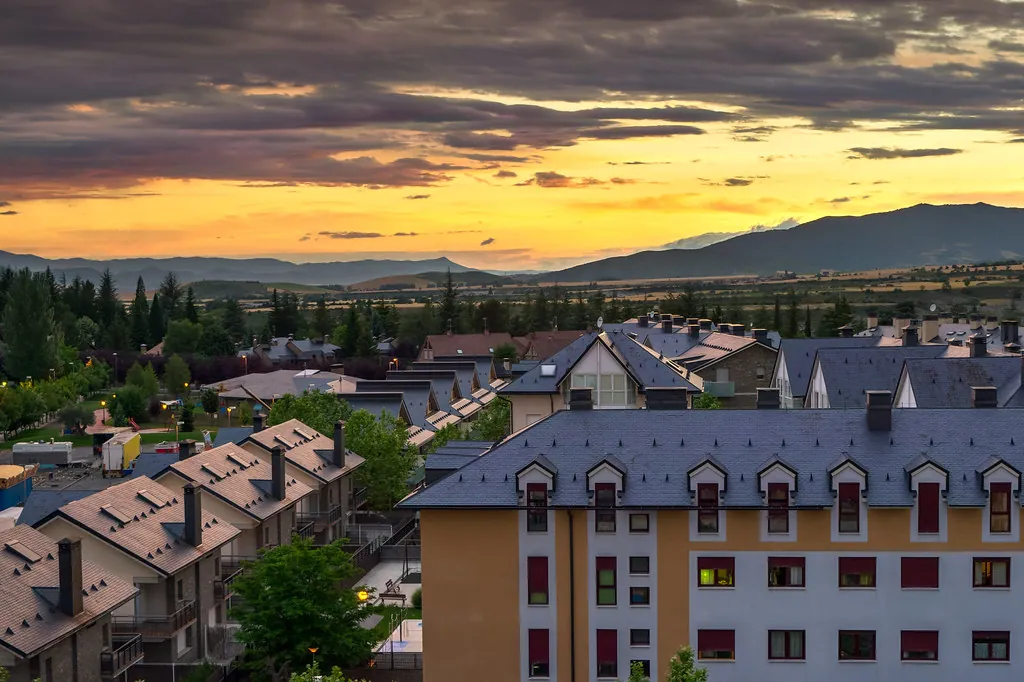
The village sits on a limestone ridge midway between the Ebro basin and the Pyrenean foothills. From the upper streets you look across a patchwork of cereal terraces and newly-planted olive groves that fade from emerald to straw depending on the month. Stone walls divide properties without grandeur; their purpose is livestock, not photographs. You'll notice the difference immediately—no souvenir shops, no guided tours, just the smell of wet earth after irrigation and the occasional clank of a distant windmill.
Getting Your Bearings (and Keeping Them)
Bierge's layout confuses first-time drivers. The A-1235 through-road bypasses the centre, dumping you at a small roundabout where signs point vaguely to Centro Urbano. Ignore the instinct to continue uphill—park near the ayuntamiento and walk. Calles San Roque and Mayor form a rough loop past the church; allow ten minutes to circle the old quarter. Houses are built from locally-quarried grey-brown stone, many with first-floor galleries that once served as grain stores. Timber doors stand open, revealing courtyards where someone is inevitably sharpening secateurs or stacking almond crates.
The tourist office isn't an office at all; it's a glass cabinet outside the municipal building containing laminated maps and a QR code. Scan it and you'll discover six way-marked walks ranging from forty minutes to four hours. None require specialist footwear, but the limestone can be slick after rain—decent treads help.
Water, Rock and a Three-Euro Paddle
Five kilometres north, the Río Alcanadre has carved the Salto de Bierge, a shallow canyon that locals market as "canyoning without the ropes". Foreign visitors like it because you can arrive in trainers rather than neoprene. Entry is controlled: €3 per person in July and August, capped at 250 swimmers per day. Book online before 18:00 the previous evening; otherwise you'll join the queue of hopefuls at 09:30 when the barrier lifts.
The descent starts with 180 metal steps that clatter underfoot. At river level the gorge narrows to twenty metres, walls streaked with iron oxide the colour of diluted Ribena. You wade waist-deep across a gravel bar to reach the grass "beach"—really a sliver of turf wedged between boulders. Families arrive with cool-boxes and inflatable unicorns; serious hikers continue upstream, rock-hopping for another kilometre until the pools deepen and cliff jumps become possible. Dogs are welcome on leads, unusual for Spanish river reserves, so expect wet Labradors shaking over your towel.
Water-shoes aren't essential but save bruised soles. Dry-bags keep cameras alive; the crossing is deeper than it looks and rucksacks ride high on your back like army packs. If mobility is an issue, skip it—the staircases are unforgiving and there's no hand-rail on the final scramble.
Between Vineyard and Cloud
Back in the village, lunchtime options are limited to two bars and the weekend-only restaurant at Casa Javier. The latter occupies a 19th-century townhouse with hill-top patios overlooking cereal fields that ripple like breeze over corduroy. British guests consistently praise Javier's English and his refusal to serve anything that can't be sourced within 40 km. Expect ternasco (milk-fed lamb) slow-roasted with mountain herbs, or a vegetarian migas made from yesterday's bread and whatever the garden yields. House wine is a young Somontano Garnacha—light enough for midday, chilled slightly to cope with the altitude sun.
If you're self-catering, stock up in Barbastro, 19 km south. Bierge's single shop keeps erratic hours; when it's closed you can usually find eggs, tinned tuna and vacuum-packed longaniza de Graus on the bar counter. The sausage is milder than chorizo, a safe introduction for children who balk at paprika-heavy flavours.
Walking Off the Wine
Afternoons are best spent on the 7 km circular route to the abandoned hamlet of Nasarre. The path starts opposite the cemetery, climbing gently through almond terraces before entering a narrow valley where holm oak replaces cultivation. You pass stone huts with intact roofs—cortijos that once housed share-croppers during the grape harvest. Swifts nest in the eaves; when disturbed they rocket out, shrieking like faulty smoke alarms.
The return leg follows a medieval drove-road wide enough for two mules. Keep an eye out for boot-shaped waymarks painted on limestone outcrops; storms wash sections away each winter and the council repaints rather than rebuilds. Total elevation gain is 220 m—enough to justify a second glass of wine later, not so much that you'll curse the hills.
When the Sky Turns Dramatic
July delivers 74 % clear-sky days, but the remaining 26 % arrive without warning. Afternoon storms build over the Pyrenees, rolling south-east until they collide with thermals rising off the Ebro plain. Temperatures can drop ten degrees in twenty minutes; hail isn't unknown. Carry a lightweight waterproof even if the morning looks biblical. Roads become rivers—don't park in the lower square unless you fancy a free chassis wash.
Winter brings a different set of calculations. At 600 m Bierge escapes heavy snow, but night frosts harden the soil until February. Rental cottages switch on heating at 18:00 and off at 23:00; pack slippers because stone floors conduct cold like a fridge shelf. Chains are rarely required on the main road, yet the final kilometre into the village can ice over. Local advice: if the pine trees on the ridge look white, stay in Barbastro and try again after coffee.
Fiestas Without the Foam Machine
Bierge's calendar hasn't been curated for visitors. Fiesta patronales honour San Miguel on the last weekend of September, coinciding with the final grape pick. The programme mixes religious procession with tractor parade—farmers polish vintage John Deeres and drive them slowly past the church, ribbons tied to radiators. Saturday night ends with a communal paella cooked in a pan two metres wide; tourists are welcome but there's no ticket system—turn up with your own bowl and spoon.
Spring brings the romería to the Ermita de la Virgen de las Viñas, a 45-minute walk south-west of the village. Participants carry an effigy through vineyards, stopping once for a shot of mistella (sweet fortified wine) and again for migas cooked over a fire of vine cuttings. It's low-key, slightly tipsy, and finishes by 14:00 so everyone can siesta.
Leaving Without the Hard Sell
Bierge won't change your life. You won't tick off Unesco sites or brag about Michelin stars. What you get is a working Aragonese village that happens to have a river pool, six decent walks and a wine region on its doorstep. Come with a car, reasonable Spanish and the habit of saying "buenos días" first; you'll be met with directions, restaurant tips and the occasional free top-up. Arrive expecting coach parking and gift shops, and you'll drive away within the hour—probably back towards the coast you thought you'd escaped.