Full Article
about Bijuesca
Ocultar artículo Leer artículo completo
The church bell strikes noon, and the only other sound is wheat rustling in the breeze. At 918 metres above sea level, Bijuesca sits high enough that the air carries both the scent of warm straw and something sharper—pine from the distant Sierra de Vicort, maybe, or just the smell of emptiness. This is Spain's Meseta at its most honest: no grand monuments, no coach parties, just stone houses huddled against a landscape that has fed people since the Romans.
The Village That Agriculture Forgot to Erase
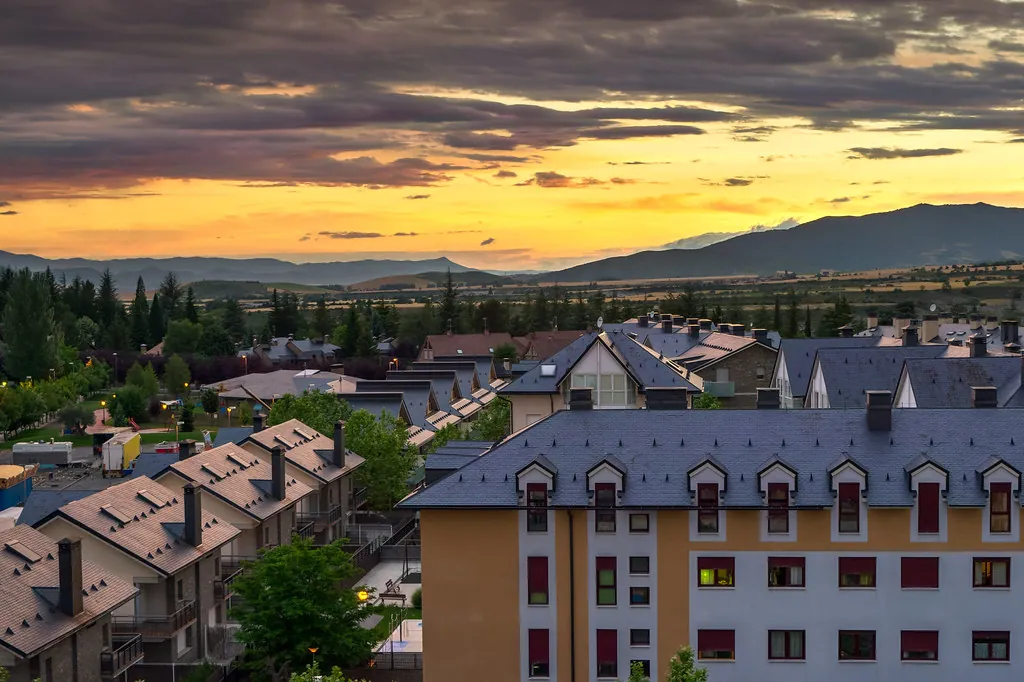
Bijuesca's population hovers around 89, though the exact number shifts with the seasons. Young families leave for Zaragoza or Madrid; elderly residents stay to tend almond groves and wheat fields that stretch like golden stepping stones toward the mountains. The village follows the logic of survival rather than tourism. Houses are built shoulder-to-shoulder, their back walls forming a defensive ring against winters that can drop to -10°C. Windows face south, catching every degree of winter sun. It's the kind of place where a stranger's car gets noted, then forgotten once it passes the last house.
The stone Church of San Miguel Arcángel dominates the skyline, its medieval bulk softened by lichen and centuries of wind. Inside, the air smells of beeswax and old wood. The altarpiece dates from the 16th century, but what catches the eye are the ex-votos—small silver charms shaped like wheat sheaves and sheep, offerings from farmers whose harvests survived drought or whose flocks weathered harsh winters. They're tacked to a side altar, a quiet testament to bargains struck between faith and necessity.
Walking Through Layers of Time
From the church plaza, Calle Mayor runs exactly 200 metres before dissolving into a farm track. Along it, houses show their age in layers: stone bases from the 1700s, adobe walls from the 1800s, aluminium windows from the 1980s. One doorway reveals a hand-carved date—1789—half-erased by rain. Another bears the initials of a Republican fighter who scratched his name here during the Civil War before heading to the front at Calatayud, never to return.
The village's few commercial enterprises cluster near the entrance: a bakery that opens three mornings weekly, a bar where farmers gather at 10am for brandy and coffee, and a tiny shop selling tinned goods and locally pressed olive oil. Prices are written in felt-tip pen on cardboard scraps. A litre of oil costs €8—cheaper than supermarket brands and sharp with peppery flavour that catches the throat.
Beyond the last house, footpaths fan out across agricultural terraces that predate mechanised farming. These dry-stone walls, built over centuries, create a mosaic of wheat, barley and fallow fields. In May, the green wheat ripples like water. By July, everything turns gold under a sky that seems higher than at sea level. The paths aren't signposted, but they're easy to follow—just keep the village behind you and the mountains ahead.
When the Land Refuses to Be Tamed
The Sierra de Vicort rises 15 kilometres north, its limestone ridges visible from every street in Bijuesca. The mountains aren't high—barely 1,400 metres—but they mark the transition between Spain's central plateau and the Ebro Valley. Temperature drops five degrees on the ascent. What grows here has adapted to harsh conditions: hardy oaks, aromatic thyme, broom that turns whole slopes yellow in spring.
Hiking routes exist, though you'll need GPS tracks downloaded beforehand. The PR-Z 242 starts just past the village cemetery, climbing 400 metres through scrubland to a ruined watchtower. From here, the view stretches across wheat fields that seem to curve with the earth's arc. On clear days, you can spot Calatayud's Moorish castle 25 kilometres southwest. The walk takes three hours round-trip; carry water as there's none en route.
Birdwatchers should bring binoculars. Golden eagles nest in the higher cliffs, while the agricultural plains attract hoopoes and crested larks. At dusk, stone curlews call from fallow fields—their eerie, descending wail carries for kilometres in the thin air.
Eating What the Land Yields
Food here follows agricultural rhythms, not restaurant trends. In spring, wild asparagus appears in scrambled eggs. Summer brings tomatoes that taste of actual sunshine, served simply with salt and olive oil. Autumn means game—partridge stewed with onion and bay, or rabbit cooked in its own blood with a splash of local wine. Winter dishes are designed for survival: thick lentil soups enriched with chorizo made from village pigs, and migas—fried breadcrumbs with garlic and grapes—that originated to use stale bread.
The bakery produces pan de pueblo twice weekly: round loaves with dense crumb and thick crust that keeps for a week. Buy one hot at 9am, tear off the knob end, and spread with local honey that crystallises from the cold nights. It costs €2.50 and tastes of wheat fields and mountain herbs.
For proper meals, drive 20 minutes to Calatayud. Casa Marín serves exceptional ternasco—milk-fed lamb roasted until the skin crackles. Their wine list focuses on local DO Calatayud reds, particularly old-vine garnacha that costs €15 a bottle and punches well above its weight.
Practicalities Without the Tourist Gloss
Getting here requires commitment. From Zaragoza's Delicias station, hire a car and take the A-2 west for 70 minutes. Exit at Calatayud and follow the A-1502 through increasingly empty landscape. The final 12 kilometres twist through wheat fields; watch for tractors pulling wide cultivators that occupy both lanes. Total journey time: two hours from Zaragoza airport, three from Madrid.
Accommodation options are limited. Casa Rural La Vieja Escuela has three rooms in a converted schoolhouse, booked mainly by Spanish families during school holidays. Expect to pay €60 nightly for a double room with kitchen access. Otherwise, base yourself in Calatayud where Hotel Calatayud offers modern rooms from €75, plus underground parking essential during summer's 35°C heat.
Visit in late May for green wheat and mild weather, or mid-October for harvest scenes and comfortable walking temperatures. August is furnace-hot—temperatures reach 38°C by noon when even the village dogs seek shade indoors. January brings snow perhaps twice yearly; roads get cleared quickly but driving still demands care.
Bijuesca won't change your life. It offers no Instagram moments, no souvenir shops, no curated experiences. What it does provide is rarer: a place where Spain's agricultural heartbeat continues unchanged, where lunch is dictated by what's ripe rather than what's fashionable, where the landscape's beauty lies not in drama but in endurance. Come prepared for that honesty, and the village might just stay with you longer than any cathedral or castle.