Full Article
about Bisaurri
Ocultar artículo Leer artículo completo
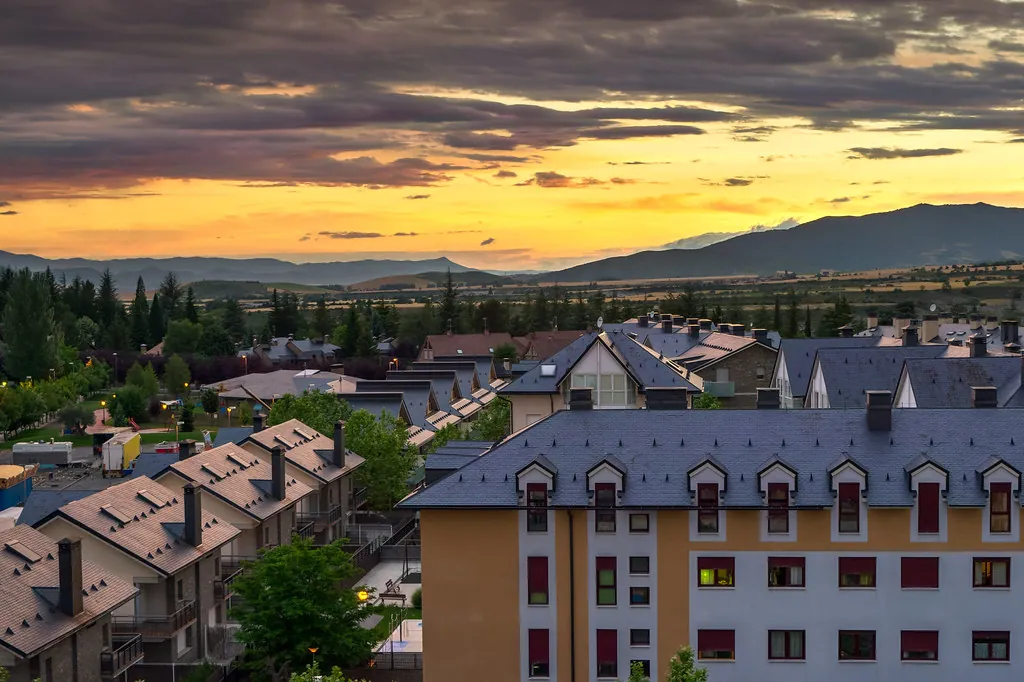
The church bell strikes noon. Nobody appears. A dog stretches outside the stone bakery, paws scattering slate dust. At 1,108 metres above sea level, Bisaurri’s soundtrack is wind in the chestnuts and the faint clank of a tractor two valleys away. The village hangs on a spur of the Sierra de Chía like an afterthought, looking down a throat of forest that runs all the way to the Esera river 400 metres below.
Most motorists barrel past the turning on the A-138, eyes fixed on the ski resorts of Benasque or the postcard gorge at Aínsa. That is the first favour Bisaurri does you: it keeps its own company. Barely 180 people live here year-round, enough to keep one baker, one butcher and a bar that still shuts when the owner feels like it. Their terraces are tiny patches hacked into the slope; the only flat ground is the football pitch, and even that has a two-metre retaining wall at one end.
Stone, Slate and Silence
Start at the top. The lane climbs past houses daubed with marriage dates – 1789, 1823, 1897 – until you reach the Romanesque portal of San Pedro. The church is locked mid-morning; ring the number taped to the door and the sacristan arrives in slippers, carrying a key the size of a croquet hoop. Inside, the air smells of candle stub and mountain damp. The altar retable is 16th-century, gilded but restrained, the colours of autumn leaves rather than carnival. Step out onto the tiny atrium and the whole Ribagorza folds out below: a chessboard of almond terraces, then the serious white teeth of the Central Pyrenees.
Walk back down via Calle Mayor, counting the slate roofs. Some have slipped like badly stacked cards; others carry solar panels bolted on with village pragmatism. Notice the bread oven built into one gable, its mouth blackened since 1924. Peer over the stone trough where women washed until 1973; the water still runs, cold enough to numb knuckles in May. There is no museum, no audio guide, just the gradual realisation that every house is its own exhibit.
Footpaths that Start at the Doorstep
Bisaurri does not do “attractions”; it does paths. The tourist office – a room open three days a week – hands out a photocopied map that looks like a school project, but the waymarks are recent and honest. Within ten minutes you can be among holm oaks listening to nightingales; within an hour you reach the first borda, a dry-stone shepherd’s hut whose roof beams are held by juniper ties smelling of gin. Continue another 45 minutes and the track tops the Coll de Llosas at 1,550 m, where vultures turn so low you can hear the wing creak.
Serious walkers link these threads into a day circuit to the abandoned hamlet of Paúles, returning along the GR-15 long-distance trail. The climb is 600 m, enough to make lungs remember they are on holiday, but the reward is a lunch spot beside a ruined chapel with 360-degree views of Aneto and Posets. In April the slope is painted yellow with broom; by late October the beeches burn copper and the only sound is chestnuts dropping onto moss.
Winter is a different contract. Snow arrives any time after All Saints, and the same lanes become sledging runs for local toddlers. When conditions settle, the forest road to Castillo de Larbés is tracked for cross-country skis; it is not patrolled, so carry avalanche transceiver and check the Catalan weather service bulletin the night before. The village itself sits just below the reliable snowline, which means you can walk to the bakery for croissants while watching skiers carve turns on distant ridges – a cheap ringside seat.
What You’ll Eat (and When)
Forget tasting menus. Mealtimes are dictated by church and field. Order lunch before 15:30 or the kitchen has already scrubbed the pans. Casa Javier, opposite the tiny town hall, serves three things well: cordero al chilindrón (lamb simmered with mild red peppers), estofado de ternera that tastes like a Spanish take on Lancashire hotpot, and a peach-and-almond tart that converts even flan-sceptics. A three-course menú del día costs €16 mid-week; wine is from Somontano, 40 minutes north, and the waiter will top up your glass without asking.
Breakfast is an affair of grey coffee and sponge cake at the Bar Centro. Locals dunk the cake; visitors pretend they meant to all along. If you are self-catering, the Co-op opens 09:00-13:30, reappears at 17:00-20:30, and stocks local sheep cheese wrapped in brown paper. It tastes like Manchevo’s rugged cousin: nuttier, saltier, half the price. Mushroom season (late September if rain has been kind) brings improvised stalls outside front doors; weigh your own porcini, leave cash in the jam jar.
Evening options shut down early. By 22:00 even the streetlights look sleepy. Plan accordingly: buy a bottle of Moristel red and sit on the balcony listening to owls. The village has no nightclub; its idea of nightlife is a neighbour practising the bagpipes for next month’s fiesta.
When the Village Remembers It’s Spanish
San Pedro, the last weekend in June, is still a family reunion rather than a tourist product. The priest processes round the lanes with a statue, children throw rose petals, someone’s uncle grills 200 sausages in the square. You will be offered one; refusal is taken as British shyness rather than rudeness.
August brings the bigger fiesta: foam party in the polideportivo, brass band that manages one octave flat, and a paella pan three metres wide. Half of Zaragoza decamps to second homes, so book accommodation by February. The upside is that café hours extend to a wild 23:30.
Autumn weekends host the mushroom fair. Mycologists set up microscopes in the cultural centre, and you can follow a guided foray for €10 (includes permit). They preach the gospel of “never eat anything with white gills unless you fancy kidney failure”. Even if fungi bore you, the woodland walk is worthwhile.
Getting Here, Staying Over, Not Running Out of Cash
Bisaurri lies 120 km north-east of Zaragoza airport, two hours on the A-138 after you leave the autopista at Barbastro. The final 18 km are mountain switchbacks; keep euros in your pocket because the toll camera on the Huesca ring road does not read UK plates. Car hire is essential: buses from Barbastro reach Graus on weekdays, but the onward taxi costs €35 and the driver expects a phone call the night before.
Accommodation clusters at two price points. In the village, Apartamentos Casa Félix offers two-bedroom flats with wood-burning stoves from €70 a night (minimum two nights in high season). Seven kilometres away, Hotel Castillo de Larbés has a pool, English-speaking reception and doubles from €110 including breakfast strong enough to wake a bishop. August sells out to Spanish families; cancel at short notice and you will still pay 50%. Wild camping is tolerated above the tree line, but fires are banned April-October and the Guardia Civil issue on-the-spot fines.
There is no cash machine. None. The nearest sits in El Pueyo de Araguás, 12 minutes down the hill, and it swallows cards for sport. Bring euros before you leave Huesca or Graus. Mobile coverage is patchy; Vodafone disappears entirely in the upper streets. Download offline maps and screenshot your booking confirmation – the owner of Casa Félix once locked a couple out for three hours while they hunted for signal to prove they had paid.
The Honest Verdict
Bisaurri will not change your life. It offers no “wow” moment, no Instagram splash. What it does give is the slow creak of a stable door, the smell of woodsmoke drifting at dawn, a place where you can still hear your own pulse. Come for three nights: walk in the morning, read on the balcony in the afternoon, argue over which direction the vultures are heading. Leave on the fourth day before the silence starts feeling normal; otherwise you will find yourself pricing slate on the drive back to the airport.