Full Article
about Bisimbre
Ocultar artículo Leer artículo completo
The single-track road into Bisimbre ends at a stone wall where an elderly man in a blue boiler suit trims dead wood from a fig tree. He doesn't look up as the engine noise fades. This is the first lesson of the village: nobody rushes to greet newcomers, mostly because there aren't any. Eighty permanent residents, one parish church, three dirt streets that still turn to caramel mud after rain—that's the complete inventory.
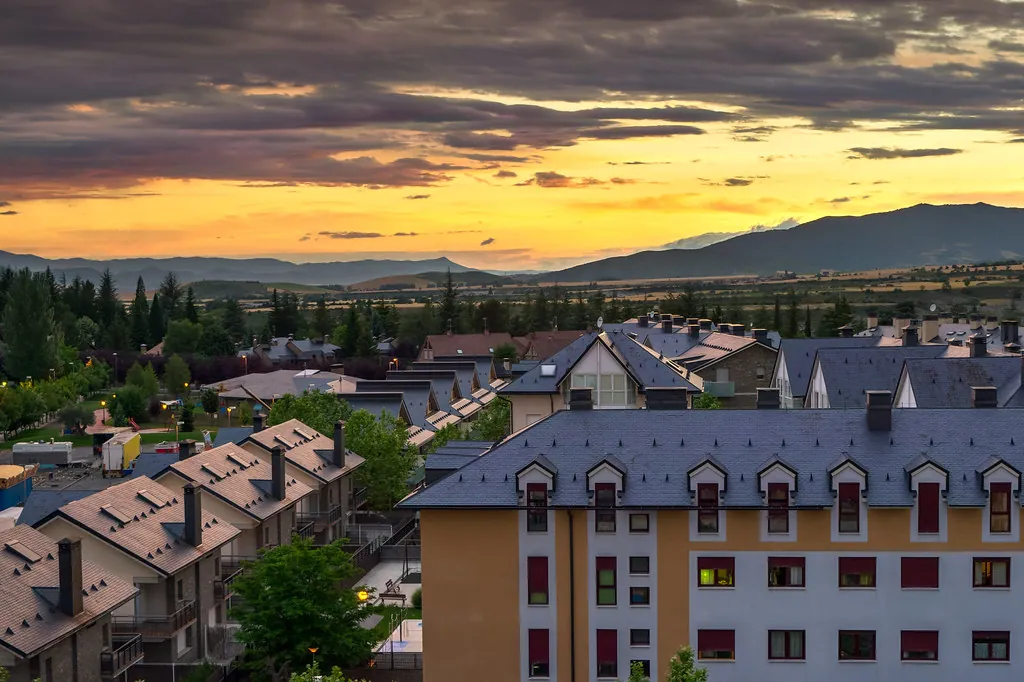
At 320 metres above the Ebro's main channel, Bisimbre sits just high enough for the river mist to miss the rooftops at dawn. The air smells of damp earth and diesel from the morning tractor run; swifts dive between telephone wires that sag under the weight of decades. Stone-and-brick houses shoulder together as if huddling against a wind that never quite arrives. The effect is less "hilltop idyll" than "medieval barnyard survived into the smartphone age"—and that, strangely, is what works.
A Parish, a Plaza, and the Problem of Too Much Quiet
The 18th-century church of San Bartolomé squats at the top of the village rather than the centre: builders followed the rock, not the compass. Its tower carries a single bell cast in 1742; the ring carries two kilometres across the vineyards, far enough for the grafter with the secateurs to know when to down tools for lunch. Inside, the nave is plain lime-wash except for a polychrome crucifix whose paint blistered during the Civil War when a makeshift stable was run in the aisle. Sunday mass is at 11:00; if the oak doors are shut you've missed it for the week.
Opposite the church steps, Plaza de la Constitución measures barely twenty paces across. One stone bench, one persimmon tree dropping fruit that nobody harvests, one bar that opens only on Friday evenings when the owner's nephew is home from Zaragoza. Order a coffee and you will get a glass of Campo de Borja red by default—wine costs less than mineral water here, and tap water tastes of iron.
The village architecture rewards slow looking: Moorish brick arches recycled into later walls, wooden eaves carved with shears and vine shears to advertise the original owner's trade, doorways narrowed in the 19th century so the tax assessor measured a smaller frontage. There is no museum, no audioguide, no gift shop selling fridge magnets. Instead there is the satisfaction of noticing that the lower stones in house number 14 are Roman ashlar, their Latin inscriptions upturned and mortared like a coded joke.
Walking Out Among Lines That Never Meet
Leave by the north track, past the last streetlight that hasn't worked since 2009, and you enter a grid of vineyards owned by three extended families. The DO Campo de Borja planting pattern is ruthlessly geometrical: 2.2 m between rows, 1.1 m between Garnacha vines, each stock head-trained low so the August mistral can whip away mildew. In April the buds are cotton buds; by mid-September the shoulders of bunches blush through bird-pecked skins and pickers move in with yellow plastic crates stacked on trailers hitched to 30-year-old John Deeres.
There are no signed footpaths. What exists is a hierarchy of farm tracks: wide enough for a sprayer, narrow enough for a quad bike, invisible except to those who work them. A polite rule applies: if a gate is closed, close it again; if open, leave it open. Stick to that and nobody minds walkers. The most rewarding circuit heads south-east towards the ruined Ermita de San Pelayo, a single-chapel hermitage abandoned after the 1950s emigration boom. The return track climbs gently onto a limestone rib; from here Bisimbre appears as a taupe smudge floating on a sea of green corduroy, the church tower the only punctuation.
Carry water between May and October—shade is limited to the occasional poplar wind-break—and remember that distances deceive. A tractor moving two kilometres away can take twenty minutes to reach you because the lane zig-zags with the ownership boundaries. Mobile reception is patchy; download an offline map rather than trust instinct.
Eating, or Why Sunday Lunch Means Driving
Bisimbre itself has no restaurant. The Friday bar offers tinned mussels, crisps, and on feast days a vat of migas—fried breadcrumbs with scraps of chorizo—stirred by whoever draws the short straw. Real food happens in kitchens that open onto the street; the smell of roast lamb and rosemary drifts out around 14:30 and disappears an hour later. Politeness dictates you are not invited.
Serious eating requires a ten-minute drive to Fuendejalón (population 1,100, practically a metropolis). There Casa Marta serves chilindrón de cordero—lamb stew reddened with dried peppers—at €14 a portion, and will refill your wine glass from a tapped jug until you place a hand over it. Closer, the roadside Venta de San Julián on the N-122 knocks out bocadillos of grilled longaniza sausage for €3.50; tractor drivers queue at 10:00 for second breakfast.
Vegetarians should lower expectations: even the chips are often fried in pork fat. Coeliacs fare better—Aragón has one of Spain's highest rates of gluten intolerance, so most kitchens stock industrial bread sticks and understand the concept. Bring your own oat cakes if you need fibre; the local supermarket (open 09:00-13:00, closed Wednesday afternoon) stocks tinned asparagus and not much else.
When to Come, When to Leave
Spring works best: mid-April almond blossom has finished, the wheat is ankle-high and luminous, daytime temperatures hover around 21 °C. By July the thermometer kisses 38 °C; the village emptips except for the elderly who sit behind closed shutters until 20:00. August brings the fiesta mayor—one evening procession, one brass band, one foam machine in the plaza, repeated for three nights. Outsiders are welcome, but there is no hotel; accommodation is renting the schoolteacher's flat (two bedrooms, €60 a night, book through the council in Fuendejalón) or sleeping in your hire car.
Autumn means harvest: trailers at dawn, the air sharp with grape must, purple stains on the tarmac. Photographers love the low sun but must ask permission before pointing lenses at workers—many are Moroccan contract labourers who object to being treated as local colour. Winter is simply grey; fog pools in the Ebro valley for days and the village feels like a ship frozen in a cloud sea. Roads rarely ice up, but the wind slices through denim.
Getting Here Without Losing the Will
Bisimbre lies 75 km north-west of Zaragoza. From the UK the practical route is fly to Zaragoza (direct from London-Stansted with Ryanair three times a week), pick up a rental car, and take the A-68 towards Logroño. Exit at Mallén, follow the N-122 for 8 km, then turn left at the sign for "Bisimbre 5 km". The final stretch is asphalt but single-lane; if you meet a vineyard lorry, reverse etiquette favours the local driver.
There is no bus. A taxi from Zaragoza airport will cost around €110—book in advance because drivers prefer longer fares into La Rioja. Cycling is feasible if you like trucks: the N-122 has a narrow shoulder and freight thunders past at 90 km/h.
Leave the village with a full tank; the nearest 24-hour filling station is 18 km away in Alagón. Petrol costs about 10 c/L less than in the UK, diesel slightly more. Phone coverage on Vodafone and EE roams to Movistar; O2 customers get nothing.
The exit strategy is simple. When the church bell strikes seven and the swifts stop screaming, the day is done. Walk back past the fig tree: the man in the blue boiler suit will have gone inside, door shut, lights off. The village gives no farewell, only the hum of a fridge in an empty kitchen. That is how you know it is time to drive away.