Full Article
about Blancas
Ocultar artículo Leer artículo completo
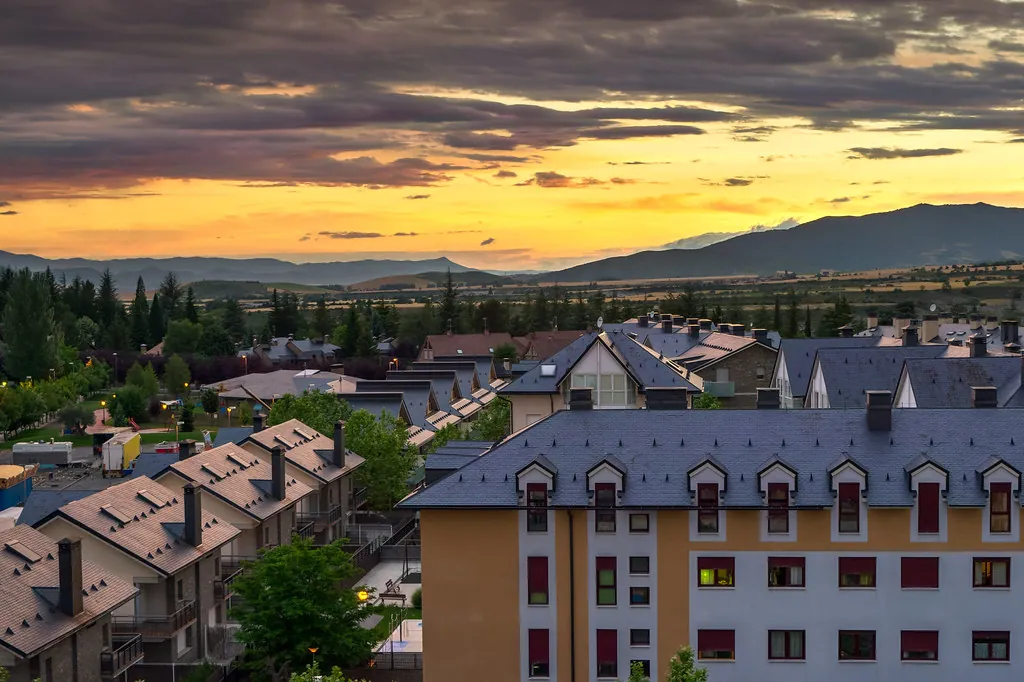
Blancas sits at 1,045 metres above sea level, high enough that the air thins slightly and the horizon seems to stretch forever across the Jiloca comarca. From the village's single main street, the view rolls out in every direction: wheat stubble turning gold in late summer, patches of almond trees, and the distant silhouettes of the Iberian System mountains that frame this corner of Teruel province.
With barely 140 residents, Blancas operates on a different timescale than the coastal resorts or grand cities of Aragon. The church bells mark the hours more reliably than any watch, and the rhythm of agricultural life dictates when streets bustle with tractors and when silence settles over the stone houses. It's the sort of place where strangers are noticed immediately, though not necessarily welcomed with effusive gestures—Aragonese reserve runs deep here.
Stone, Tile, and the Mark of Centuries
The parish church of San Miguel Arcángel dominates the modest skyline, its simple tower visible from kilometres away along the approach road. Built in the 16th century and modestly renovated over the years, it represents the village's architectural ambitions: practical, solid, unadorned. The interior holds a few baroque flourishes—gilded altarpieces and painted wooden beams—but nothing that would trouble the casual visitor for more than twenty minutes.
Wandering the narrow lanes reveals the honest architecture of rural Aragon. Houses constructed from local limestone sit shoulder-to-shoulder, their Arabic tiles weathered to subtle gradients of terracotta and grey. Some properties display careful restoration: new wooden balconies painted deep green, ironwork freshly blackened. Others remain in various states of decline, their ground floors once housing animals now filled with agricultural equipment and decades of accumulated rural detritus. This isn't a film set—it's a working village where beauty and decay coexist without apology.
The municipal boundaries encompass 48 square kilometres of typical meseta landscape. Dry stone walls divide fields that alternate between cereal crops and fallow land. Small copses of Aleppo pine and holm oak cluster in the few areas where limestone outcrops make ploughing impossible. During spring walks, the contrast between cultivated land and natural vegetation creates a patchwork effect that changes weekly as crops germinate and wildflowers bloom sequentially.
Walking, Watching, and Waiting for Rain
The immediate surroundings offer gentle walking rather than challenging hiking. A network of agricultural tracks radiates from the village, passing through fields and connecting with neighbouring hamlets like Monterde de Albarracín, eight kilometres to the north-east. These paths require no technical skill—just reasonable footwear and awareness that shade remains in short supply throughout summer.
Spring brings the most rewarding conditions for exploration. Temperatures hover around 18°C during April and May, wild asparagus appears along track edges, and the air carries scent from blooming almond and cherry trees. Autumn offers similar appeal, particularly during mushroom season when locals scour the pine woods for níscalos and other edible fungi. The unwritten rule: never ask someone where they found their harvest.
Summer walking demands early starts. By 11am during July and August, temperatures regularly exceed 30°C, and the exposed limestone reflects heat back with vindictive efficiency. Water sources remain scarce—carry at least two litres for any walk exceeding two hours. Winter brings the opposite challenge: days remain crisp and bright, but night temperatures drop below -5°C, and the occasional snowfall can isolate the village for days.
Food Without Fanfare
Blancas supports a single bar-restaurant, Casa Pedro, located on the main street opposite the town hall. Opening hours fluctuate seasonally—call ahead during winter months to avoid disappointment. The menu reflects agricultural reality: hearty stews featuring local beans, pork dishes that utilise every part of the animal, and simple preparations of whatever vegetables grow in household gardens. A three-course lunch costs around €12, wine included.
The Saturday market in nearby Calamocha, 25 kilometres distant, provides the nearest opportunity for serious food shopping. Locals make the weekly pilgrimage to stock up on provisions unavailable in village shops—which means most things beyond basic tinned goods and cleaning products. The market's cheese stall sells excellent tronchón, a semi-hard goat and cow's milk cheese that travels well for picnics.
Those self-catering should visit the village bakery, open Tuesday through Saturday mornings. The baker arrives at 5am to fire the wood oven, producing crusty loaves and empanadillas filled with seasonal vegetables or tuna. By 1pm, shelves stand empty—another example of Blancas operating on its own schedule, unconcerned with tourist convenience.
Practicalities and Honest Assessments
Reaching Blancas requires commitment. The nearest major airport lies at Zaragoza, 140 kilometres north—rental car essential, as public transport proves patchy at best. From Teruel, the regional capital, allow 75 minutes driving via the A-23 and local roads that deteriorate noticeably after rain. The final approach involves navigating several kilometres of unmarked agricultural roads; satellite navigation helps, though don't be alarmed when phone signal disappears entirely.
Accommodation options remain limited. The village maintains three self-catering cottages, renovated from traditional houses and booked through the regional tourism office in Teruel. Expect stone walls half a metre thick, wood-burning stoves, and occasional electricity cuts during storms. Prices range €60-80 nightly, minimum two-night stay preferred by owners who've learned that single nights rarely justify the cleaning effort.
Blancas won't suit everyone. Evening entertainment consists of watching elderly residents play cards in the bar, or counting shooting stars during exceptionally clear nights. The nearest cinema sits 45 kilometres away in Teruel. Mobile phone coverage remains sporadic, and WiFi exists only in the municipal building open three days weekly. Rain transforms unsurfaced roads into muddy challenges, while summer droughts can restrict water usage.
Yet for those seeking immersion in authentic rural Spain, where conversations unfold over hours rather than minutes and where the landscape changes subtly with each passing cloud, Blancas offers something increasingly rare. It's a place where British visitors can experience the Spain that exists beyond coastal developments and city breaks—a village that continues its centuries-old rhythms regardless of who passes through, demanding nothing but respecting everything.