Full Article
about Bordalba
Ocultar artículo Leer artículo completo
The Village That Traffic Forgot
Stand in Bordalba's single street at 2am and you'll hear something rare in modern Europe: absolute quiet. No distant motorway, no late-night bar, not even a humming streetlamp. Just the thin air of 1,000 metres altitude and, if you're lucky, a tawny owl somewhere in the encina oaks below.
This hamlet of forty-nine souls sits high in the Iberian System, ninety minutes north-east of Zaragoza. Drivers blast past on the A-2 below, bound for Madrid or Barcelona, never guessing that a turn-off at Calatayud climbs to a place where the loudest noise is your own heartbeat. The road winds 28 kilometres upward, the temperature dropping a degree every few minutes, until stone houses appear like an afterthought on the ridge.
Stone, Adobe and the Art of Staying Put
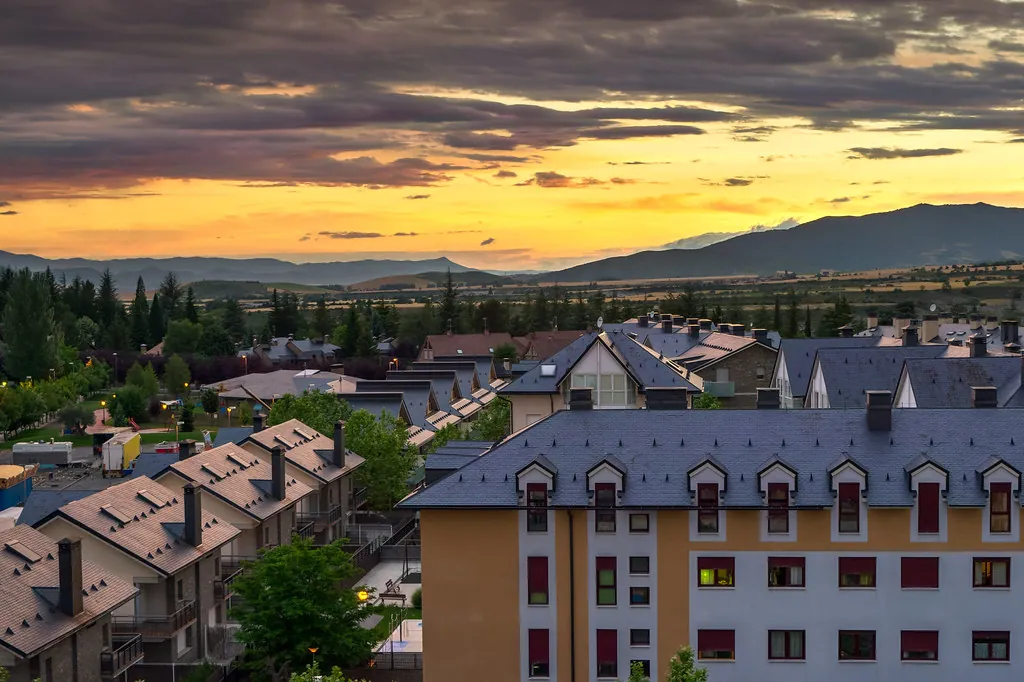
Bordalba's architecture won't make postcards. Walls are thick local stone mortared with mud, roofs tiled in weather-beaten terracotta, balconies sagging under the weight of decades. What it offers instead is coherence: every building speaks the same dialect of necessity. Peer through the iron grille of the fifteenth-century church and you'll see a single nave lit by crude oil lamps; the priest arrives from Calatayud only on the first Sunday of the month.
Walk the lanes at dusk and notice how doorways shrink to human height—built when people were shorter and heat precious. One house has a stone bench built into its façade; an old man in a beret sits there each morning, nodding at strangers without expectation of conversation. His family has occupied the same rooms since 1832, a lineage unbroken by civil war, dictatorship or tourism.
The village ends where the track becomes a shepherd's path. Beyond, abandoned terraces step down the slope like broken stairs. Wheat hasn't grown here since the 1960s; now broom and wild lavender reclaim the soil, filling June air with a scent that makes walkers stop without knowing why.
Tracks for People Who Like Empty Maps
There are no signed trails, no visitor centre, no car park. What exists is a lattice of old drove roads radiating into 600 square kilometres of empty sierra. The most useful is the GR-90 long-distance footpath which skirts the village before climbing to the ruined watchtower of El Castillico—a pile of rubble with a 360-degree view across three provinces.
Set out early and you'll share the path only with Iberian magpies and the occasional wild boar print pressed into the red clay. After forty minutes the hamlet of Villarroya del Campo appears across a ravine, its church bell striking hours you didn't know you were counting. Keep ascending and you reach the Collado del Pino, a wind-scoured pass where snow can lie until April. From here you can drop into the next valley, circle back via an old ice-store cave, and return to Bordalba in four hours without seeing a road.
Winter changes the rules. The access road is cleared sporadically; locals keep shovels in car boots for the final kilometre. When snow drifts across the track, the village becomes an island reached only by 4×4 or on foot from lower villages. Children—there are four—sledge down the main street using feed sacks as toboggans. Electricity cables snap under the weight of frost; everyone cooks on wood until engineers arrive from Calatayud.
What to Eat When There's One Hob
The bar is also the shop, post office and gossip exchange. Open hours are flexible; if the metal shutter is half-down, knock. Inside, three tables, a espresso machine older than the barman, and a blackboard listing three dishes. Migas del pastor arrives as a mountain of fried breadcrumbs studded with chorizo and grapes—carbohydrate designed for men who spent dawn rounding up sheep. The chuletón is a T-bone the width of a dinner plate, served rare unless you protest; knife skills matter because they only own one sharp knife.
Wine comes from Cariñena, twenty-five kilometres north, in glasses that cost €1.80. Locals dilute it with lemonade for a summer drink called "casera" that horrifies visiting Rioja enthusiasts. Pudding might be a slice of borracho, sponge cake soaked in anise and cinnamon, strong enough to make you rethink the drive back down.
Sunday lunch finishes at 3pm sharp. The owner locks up whatever the state of your plate; siesta is non-negotiable. Stock up beforehand—there is no other food outlet within 22 kilometres.
Getting There, Staying Over, Getting Out
Ryanair and easyJet fly direct to Zaragoza from Stansted and Manchester twice weekly in summer. Hire cars wait in the airport car park; ignore the sat-nav shortcut that diverts onto a goat track—stay on the A-2 to Calatayud, then follow the N-234 towards Soria until the brown sign for Bordalba appears.
Accommodation is limited. The village has two self-catering houses restored with UK visitors in mind: thick duvets, Wi-Fi that actually reaches the bedroom, and wood-burners with instructions in English. Expect €70 a night for two, minimum stay two nights. Hosts leave a welcome pack of local ham, eggs from the neighbour's hens, and a note explaining where to find the key when the mobile signal dies.
Bring cash. The nearest ATM is twelve kilometres away in Calatayud, and the bar's card machine works only when Jupiter aligns with the router. Pack a fleece even in August—night temperatures can dip to 8°C—and walking boots with ankle support; the trails are stony and medical evacuation is complicated.
Leave before 10am on checkout day; the baker's van from Torrellas passes then and sells still-warm cocas topped with sugar and anise to anyone flagging it down. It's the closest thing Bordalba has to public transport, and the only lift that will get you to Calatayud in time for the 11:32 train back to Madrid.
Bordalba doesn't do drama. It offers instead a measured dose of silence, stone and spatial memory—enough to reset your urban pulse, not enough to keep you forever. Drive away slowly; the road drops through pine plantations where wild thyme scents the air, and suddenly the motorway roar returns like a radio switched back on. You'll know then that the quiet was real, and that it is already shrinking in the rear-view mirror.