Full Article
about Bubierca
Ocultar artículo Leer artículo completo
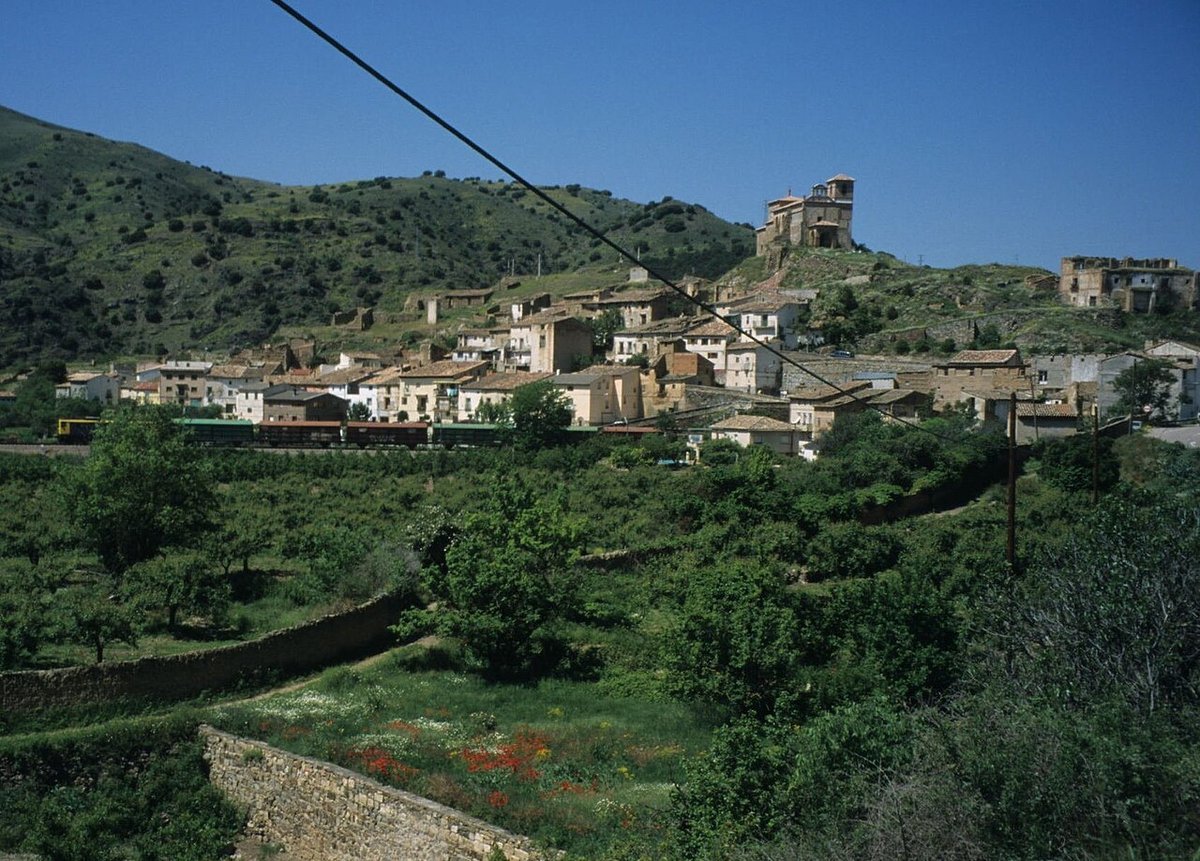
The church bell strikes noon, echoing across stone roofs that haven't seen a full household in decades. Below, a single pensioner waters geraniums on a balcony while her neighbour's house stands shuttered, its wooden door weathered grey, the family name still etched on a rusting plaque from 1923. This is Bubierca at midday in October – not abandoned, not quite alive, but existing in that peculiar Spanish twilight where villages hover between memory and extinction.
At 647 metres above the Jalón valley, Bubierca sits high enough to catch mountain breezes that never quite reach the baking plains below. The altitude matters here. Summer mornings start cool, often misty, before temperatures climb into the thirties by afternoon. Winter brings proper frost, sometimes snow, and the occasional cutting wind that whistles through empty streets. The climate dictates everything: when farmers plant their almonds, when the handful of remaining families shutter up for winter, and when the August returnees arrive to repaint their grandparents' houses.
The Geography of Absence
Drive the A-2 from Zaragoza towards Madrid and you'll spot the turning to Bubierca just past Calatayud. What follows is twelve kilometres of winding mountain road, the A-1502, climbing through scrubland where kites circle overhead and the occasional shepherd still tends goats. The road matters because it's the village's lifeline – and its barrier. When snow closes this route, Bubierca becomes properly isolated. When summer tourists arrive, they come in cars loaded with supplies because they've learned the hard way that the village shop might be shut. Again.
The population board in the town hall reads 64 inhabitants, though that's census fiction rather than daily reality. Perhaps twenty people actually live here year-round. The rest are vecinos who maintain their voting rights, return for fiestas, and keep ancestral homes locked against squatters. It's a pattern repeated across Aragon's comarca of Calatayud – villages that grew around cereal farming, survived Franco's rural exodus, then watched their children depart for Zaragoza, Barcelona, or London building sites. What remains are stone houses built for families of eight, now occupied by ageing couples who rattle around like peas in oversized pods.
What Remains When Tourism Doesn't Come
There's no medieval castle, no Renaissance plaza, no Instagram-worthy mirador. Instead, Bubierca offers something more honest: a masterclass in rural Spanish survival. The sixteenth-century church of San Pedro Apóstol squats at the village centre, its bell tower repaired after Civil War damage, its interior a jumble of Baroque gold leaf and twentieth-century concrete patches where funds ran dry. Step inside during Saturday evening mass – if the priest makes it up from Calatayud – and you'll see faith practiced by twelve worshippers in a space built for two hundred.
Wander the streets and architecture tells its own story. Stone houses from the 1700s sit beside 1950s brick boxes built when someone had a good year with the wheat harvest. Traditional timber balconies – corredores – survive on some façades, their carved supports depicting harvest scenes or religious symbols. Others have collapsed, replaced with concrete or simply left gaping open to the weather. It's architectural evolution without planning permission, a village modifying itself according to need rather than aesthetics.
The agricultural landscape surrounding Bubierca operates on rhythms older than Spain itself. Almond groves turn white in February, their blossom promising income that won't materialise until October harvest. Wheat fields shift from emerald to gold, their yield determined less by modern farming techniques than by whether spring rains arrived on time. Along the Jalón river, poplars mark where Moorish farmers first channelled water a millennium ago. Today, irrigation pumps whir where waterwheels once turned, but the basic crops – cereals, almonds, olives – remain unchanged.
The Practicalities of Visiting Almost-Nothing
Let's be clear: Bubierca challenges conventional tourism. There are no hotels, no restaurants operating regular hours, no souvenir shops flogging fridge magnets. What exists is Casa Rural El Tablar, a renovated farmhouse on the village edge with three bedrooms, proper heating, and a kitchen you'll need because the nearest reliable meal service is twenty minutes away in Calatayud. Book directly – they don't do Booking.com – and bring cash because the village has no ATM. Mobile signal? Vodafone works on the main plaza if you stand near the fountain. EE customers should consider this a digital detox.
The village shop opens Tuesdays and Fridays, 10:00-14:00, selling basics: tinned tomatoes, UHT milk, galletas María biscuits that every Spanish grandmother stocks. Bread arrives Wednesday mornings from the regional bakery van – queue early because when the barra loaves sell out, that's breakfast gone. For proper supplies, hit Carrefour in Calatayud before you drive up the mountain. And petrol? Fill the tank. The nearest station is back down that winding road, and you don't want to negotiate mountain hairpins with the fuel light flashing.
Walking Through Layers of Emptiness
Bubierca's hiking isn't about spectacular peaks or dramatic gorges. Instead, try the six-kilometre loop that follows ancient grain caminos past abandoned cortijos – farmsteads where families once lived alongside their animals. The path starts by the ruined era – the circular threshing floor where entire villages once processed wheat by hand. Walk it in May and you'll pass through fields of poppies interspersed with wild orchids. October brings the scent of almonds drying on tarpaulins beside the track, their harvesters long gone but their crop still curing in mountain air.
Birdwatchers should bring binoculars for the steppe species that thrive where intensive farming never arrived. Calandra larks display over cereal fields, their black underwing patches flashing white in territorial dives. Around the river, nightingales sing from February through summer, their volume undiminished by human presence because there simply isn't any. Booted eagles circle overhead, riding thermals that rise from the valley floor far below. It's not the Pyrenees, but there's something haunting about watching raptors soar above villages where human populations have thinned to almost nothing.
Eating What the Land Provides
Food here follows agricultural reality: pork from pigs fattened on kitchen scraps, lamb from animals that grazed nearby hillsides, vegetables grown in gardens watered by hand during summer droughts. The local ternasco – milk-fed lamb roasted with potatoes – tastes milder than British lamb, its flesh pale pink from a diet of mother's milk and mountain herbs. Migas – fried breadcrumbs with garlic and bacon – originated as field workers' fuel, designed to use stale bread and provide calories for heavy labour. In Bubierca, they're served simply: no fancy presentations, just a mountain of golden crumbs that somehow satisfy more than any Michelin-starred foam.
Wine comes from Cariñena, forty minutes south, where Garnacha vines produce robust reds that cost less than a London pint. Local peaches – canned rather than fresh because they travel better – arrive from the Jalón valley's irrigated orchards. Their syrup tastes of proper summer, the kind that makes you understand why Spanish families endure August temperatures that send British tourists fleeing to air-conditioned hotels.
The Honest Truth
Bubierca won't suit everyone. Some visitors find the silence oppressive, the empty houses depressing, the lack of organised activities baffling. They came seeking Spain's romanticised pueblos blancos and found instead a village fighting demographic extinction with every harvest season. Others discover something rarer: authentic rural Spain unfiltered by tourism departments or Instagram filters. Where grandmothers still sweep their doorsteps at dawn, where farmers pause their tractors to pass the time of day, where fiestas happen not for visitors but for the scattered tribe who return each August to remember who they are.
Visit in late September when harvest dust hangs in golden light, or in early May when almond blossom reflects off whitewashed walls. Come prepared: with supplies, with patience, with an acceptance that Spain's empty quarter operates on its own schedule. Bubierca offers no apologies for what it's become – a village that survived modernity by refusing to adapt to anyone's expectations except its own.