Full Article
about Burbaguena
Ocultar artículo Leer artículo completo
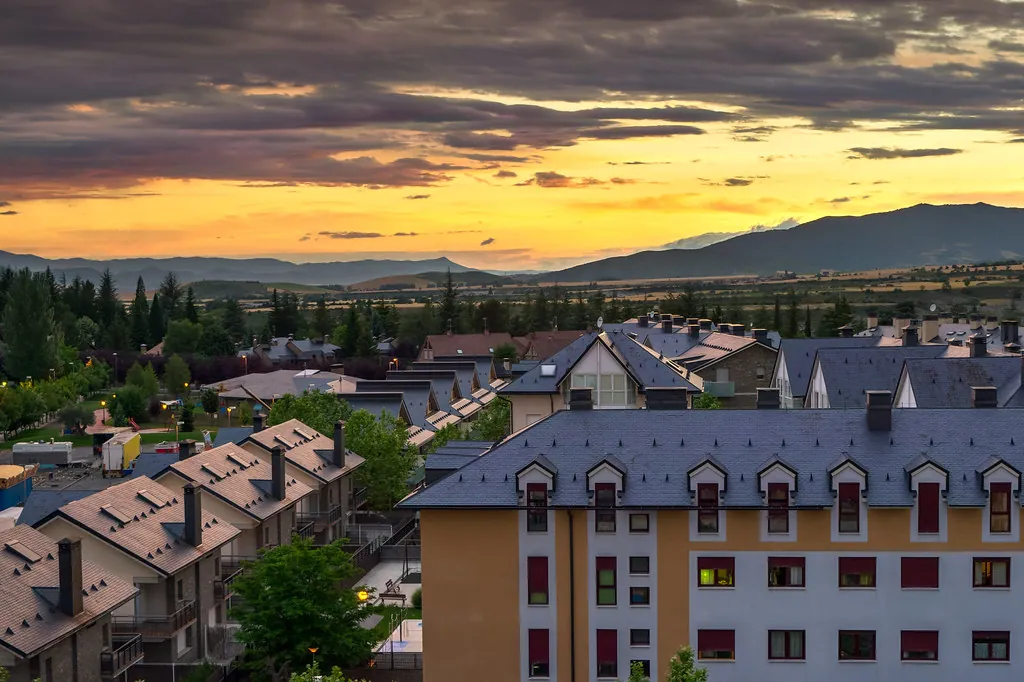
The only sound at 814 metres is the wind rattling loose roof slates. Stand on the stone lip above Burbáguena’s single traffic-calmed street and you can watch weather arrive five minutes before it hits: slate-grey clouds sliding across the Jiloca valley, the first drops darkening the wheat on the western slope, then the faint smell of wet chalk as the storm reaches the houses. At this altitude the air is thin enough to make a Londoner light-headed after two flights of stairs, yet the village itself feels glued to the rock – no ornamental balconies, no postcard plazas, just terracotta roofs the colour of dried blood and walls the colour of whatever the sky is doing.
A Plateau That Forgot to Flatten
Burbáguena sits where the Meseta Castellana remembers it is supposed to be a mountain range. The road from Teruel climbs 400 metres in 25 minutes, corkscrewing through almond terraces until the land suddenly levels out on a high shelf. That shelf is the village: one main street, four cross-lanes, a church tower that doubles as the mobile-phone mast. Park on the ring-road – the streets inside are barely wider than a Tesco delivery van – and walk uphill past houses that turn their backs to the north wind. In January the temperature can drop to –8 °C; in July it hits 35 °C by eleven o’clock. Spring and autumn are the sweet spots, when the thermals read like a Surrey April and the surrounding wheat shimmers from green to gold in the space of a week.
The British instinct is to look for the centre. Burbáguena does not have one. The church, dedicated to the Assumption, squats at the highest point because that is where the rock is thickest; the bar is 50 metres lower because that is where the water table reaches. Between them lies a slope of polished limestone cobbles that turns into a stream every time it rains. Step inside the church and the temperature drops another five degrees; the stone floor is worn into shallow bowls by centuries of farmers genuflecting in hobnail boots. There is no entry fee, no donation box, no postcards – just a printed notice asking visitors to close the door because “the swallows get confused”.
Walking Without Waymarks
Serious hikers expecting way-marked trails will be disappointed. What Burbáguena offers is a lattice of farm tracks that fan out towards the next village, whichever direction you choose. Head south-east on the dirt road signed “Mas de Vidal” and within twenty minutes the hamlet is a smudge of roofs behind you; ahead, the land folds into a series of dry valleys that look like the North Downs until you notice the vultures. The going underfoot is stony but not brutal – a pair of approach shoes suffices – and the gradients rarely top 200 metres. Carry water; there are no fountains once you leave the cultivated ring. A circular loop to Torrijo del Campo and back is 11 km, takes three unhurried hours, and delivers exactly one tree that offers shade.
Birders arrive in late February for the crane migration. The Gallocanta lagoon is 30 minutes away by car, but the cereal steppe around Burbáguena hosts its own suite of larks, bustards and sandgrouse if you are willing to sit still. Dawn is non-negotiable: by ten o’clock thermals blur the horizon and every bird has gone to ground. Bring a scope, a flask of coffee and patience; the reward is a landscape that sounds like a Geiger counter – short, sharp calls bouncing across empty fields.
What Passes for Gastronomy
There is no restaurant. There is a bar, Casa Félix, open when Félix feels like it – usually 08:00-11:00 for coffee, 19:00-22:00 for beer and tapas. The menu is written on the inside of a cardboard box propped against the coffee machine: migas (fried breadcrumbs with scraps of chorizo), chuletón de cordero (thick lamb chop, £12 for two), queso Tronchón (semi-soft, slightly nutty, £6 a wedge). If you insist on vegetables you will be offered roasted red peppers from a jar. Vegetarians have been known to survive on tortilla and beer alone. Payment is cash only; the nearest ATM is 6 km away in Torrijo del Campo, so fill your wallet before you climb the hill.
For self-caterers, the village shop doubles as the post office and opens 09:30-13:30, 17:00-19:30 except Thursday afternoon when it doesn’t. Stock is eclectic: tinned white asparagus, UHT milk, local honey labelled only with a mobile number, and a freezer of breaded squid rings that no-one can explain. The honey is worth the trip – thick, dark, scented with rosemary and thyme, £8 for a kilo jar that fits sideways into a carry-on if you wrap it in a fleece.
When Nothing Happens (and Why That is the Point)
August fiestas last four days, centre on the 15th, and double the population. A sound system appears in the school playground, pumping 1990s Euro-pop until 04:00; residents who left for Zaragoza in 1987 return with London-raised children who speak better English than you. Any other week the highlight is the bin lorry at 09:15 on Tuesday. Photographers complain there is “nothing to shoot” – then spend three hours capturing the way afternoon light grazes the stone doorways on Calle Mayor. The trick is to lower the threshold of interesting: a battered Citroën 2CV parked against a 500-year-old wall becomes a study in rust versus geology; a single stork circling the church tower is an event worth a 300 mm lens.
Mobile reception is patchy. EE drops to 3G on the north side of the street; Vodafone disappears entirely inside the church. Download offline maps before you leave the A-23. The village Wi-Fi password is written on a scrap of paper taped to the bar fridge – it hasn’t worked since 2019, but no-one has bothered to take the note down.
Leaving Without Buying a Fridge Magnet
There is no souvenir shop. The closest thing to a memento is the stamp-sized sticker Félix gives you if you finish the house wine: a black bull silhouette that peels off your jacket the moment you reach Gatwick. Drive back down the hill at sunset and Burbáguena shrinks to a line of ochre against the ridge, indistinguishable from the rock until the first streetlight flickers on. You will have spent very little money, walked further than intended, and eaten more lamb than is strictly wise. The village will forget you by the time your car reaches the main road; the silence, unfortunately, tends to follow you home.