Full Article
about Cabolafuente
Ocultar artículo Leer artículo completo
The church bell strikes noon, yet nobody appears. Forty-nine residents are somewhere among the stone walls, but the only movement is a pair of red kites tilting on the thermals above the cereal terraces. At 977 m in the Sistema Ibérico, Cabolafuente sits high enough for the air to feel thinner, cleaner, and just loud enough for you to notice the absence of traffic.
A village that still keeps its own time
Most maps barely register the turn-off from the A-1506, 35 km south-east of Calatayud. What begins as a decent two-lane road quickly narrows into a wriggling 6 km climb through holm-oak scrub. The last 800 m are concrete, single-track with passing bays; in winter the surface can hold snow long after the valley below has thawed. Leave the car by the stone trough at the entrance—there is no paid parking, mainly because there is no parking at all.
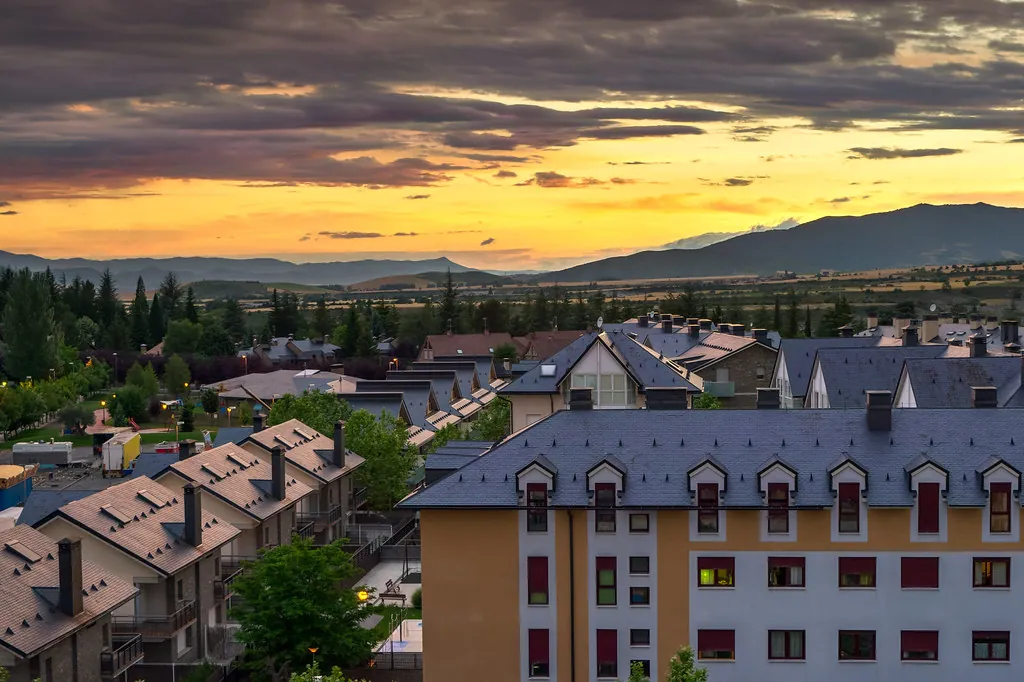
Houses are built shoulder-to-shoulder against the wind, their roofs still weighted with original Arab tiles held in place by stones. Timber doors open straight onto the street; many still have the iron door-knockers shaped like a woman’s hand, a Moorish habit meant to ward off envy. Walk slowly and you will notice temperature drops of several degrees where alleyways funnel the mountain air—natural air-conditioning that locals trust more than any electric unit.
Water, stone and the colour of quiet
The name translates roughly as “fountain-head”, and the village was founded around three permanent springs. Two remain accessible: Fuente de Arriba, reached by a five-minute stone path behind the church, and Fuente de los Frailes on the eastern edge, where shepherd troughs still fill after heavy rain. The water is potable; bring a bottle and you can save yourself the walk back to the car.
Architecture is functional rather than grand. The sixteenth-century parish church of San Pedro has a single-nave plan and a roughly coursed tower you can pick out from any surrounding ridge. Inside, the alabaster font is original; the Civil War bullet holes in the choir stall are not. Sunday mass is held at 11:00, attended—on a good week—by eight people and a dog that refuses to sit on the cold stone floor.
Outside, the village ends almost immediately. Within three minutes you have passed the last house and entered grain plots bordered by dry-stone walls. These plots stop at a sudden drop: the Barranco de la Hoz, a limestone gash 150 m deep whose walls echo with nesting crag martins from March to September. A rough footpath threads the rim, but it is narrow and unfenced—keep dogs and small children on the inland side.
Trails that remember shepherds
The easiest circuit is the 7 km “Ruta de las Fuentes”, way-marked with yellow dashes. It dips into two side valleys, passes both springs and returns along an old drove road once used to take sheep to winter pastures in the Ebro valley. Gradient is gentle, but the path crosses two usually dry fords that can run waist-deep after storms; check the sky before setting off.
Ambitious walkers can link with the GR-90 long-distance footpath, 3 km south of the village. Head east and you reach the abandoned hamlet of Aldehuela—roofless houses, a still-intact stone oven and, bizarrely, a 1993 calendar on one remaining wall. Westwards, the trail climbs to the Sierra de Vicort ridge at 1 420 m, where views open north to the Moncayo massif and south across the Jalón valley. Allow six hours return and carry at least two litres of water; there are no streams above 1 100 m from June to October.
Eating: plan ahead or go hungry
Cabolafuente has no bar, no shop, no bakery. The nearest restaurant is in Codos (14 km by twisty road), open weekends only outside August. Locals recommend telephoning the Bar Deportivo in Villarroya de la Sierra the day before—they will prepare a three-course menú del día for €14 if you commit to a time. Otherwise, pack lunch and buy supplies in Calatayud before you leave the main road.
The village does produce small quantities of mountain honey, sold from a fridge on the porch of number 24. Honour system: take a 500 g jar, leave €6 in the tin. Thyme and rosemary notes dominate; the aftertaste carries a faint bitterness that professional tasters attribute to the local quejigo (Portuguese oak).
When to come – and when to stay away
April–May turns the surrounding hills emerald; wild peonies bloom along path edges and daytime temperatures hover around a dry 18 °C. September offers similar weather plus the grape harvest in the lower valleys, though nights can dip below 8 °C by the equinox—bring a fleece.
July and August are fiercely hot despite the altitude; thermometers can still reach 34 °C at midday. Spanish families occupy second homes at weekends, quadrupling the population and filling the single street with cars whose drivers are unused to reversing. Accommodation is non-existent in the village itself; nearest casas rurales are in Codos and sell out weeks ahead for August fiestas.
Winter brings sharp contrasts. Daytime sunshine can touch 12 °C, but the moment the sun drops behind the ridge the temperature plummets. Snow is common January–March and closes the access road for a day or two most years. Chains are rarely mandatory, yet rental companies in Zaragoza will charge €40 for a set if you haven’t brought your own. The upside: you may have the entire village, the ravens and the wind to yourself.
Getting there without the headache
Ryanair flies London-Stansted to Zaragoza four times a week year-round; Manchester operates May–October only. Pre-book a hire car—on-the-spot rentals at Zaragoza airport are frequently sold out at weekends. From the airport, take the A-23 towards Teruel, exit at km 222 signposted “Codos/Cabolafuente”, then follow the A-1506 for 19 km. The final junction is easy to miss: look for a stone cross and a yellow village nameplate that has faded to the colour of bone.
Public transport is trickier. ALSA runs twice-daily coaches from Zaragoza to Calatayud (55 min, €8.50). From Calatayud railway station you will need a taxi; book the day before through Radio Taxi Calatayud (+34 976 89 22 22). Expect to pay €45–50 each way and agree a pick-up time for the return journey—drivers do not loiter in Cabolafuente.
Parting shot
Cabolafuente will not change your life. It offers no souvenir shops, no Michelin stars, no Wi-Fi in the square. What it does offer is a yardstick against which to measure noisier places: a village where the loudest sound at midnight is the church clock striking twelve, and where, if the sky is clear, you can watch the Milky Way rise above a silhouetted bell-tower without anyone blocking the view. Bring water, bring a map, and bring an appetite for silence. Then drive back down the mountain before the sun melts the frost on the windscreen and you start pretending this was your discovery.