Full Article
about Cabra de Mora
Ocultar artículo Leer artículo completo
At 1,085 m the air thins just enough to make morning coffee taste better. Cabra de Mora sits on a ridge in the Sierra de Gúdar, its stone walls holding back the wind that rolls up from the Mediterranean two hours away. Seventy residents, one church bell, no traffic lights. The village is so small that when the church clock strikes noon even the dogs seem to pause.
The long climb up
Leave Valencia airport early and you can reach the foothills by mid-morning, but the last 25 km drag the journey out. The TE-V-9031 wriggles through pine plantations where wild boar prints cross the tarmac and stone mile-posts still give distances in leagues. Fill the tank at the motorway services outside Teruel; after that the only petrol pump is a hand-cranked relic in a farmer’s barn and it is definitely not for hire.
Winter can shut the road for a day or two after snow, but April to November is usually open. Even so, the surface is patchy: think single-track Scotland with added Iberian sunshine. A cyclist on the Maestrazgo loop once described it as “a 40-minute ascent that feels like a religion test”, which is fair. The payoff is air that smells of thyme and the sudden realisation that your phone has given up searching for signal.
Stone, slate and silence
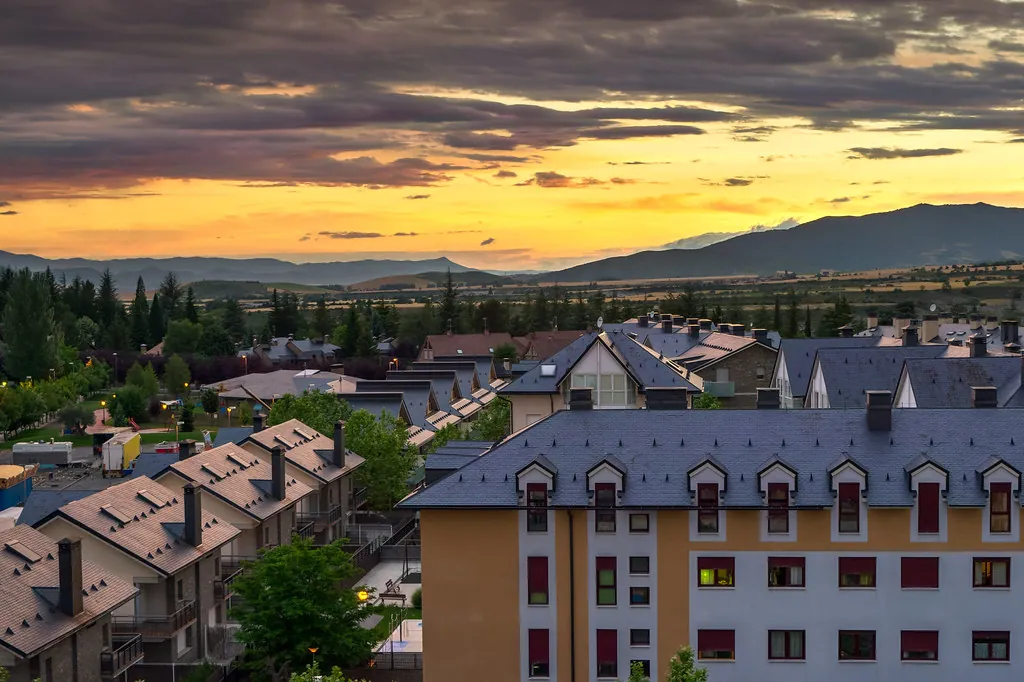
Architecturally the place is stubborn. Houses are built from local limestone the colour of old bone, roofs tiled in dark Arabic slate that sheds the snow. Nothing rises above the church tower, dedicated to San Roque, whose plain stone façade dominates the single plaza. There are no souvenir shops, no boutique hotels carved from convents—just dwellings that have learned to age gracefully.
Wander the two main streets and you’ll pass a communal fountain where locals still fill five-litre jugs. The water is cold enough to numb your fingers even in July, when the valley below is brushing 35 °C. Up here the average July high is 27 °C; nights drop to 15 °C, perfect for sleeping with the window open and no air-con unit in sight.
Walking without waymarks
Maps exist, but the best routes are learned by asking. From the fountain a farm track heads north-east into pinewoods of laricio and Scots pine, then breaks onto open grazing land where sheep wear bells the size of teacups. After 45 minutes the path skirts a limestone escarpment; look down and you’ll see Cabra de Mora reduced to a grey smudge among green waves.
Serious walkers can link into the old mule network that once carried wool to Teruel. A circular to the abandoned hamlet of La Cuba takes three hours, gains 300 m and offers a good chance of spotting roe deer or the outline of a griffon vulture sliding along the thermals. Stout footwear is advisable: the stone is sharp and rain showers arrive without etiquette.
If you prefer pedals to boots, the forest roads are rideable on a gravel bike. Gradient graphs resemble a saw-blade, but traffic is measured in tractors per day. Carry two tubes; thorns from blackthorn hedges have a talent for finding latex.
What passes for lunch
There is one bar, its door painted the institutional green of Spanish primary schools. Opening hours are 08:00–15:00 and 19:00–22:00, closed Mondays out of season. Coffee is decent, and the lomo baguette—thin slices of cured pork loin, tomato rub, no butter—costs €4. Ask for it “sin salsa” if you want to avoid the garlic mayonnaise that otherwise arrives by default.
Evening meals must be booked the previous afternoon. The CabraBerry guest-house will lay on a three-course set menu (€18) if three or more guests fancy it; expect local cheese, a thyme-scented stew and whatever vegetable arrived from the coast that week. Vegetarians are politely accommodated, vegans slightly pitied. The village honey, labelled with postcode and harvest date, makes a portable souvenir; it tastes of rosemary and faintly of pine smoke.
Seasons and solitude
May and June turn the surrounding hills lavender-blue with flowering thyme. Daytime temperatures hover around 22 °C, ideal for walking without carrying litres of water. September and October swap thyme for golden broom and add the bonus of autumn mushrooms—rovellones and níscalos appear after the first storms, and locals will point you toward the spots they’ve already cleaned out.
August belongs to the fiestas of San Roque. Former residents return, numbers swell to perhaps 200 and someone wheels a sound system into the plaza. Fireworks echo off the stone houses at midnight; if you want silence, choose a different week. Conversely, November can feel monastic. Mist fills the valleys, temperatures flirt with freezing and the wood-smoke smell is constant. Bring a jumper and a taste for early nights.
Snow usually arrives between December and March but rarely stays long. When it does the village briefly becomes a sledging resort for Teruel families, the only time parking requires patience. Chains are recommended; the council grades the road but doesn’t rush.
Before you set off
Accommodation is limited to two guest-houses—CabraBerry and La Casa de la Abuela—total eight rooms. Weekends fill up with Spanish couples from the coast; mid-week you may have the place to yourself. Double rooms start at €70 including breakfast (toast, local jam, coffee, freshly squeezed orange juice). Neither property has a television in the rooms; Wi-Fi is adequate for email, patchy for video calls.
Cash is still useful. The bar accepts cards, but the cheese seller at Saturday’s pop-up market does not. There are no ATMs; the nearest is 22 km back down the mountain in Sarrión.
Phone coverage is best on the ridge just above the church—stand near the stone cross and you might manage a WhatsApp voice call. Elsewhere expect one bar of 3G that vanishes when the wind changes.
Worth the detour?
Cabra de Mora offers no postcard moments, no single “must-see” sight. Instead it gives you height, quiet and a chance to remember what travelling felt like before everything needed photographing. If you’re happy to trade nightlife for starlight, and satisfied with a day whose highlight is spotting a vulture at eye level, the detour will feel short. If you need museums, Uber and soya lattes, stay on the coast. The mountain will still be here when you’re ready to slow down.