Full Article
about Calmarza
Ocultar artículo Leer artículo completo
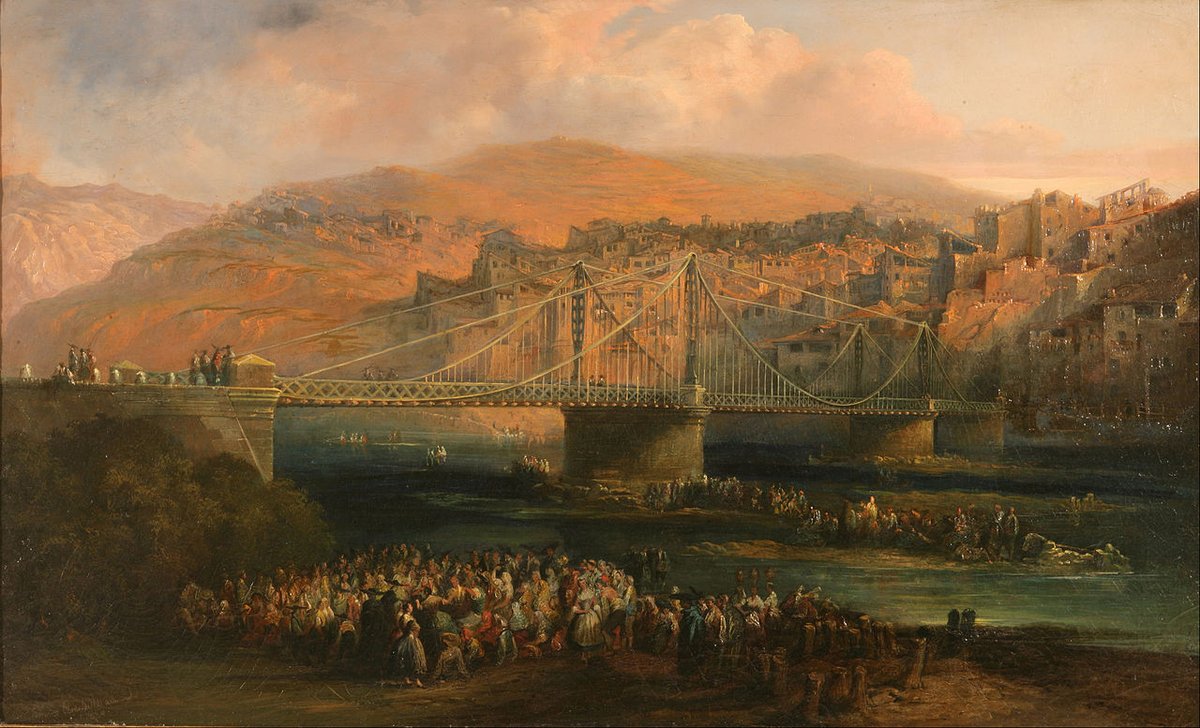
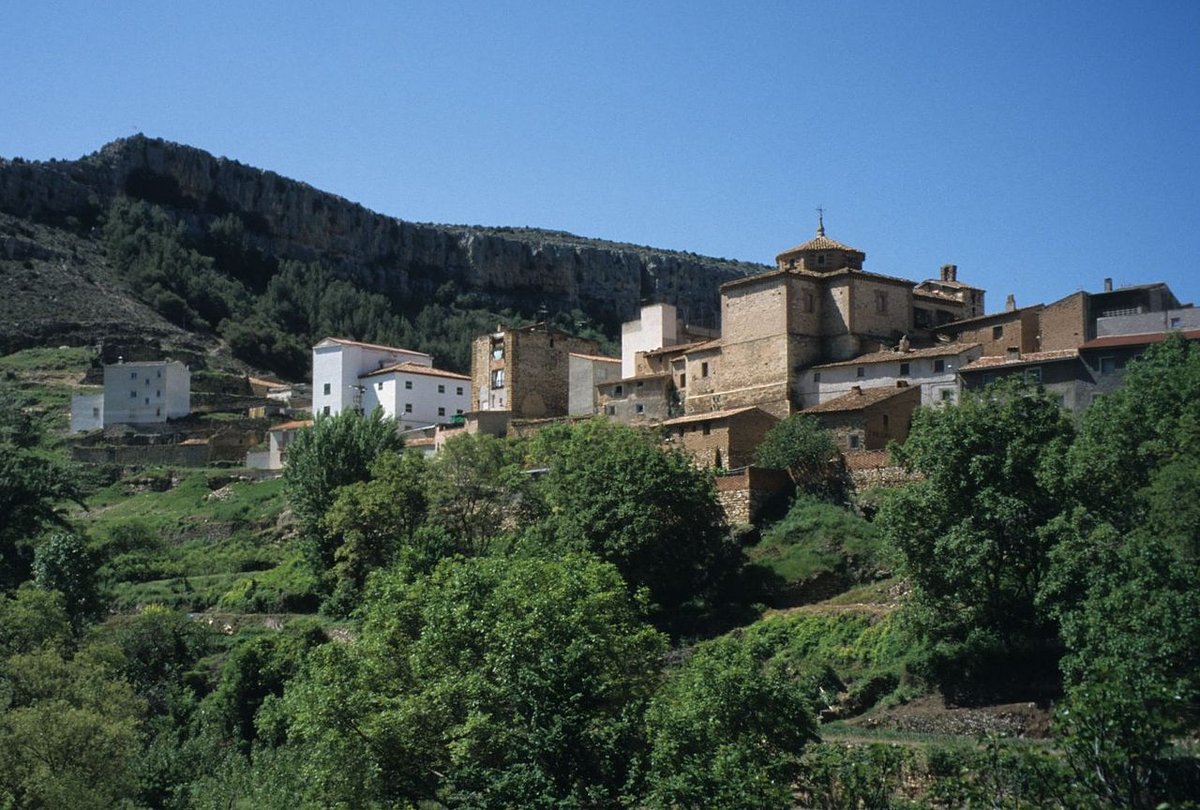
The church bell strikes noon, yet only three souls cross the stone bridge into Calmarza. At 839 metres above sea level, the village floats above the morning haze of the Jalón valley like a ship that forgot to drop anchor. Sixty registered inhabitants, perhaps ten actually here on a weekday. The rest have left for Zaragoza, Madrid, or the afterlife. What remains is a settlement that refuses to become a museum, preferring to nap through the twenty-first century.
Stone, Sky and the Art of Doing Nothing
Aragonese builders knew their craft. Houses grow from the bedrock here, their limestone walls the same colour as the ridge behind. Rooflines sag with dignity; centuries of snow have curved the terracotta tiles into smiles. Windows are small, shutters thick, paintwork mostly gone. Nobody has bothered to restore the ochre wash on Calle Mayor because nobody sells postcards. Walk the single thoroughfare and you’ll pass a bakery that opens twice a week, a bar that may or may not be unlocked, and a fountain where water still tastes of iron and winter.
The plaza measures thirty strides across. Elderly men play dominoes on a stone table scored by weather, speaking in the slow monotone of people who know the next news will arrive tomorrow, or next week. British visitors expecting tapas trails and artisan gin will need to recalibrate. Calmarza offers instead a masterclass in negative space: the pleasure of an empty horizon, the way silence can ring louder than traffic. Bring a paperback, a hat, and the habit of looking up. Griffon vultures circle most afternoons, riding thermals that rise from the barranco.
Paths that Forget to End
Leave the village by the upper track, signposted only with a weather-beaten tile that reads “Ermita”. Within five minutes cereal terraces fall away beneath your boots; the only sound is the crunch of thyme underfoot and, somewhere far below, the Jalón river polishing stones. The trail is a former mule track, its cobbles now loose enough to turn an ankle. No handrails, no interpretive panels, no gift shop. Just oak scrub, rosemary and the occasional stone cross erected after a 1930s landslide took two houses and a mule.
After forty minutes the path splits. Left climbs to a limestone bluff where the valley spreads like a rumpled tablecloth: olive dots, almond flashes, the silver thread of the N-234. Right descends through holm oak to an abandoned hamlet whose name even locals argue over. Roof beams have collapsed inward, ivy claiming the altar of a chapel no bigger than a Cornish bus shelter. Return by the same route or continue south until the track peters out above a gorge; either way, mobile reception vanished the moment you left tarmac.
Carry water. Summer temperatures touch 35 °C by eleven o’clock; in January the wind whistles up from the meseta and finds every gap in your anorak. Spring brings orchid explosions along the banks; autumn smells of damp mushroom and woodsmoke. Proper boots are sensible, though the retired sheep farmer who still grazes forty head on the ridge does the walk in plastic sandals.
Bread, Wine and Whatever’s in the Pot
Food happens when it happens. The bakery (open Tuesday and Friday) sells a dense country loaf that keeps for a week; arrive after 10 a.m. and you’ll queue behind three grandmothers and a Labrador. The village shop closed in 2008, so locals drive twenty minutes to Calatayud for tinned tomatoes and Wi-Fi. What remains is neighbour arithmetic: if three households kill a pig the same weekend, everyone swaps cuts until the freezer is full.
Visitors staying in self-catering cottages sometimes find a cabbage on the doorstep, or a plastic bottle of olive oil labelled only with last year’s date. Accept these offerings; reciprocity is currency here. The nearest restaurant is in Nuevalos, 18 kilometres down the winding A-1512. Menu del día runs to fourteen euros: roast lamb, cardoon in almond sauce, and a glass of Garnacha from the Calatayud D.O. that tastes of blackberries and the slate it grows in. Book ahead on weekends; Spanish families descend from the city to breathe air that doesn’t taste of diesel.
When the Village Remembers How to Party
August changes everything. The population quadruples as descendants return, tents sprout in almond orchards, and someone wires loudspeakers to the church tower. The fiesta honours the Virgen de la Asunción with processions that start at dusk and finish at dawn, fireworks launched from a hillock normally reserved for grazing sheep. Outsiders are welcome but not catered for: bring your own chair, your own glass, and the expectation that breakfast will be served at five in the morning with brandy instead of coffee.
On the final night a foam machine transforms the plaza into a makeshift disco. Teenagers who grew up in Barcelona sing along to eighties pop while their grandparents gossip about who died, who emigrated, who returned with a German spouse. By sunrise the village is quiet again; empty bottles clink as the rubbish lorry makes its weekly round, and Calmarza settles back into its default setting of gentle decline.
Arriving, Sleeping, Leaving
There is no railway station. From Zaragoza–Delicias take the coach to Calatayud (55 minutes, €7.20), then taxi another thirty minutes up the service road; agree the fare beforehand, roughly €35. Hire cars are simpler: A-2 west, exit at km 244, follow signs for Monasterio de Piedra and keep climbing after the tourists turn off. Parking is wherever you can squeeze a Fiesta without blocking a tractor.
Accommodation is limited. Three village houses have been restored as holiday lets; expect stone floors, wood-burning stoves and Wi-Fi that arrives by microwave link from a water tower. Prices hover around €70 a night for two, less if you stay a week. One brings breakfast: coffee, the aforesaid dense bread, and homemade marmalade from figs that spent September drying on a roof. Camping is tolerated on the ridge, provided you pack out tins and don’t light fires between June and October.
Leave early if you must reach Madrid the same day; fog can blanket the valley until ten, and the single-track road down is not the place to discover Spanish lorry drivers treat centre lines as decorative. Better to dawdle. Stand on the bridge one last time and listen: a dog barking somewhere, the creak of a weather vane, the soft thud of figs dropping onto stone. Calmarza will still be here next year, and the year after, though perhaps with fewer inhabitants and one more collapsed roof. Visit before the silence wins completely.