Full Article
about Camanas
Ocultar artículo Leer artículo completo
The first thing you notice is the bell rope. It dangles outside the 16th-century church of La Asunción with no safety cage, no notice, just a frayed length of hemp that still summons the faithful at 08:00 every Sunday. Give it a tug and the clang carries clear across the cereal terraces to the pine ridge 300 m above—sound travelling farther than any mobile signal manages here.
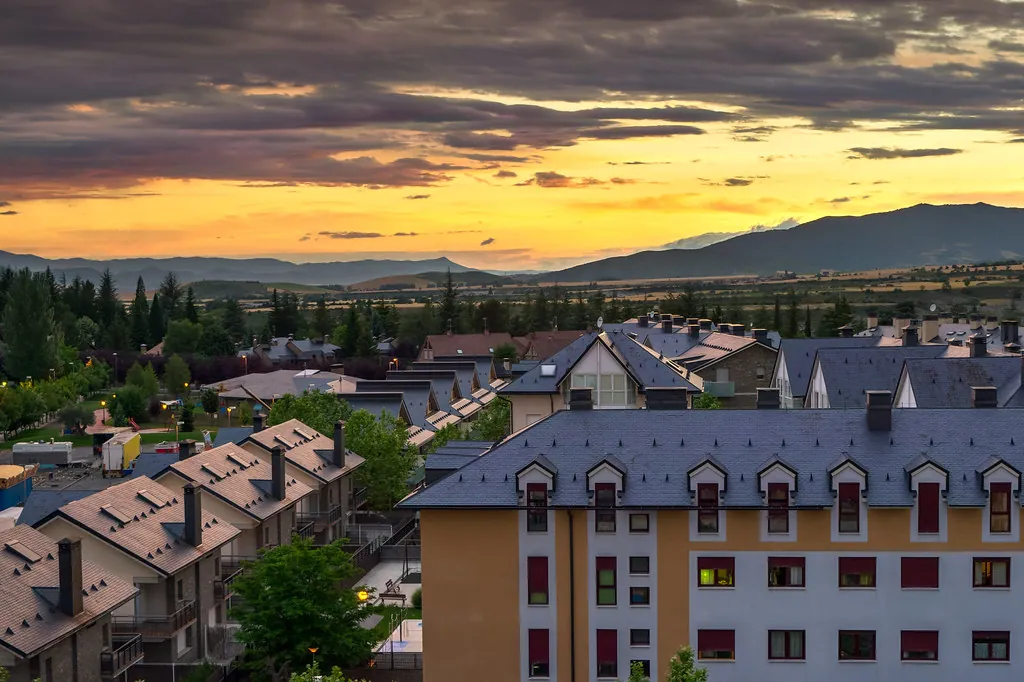
Camañas sits at 1,237 m on the last ripple of the Pyrenees before the land flattens into the Ebro basin. The village count hovers around 137, fewer than the goats you’ll meet on the track up from Jaca. What it lacks in headcount it offers in horizon: step out of the single grocery and you see three kingdoms—Aragon to the south, Navarre westward and France somewhere beyond the blue wall of the ridge. On a sharp spring morning the air carries resin, cold stone and wood-smoke in equal measure; by July the same breeze feels like a hair-dryer and you’ll understand why every house has metre-thick walls and shutters painted the colour of ox-blood.
Stone, Slate and Adobe
No postcard prettiness here—just the honest materials that kept families alive when the nearest doctor was a day’s mule ride away. Granite quoins, slate roofs weighing down the beams, adobe patched with straw and goat dung. The houses stand shoulder-to-shoulder along a single main lane just wide enough for the baker’s van to squeeze through on Saturday. Look up and you’ll see wooden balconies warped into gentle smiles; look down and the pavement is worn into shallow troughs by centuries of hobnailed boots heading to field or mass.
The church interior is equally spare: one nave, no side chapels, a retablo whose gold leaf was stripped during the Civil War and never replaced. Yet someone still freshened the ochre walls last year, mixing pigment with local clay so the colour matches the earth outside. That continuity matters more to parishioners than marble or baroque scrollwork ever could.
Walking Without Way-markers
Officially there are three signed routes that leave the village. Unofficially, every shepherd track is a path if you can read the land. The easiest hour-long loop climbs past the ruined limekiln to the Font de la Teula, a spring that drips even in August and once provided drinking water for pack mules heading over the Puerto de Ibañeta. Take the higher variant and you’ll reach the Collado de Aso after 450 m of ascent; from the saddle the wheat-coloured plains of Aragon spill south like a calm sea while buzzards mew above your head. Stout shoes suffice—there’s no via ferrata—but carry a litre of water per person; shade is limited to isolated pine clumps and the sun at this altitude burns through cloud.
Autumn brings a different palette: stubble fields turn the colour of burnt toast, hawthorns drip with coral berries and the air smells sharp enough to make you walk faster just to stay warm. If you’re lucky you’ll hear the soft whistle of migrating cranes heading down the flyway that bisects the valley. Winter is quieter still. Snow seldom lies thick—this is Spain’s dry belt—but when it comes the single road from Jaca can close for half a day. Locals keep chains in the barn and a freezer full of chorizo; visitors without 4×4 are politely advised to wait for the plough.
What Passes for a Menu
Hunger is the best sauce and Camañas keeps things simple. Bar Restaurante El Horno opens five days a week (closed Mon & Thu) and dishes up whatever Mercabro delivered that morning. Expect migas—fried breadcrumbs laced with garlic and scraps of pancetta—followed by cordero al chilindrón, lamb simmered in mild tomato-pepper sauce that won’t trouble delicate palates. A half-ración feeds two modestly; a full plate could floor a hungry pilgrim. House red comes from Cariñena, costs €2.40 a glass and tastes better than water that has travelled through old copper pipes. Vegetarians get eggs—usually in the form of a potato tortilla thick as a paperback—and salad that may still hold soil from the garden. Pudding is homemade huesos de santo, tubes of almond paste less cloying than most Spanish sweets; order coffee and the waitress will heat milk in the same copper pot her grandmother used.
If the bar shutters are down, the grocery two doors along sells tinned tuna, rubbery but edible cheese and bread that was definitely baked yesterday. Ask for a guindilla and the owner will fish a single pickled chilli from a jar on the counter, wrap it in newspaper and charge you ten cents. That’s the nearest thing to spice you’ll find.
Beds, Bells and Bureaucracy
Accommodation is limited. The municipal albergue has twelve beds in a converted schoolhouse: clean, heated, €8 a night. Catch is access. You need a code released by the ayuntamiento in Jaca, and that office shuts at 14:00 sharp. Arrive late and a handwritten notice sends you to the mayor’s cousin who keeps the key but lives 6 km out and drives slowly. Phone numbers on the door sometimes work, sometimes don’t—patchy 3G is the village’s only internet flavour. Bring cash: no card machine, no deposit box, just an honesty jar for donations.
Alternative is Casa Rural La Carreteria, three doubles in a 17th-century manor with stone staircases wide enough for a bishop’s robes. Rooms are €55 midweek, breakfast €7 extra. The track is graded but rough; after rain taxis from Jaca refuse the final 800 m and you’ll walk it with your wheelie bag bouncing like a badly packed parachute. Both places close entirely from mid-December to mid-January while owners head to coastal flats—winter solitude here is absolute.
Getting There, Getting Out
Public transport exists, just. Weekday ALSA coach from Zaragoza–Delicias reaches Jaca at 15:15; connect with the local bus that leaves Plaza de Biscós at 16:00 and rattles into Camañas forty-five minutes later. One service, no exceptions. Miss it and a taxi costs €35—if you can persuade the driver to climb. Saturday bus shifts to 10:00; Sunday offers nothing at all. Drivers should leave the A-23 at Puente la Reina, follow the N-240 to Jaca, then take the A-1601 for 24 km of bends. Petrol last chance is Jaca; next pump is 70 km away in Pamplona territory.
The Honest Season
Come in late April for orchids among the wheat stubble and night skies so dark you’ll see the Orion Nebula with bare eyes. May adds colour but also the north wind—bring a fleece. July and August bake; villagers retreat indoors after 12:00 and dogs lie motionless in the single patch of shade cast by the church tower. September eases the heat and returns birdlife; October can gift T-shirt days but frost at dawn is normal. Whatever the calendar, carry a light jacket after 18:00—altitude turns evenings brisk even when the day felt Saharan.
Camañas will not change your life. It offers no souvenir beyond the echo of a bell you rang yourself, no story grander than the one about the limekiln that supplied mortar for Jaca’s cathedral. Yet for walkers on the Camino Aragonés, or for anyone who suspects real Spain might still exist somewhere above the Costas, this ridge-top scatter of stone is a useful reminder that small places keep large silences—and that sometimes the best thing a village can do is simply stay there.