Full Article
about Campillo de Aragon
Ocultar artículo Leer artículo completo
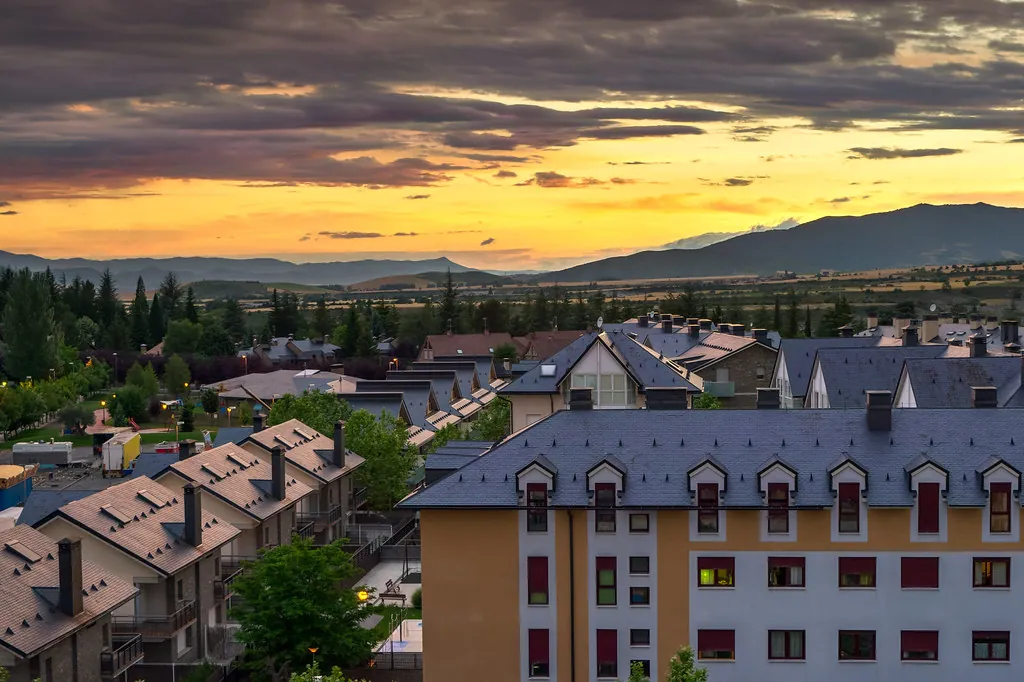
At 1,040 m above sea level, the wind arrives earlier than the visitor. It slips across the cereal plains of the Jiloca high plateau, rattles the few streetlights and reminds anyone on the single pavement that Campillo de Aragón answers to weather, not to timetables. The village—127 permanent souls, one church, no hotels—keeps its back to the Sierra del Pobo and its face turned firmly towards the soil. This is not a backdrop; it is a working grain depot that happens to let outsiders in.
Stone, Adobe and the Smell of Thyme
The built fabric is modest, honest and ageing gracefully. Granite footings rise into adobe walls the colour of dry biscuits; rooflines sag like well-worn saddles. The 16th-century parish tower, patched with brick after an 18th-century lightning strike, is still the tallest thing for 30 km. Walk the two principal lanes—Calle Mayor and the unnamed lane that dog-legs towards the grain store—and you will pass wide timber doors strong enough to admit a mule cart, iron knockers shaped like rosemary sprigs, and the occasional 1950s Coca-Cola advert fading on a gable. Nothing is staged; curtains twitch because neighbours, not tour guides, live behind them.
Outside the nucleus, stone threshing circles dot the surrounding fields, their radii measured by the length of a wooden flail. In late June, harvesters leave neat monoliths of straw the size of garden sheds; by August the stubble resembles a close-cropped beard and the air smells of resin and dust. Climb the low hill south-east of the cemetery and the whole theatre becomes visible: a brown-green chessboard of wheat and barley, scattered holm oaks like solitary pieces, and the corrugated tin roof of the cooperative glinting in the sun.
Walking Without Waymarks
There are no ticketed attractions, which is why walkers bring their own purpose. Farm tracks strike out towards the Sierra del Pobo, following the dry stone walls that separate crop from grazing. A serviceable loop of 8 km heads south past the abandoned cortijo of Los Llanos, then cuts back along the Cañada Real Soriana, the ancient drove road still used by shepherds moving sheep between summer and winter pastures. Spring brings purple flashes of viper’s bugloss; after rain, the path turns to ochre glue that cakes boots and tyres alike.
Because paths are unsigned, a mobile map is prudent. More reliable still is conversation: stop at the petrol-blue Ford parked permanently outside the pharmacy-kiosk and ask Julián—he farms 200 ha and knows which gates must stay shut to keep merino rams from ewes. Mention the stone bridge at El Arco and he will tell you it was rebuilt after the 1937 floods, then point out the detour that saves a kilometre.
For something sterner, drive 20 minutes to the head of the Barranco de la Hoz. The gorge narrows to two arm spans, its walls ribbed like cathedral vaults. A scramble along the stream bed ends at a waterfall that flows only after snowmelt; in high summer the pool is reduced to a collar of white limestone, but the temperature stays ten degrees cooler than the plateau above.
Eating What the Matanza Gave You
There is no restaurant, so provisions must be planned. The tiny supermarket opens 09:00–13:00, closes for siesta, then unlocks 17:00–20:00. Inside: tinned white beans from Fuentes de Ebro, paper-thin jamón serrano sealed in plastic, and vacuum-packed morcilla that keeps without refrigeration. Pair with a bottle of Cariñena red—£3.40—and you have the raw materials for a caldereta, the local lamb stew designed to stretch one joint across six stomachs.
Should you prefer someone else’s kitchen, drive 19 km to Munebrega, where Casa Rural La Mañica serves migas—fried breadcrumbs laced with garlic and grapes—on Saturdays if you book before Thursday. Closer still is the roadside venta at Villarroya del Campo, open weekends only; the owner, Charo, plates grilled pork ear with a paprika glaze that stains fingers and napkins alike. Ask for the homemade churros; they appear only when her nephew is home from college in Calatayud.
When the Village Swells to 400
Festivity is brief but intense. The fiestas patronales around the 15 August long weekend triple the population. Returning emigrants park hatchbacks along the wheat stubble, string bunting between balconies and stage a paella contest in the plaza. At 23:00 the brass band from Calatayud strikes up; by 01:00 the single policía local has given up trying to redirect traffic and simply watches the proceedings with arms folded. Fireworks are low-budget—one rocket hissed sideways in 2022 and ignited a stook—but nobody leaves until the chocolate con churros runs out at dawn.
Winter reverses the script. January brings the Romería de San Blas, a 3 km procession to an open-air shrine. Participants swap summer espadrilles for hunting boots; thermoses of anise-flavoured coffee circulate. The priest says a brief mass, then everyone hikes back before the north wind drives temperatures below –5 °C. Snow is not guaranteed, but when it arrives the village turns sound-proofed and bright, and the only tyre tracks belong to the weekly bread van.
Getting There, Staying Warm, Leaving Again
Campillo sits 95 km south-west of Zaragoza airport, served by Ryanair from London Stansted three times a week in summer. Hire cars queue directly opposite arrivals; allow £110 for four days. Take the A-23 towards Teruel, peel off at the sign for Calatayud-Daroca, then follow the N-234 for 38 km of empty plateau. The final 12 km are local road: single track, no cats-eyes, occasional sheep. In winter carry snow chains; frost can persist until 10:00.
Accommodation is the limiting factor. Inside the village boundary you have one option: the Airbnb cottage “Casa de Campo”, two bedrooms, wood-burning stove, Wi-Fi that falters when the microwave runs. Nightly rate £70, but only four reviews—book early or risk a 40 km night drive from Daroca. Bring slippers: traditional floors are tiled and cold once the sun drops.
Cash machines are equally scarce. The nearest reliable ATM is in Daroca (36 km), so fill your wallet before you leave Calatayud. Fuel is not a problem: the cooperative sells agricultural diesel from a pump, but standard unleaded requires a 25 km detour to Monreal del Campo.
The Part They Never Promise
Silence here is not poetic; it is absolute. At 03:00 you will hear either a dog three valleys away or your own pulse. Mobile reception downgrades to 3G when the weather flips, and Netflix buffers endlessly. If the cottage boiler fails, the owner arrives with a wrench, not a replacement circuit board. You may be woken by a mechanical drone—farmers start seeding at dawn—and the smell of fertiliser is pungent, not pastoral.
Yet for travellers who can swap entertainment for observation, Campillo repays in small, unrepeatable units: the sight of white stilts migrating above the threshing circles; the moment a neighbour wordlessly hands over a handful of fresh peas; the realisation that the village clock strikes only twice an hour because the mechanism dates from 1932 and nobody sees the need to mend it.
Drive out at sunrise, thermos wedged between seats, and the plateau glows bronze. The cereal heads sway like commuters on the Tube, only here the movement is governed by wind, not timetables. Then you understand why people stay, or why they leave and still return every August. Campillo de Aragón offers no souvenir shops; it offers the rarer chance to calibrate your own rhythm against something older and slower. Take it or leave it—the village will not mind either way.