Full Article
about Canada de Verich
Ocultar artículo Leer artículo completo
The church bell strikes eleven and nobody looks up. Not the farmer loading almonds onto his trailer, not the two men sharing a cigarette outside Bar Gobli, certainly not the elderly woman who has been sweeping the same square since 1987. In Cañada de Verich, time isn't measured by clocks but by harvests, and the harvest ended three weeks ago.
A Village That Forgot to Shrink
At 738 metres above sea level, on a plateau where the Ebro Valley finally runs out of steam, ninety-seven souls cling to a landscape that once supported thousands. The Romans passed through here, leaving coins and olive presses. The Moors stayed longer, teaching locals how to coax wheat from thin soil and build houses that breathe in summer and hunker down in winter. What remains is a masterclass in architectural honesty: stone walls two metres thick, timber beams darkened by four centuries of woodsmoke, and roofs angled precisely to shrug off the ferocious wind that arrives every afternoon without fail.
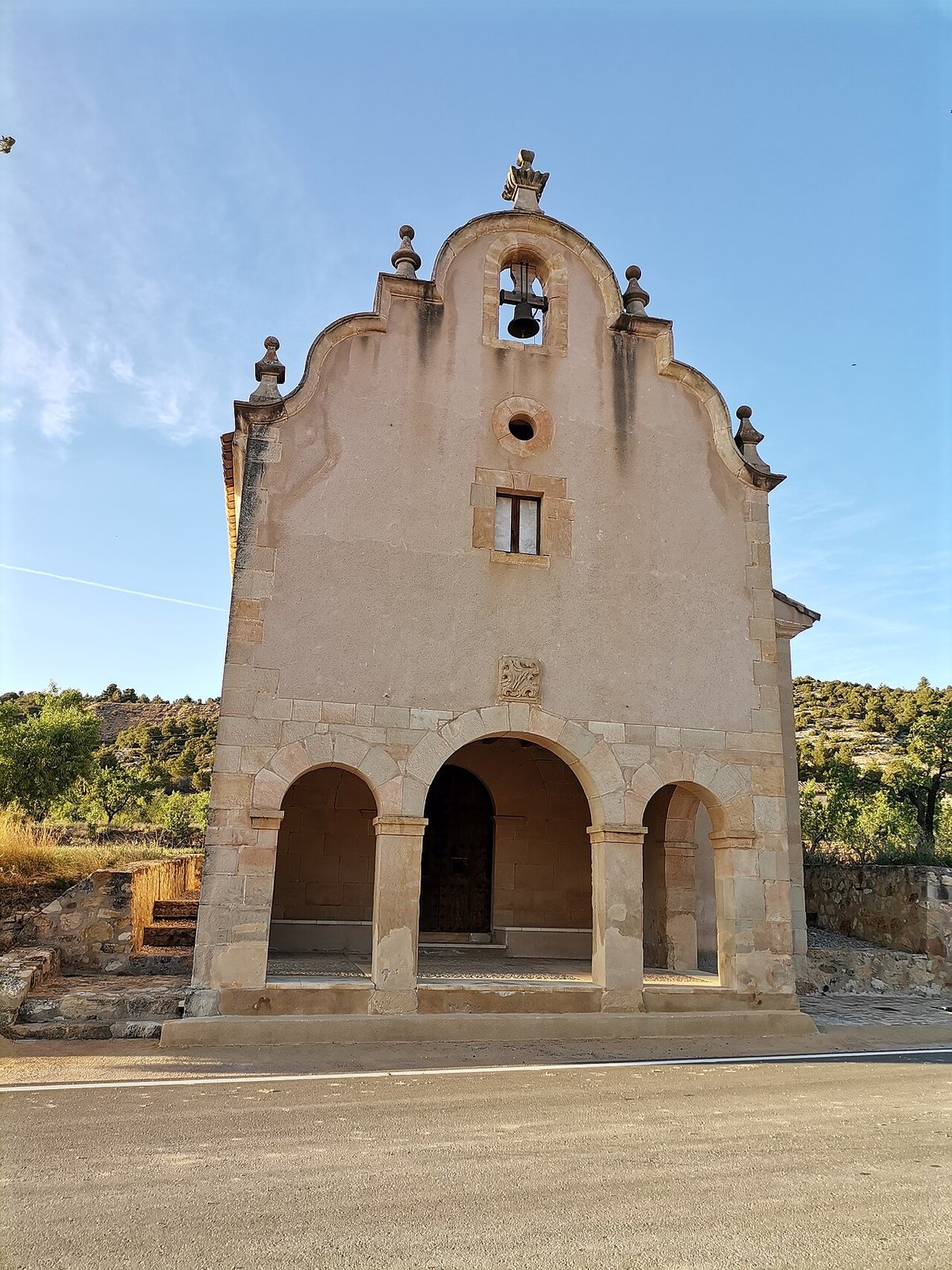
The village proper takes twenty-three minutes to circumnavigate at funeral pace. Start at the church of San Miguel Arcángel, its medieval bones dressed in 18th-century stone, and wander clockwise. Past the former school, now a repository for broken agricultural machinery. Past houses where satellite dishes bloom like metallic fungi against ancient walls. Past the cemetery where iron crosses list at angles that would give a British health-and-safety officer palpitations. Complete the circle and you're back where you started, though the farmer has driven off and the sweeping woman has moved inside to make coffee strong enough to wake the dead.
The Art of Seeing Nothing
British visitors arrive expecting Instagram moments and leave puzzled by their own contentment. There's no castle to conquer, no Michelin-starred restaurant to tick off, no artisanal gin distillery run by expats named Hugo. Instead, there's the slow revelation of a landscape that changes hourly. Winter strips everything back to bones: almond trees like black lightning against pale earth, the distant ridge of the Iberian System sharp as a paper cut. Spring arrives overnight, a week of warmth transforming the same trees into clouds of white blossom that smell faintly of honey and almonds. By June the wheat stands waist-high, moving in waves that make the plateau look like a golden sea. October brings harvesters that work through the night, their headlights creating alien crop circles in the darkness.
The real attraction lies in learning to look properly. Take the track south towards La Puebla de Híjar at 6:30 am and you'll share the road with a shepherd moving 200 sheep across asphalt still warm from yesterday's sun. His dogs work in silence, border collies whose lineage traces back to imports brought by British miners in the 19th century. Stop - he'll nod but won't break stride. Listen and you'll hear the soft percussion of hooves, the rasp of wool against wool, the occasional guttural comment in Aragonese that might be sheep-talk or might be the shepherd wondering what kind of fool walks anywhere at this hour.
Practicalities for the Unprepared
Let's be clear: Cañada de Verich is not for everyone. The nearest supermarket sits 28 kilometres away in Alcañiz, a drive that feels longer because every kilometre looks identical until you know what to notice. The village bar - singular - opens when the owner feels like it and serves a menu that changes according to what's in his freezer. Thursday might bring migas, breadcrumbs fried with garlic and grapes, a dish that sounds like poverty food until you taste how the bread absorbs olive oil like a sponge turning to velvet. Friday could mean roast lamb that falls off the bone at the mere suggestion of a fork, served with potatoes that taste faintly of the earth they were pulled from that morning.
Motorhome travellers have discovered the free aire on the village edge, six pitches with electricity that works unless everyone decides to charge their devices simultaneously. The British couple who arrived last September in a converted Transit hadn't planned to stay three days. "We pulled in for lunch," explained the woman, making tea with water boiled on a gas ring, "then the mechanic in Alcañiz said our fan belt needed ordering from Zaragoza. Next day we walked to the Roman aqueduct - three hours there and back, saw nobody. Day after we helped with the almond harvest. Got paid in nuts and homemade wine." They left with twenty kilos of almonds and an invitation to return for Christmas.
When the Weather Turns
Summer here isn't the gentle warmth of an English July. It's an oven that hits 38°C by eleven o'clock and stays there until the wind arrives, sudden and violent, flipping parasols and filling eyes with grit. Smart visitors adopt the Spanish rhythm: movement before 10 am, siesta until 5 pm, activity stretching past midnight under stars so bright they cast shadows. Winter brings the opposite problem. The plateau freezes solid in January, the road from Alcañiz becoming a luge track decorated with abandoned lorries. Locals stockpile wood in October and don't emerge properly until March, communicating through smoke signals from chimneys that never go cold.
Spring and autumn offer the sweet spot, though spring carries its own warning. May can deliver every season in a single day: frost at dawn, t-shirt weather by lunchtime, hail at tea-time, perfect calm by evening. The elderly man who runs the petrol station in nearby Calanda - "runs" being optimistic since he opens approximately four hours daily - keeps a chart recording weather patterns since 1964. "Nineteen seventy-two," he'll tell you, stabbing at a page with a finger missing its last joint, "snowed in June. Killed all the almonds. We ate rabbit for three months." He says this with satisfaction, as if personal hardship confers membership to an exclusive club.
Leaving Without Really Going
The British habit of collecting experiences - cathedral tick, castle tick, tapas tick - doesn't work here. Cañada de Verich gives you nothing except what you bring patience to find. Drive away and you'll carry nothing more substantial than the memory of absolute quiet broken by a lark, or the taste of almonds so fresh they still contain last year's sunlight. Six months later you'll wake in Croydon or Carlisle and remember suddenly how the plateau looked from the cemetery, forty kilometres of empty rolling towards mountains you couldn't quite see, and realise the village gave you exactly what you didn't know you needed: proof that places still exist where nobody knows or cares what a TikTok is, where dinner depends on what grew that year, where the same families have been intermarrying for so long that everyone's nose carries the same distinctive bump.
Return visits become compulsory. The sweeping woman will still be there, though she'll have aged five years while you aged one. Bar Gobli might have closed forever or might have expanded into the adjoining house - nobody knows until it happens. The almonds will alternate between abundant and absent, following cycles that predate your grandparents and will outlast your grandchildren. Cañada de Verich continues regardless, a small defiance against the modern conviction that progress equals improvement, offering instead the radical notion that enough might actually be enough.