Full Article
about Candasnos
Ocultar artículo Leer artículo completo
The A-2 slips past Candasnos at 120 km/h, a ribbon of tarmac that links Barcelona to Madrid and carries most British traffic straight past the village exit. Pull off, however, and the motorway roar drops away to reveal something Spain rarely markets: a working cereal town whose skyline is still a concrete grain silo, not a medieval tower. At 283 m above sea level the air feels thinner than on the coast, the light sharper, and the horizon so wide it seems to bend.
What the map doesn’t mention
Candasnos sits squarely in the Bajo Cinca comarca, forty minutes south-east of Zaragoza and light-years away from the Costa image most UK drivers carry in their heads. The 418 inhabitants live scattered along a grid of dusty lanes that end abruptly in wheat stubble or almond groves. There is no old town, no fortified core, just low houses the colour of biscuit, their timber beams painted the same green Aragón has used since the 1950s. The parish church of San Pedro Apóstol raises a modest brick tower; from the top you can count the tiled roofs in under a minute, then stare across the steppe until the heat haze swallows the Pyrenees.
British bikers use the place as a cheap overnight on the haul to Valencia: the Hotel A-2 (yes, that’s its name) charges €45 for a double, including a garage bay where you can chain up a Triumph without worrying. The rooms overlook not a plaza but the truck parking area; at 05:30 the refrigerated lorries start up like a brass band tuning up. Bring ear-plugs or treat the noise as an alarm clock.
Eating (or not) beside the motorway
Spain’s lowest-scoring eating spot – the Los Monegros service-area cafeteria – squats on the west-bound side, its TripAdvisor rating stuck at 1.7/5. Brits queue for coffee anyway because the alternative is another 70 km to the next outlet. The “full English” costs €7.50 and arrives with bacon the colour of sun-dried tomato; the fried eggs are cooked on one side only, Spanish-style. Safer options: churros (€1.40 a pair) and a cortado made with UHT milk that tastes oddly nostalgic, like school trips to France in the 1990s.
If you want food that hasn’t seen a freezer lorry, drive the 400 m into the village. Bar El Cierzo opens at 07:00 for farmers and closes when the last customer leaves. Order the migas – fried breadcrumbs laced with sausage fat and grapes – and the landlord will insist on pouring a splash of local Somontano wine into your glass, free “for the throat”. Lunch is served until 15:00 sharp; after that the stove goes off and the television switches to horse-racing from San Sebastián.
Walking where the larks outnumber the people
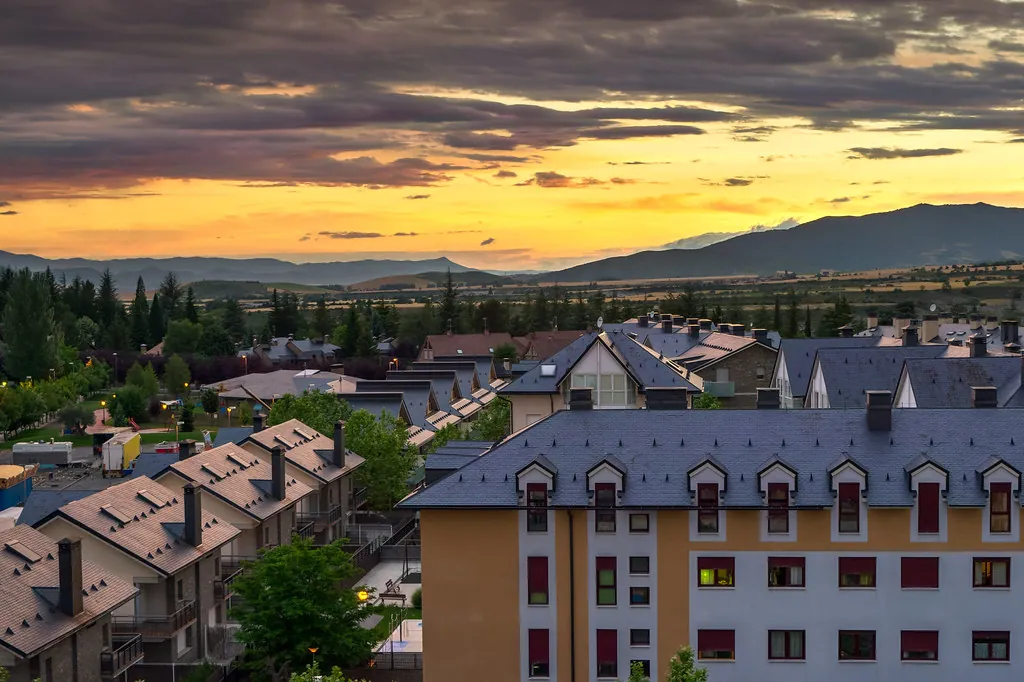
Step beyond the last street lamp and you are in cereal ocean. The GR-99 long-distance path skirts the village, but most visitors simply follow the farm tracks south toward the 0°-meridian marker – a waist-high monolith that announces you are standing on London’s longitude line, give or take a few metres. Sunsets here arrive with a slow fade that turns the wheat gold, then copper, then the colour of strong tea. Photographers plant tripods in the stubbly earth and wait; the only sound is the wind rattling the power lines and the occasional tractor grinding home for supper.
Birders come for Dupont’s lark, a bird that sounds like a squeaky gate and refuses to show itself unless the temperature is above 28 °C and the wind below 10 km/h. Even without the star species the plains deliver: calandra larks rise in song flights, little bustards stalk the fallow, and red kiles circle over the irrigation pivots. Bring a scope and patience; shade is non-existent and the nearest loo is back at the service station.
Meridian zero, wine one
Candasnos’ other claim to cartographical fame is the abandoned grain silo beside the old N-II, its flank still painted “Km 0” in flaking white. Climb the external ladder (at your own risk – no safety rail, no mobile signal) and you can see the silhouette of the hotel, the church tower and, on clear April mornings, the snow-dusted Pyrenees 150 km away. The concrete radiates heat after midday; touch it with bare skin and you’ll understand why harvest starts at dawn.
Down at road level the Repsol fuel station sells Somontano reds for €4.50 a bottle – the same label fetches £9.99 in Waitrose. The cashier will uncork one for you if you buy two plastic cups; drink them beside your car and watch the articulated lorries swap drivers. It is the cheapest vineyard tasting in Spain, with exhaust fumes instead of cellar notes.
When to bother, when to drive on
Spring brings colour: poppies puncture the wheat, almond blossom foams along the ditches and the thermometer hovers either side of 20 °C – perfect for walking before the flies wake up. Autumn is quieter; stubble fires send thin columns of smoke into a duck-egg sky and the village celebrates the Fiesta de la Vendimia with free grapes and a mobile disco that shuts down at 23:00 because the mayor needs his sleep.
Summer is brutal. Daytime highs brush 40 °C, the asphalt bubbles and even the dogs retreat into doorways. If you must stop, do it at first light; by 11:00 the car steering wheel is too hot to grip. Winter is the reverse: nights drop to –5 °C, the steppe turns the grey of wet cardboard and the wind – the infamous cierzo – can whip across the Ebro valley at 70 km/h. Chains are not required on the A-2, but a sensible driver keeps a blanket and a flask in the boot.
Cash, cards and other small mercies
The Santander ATM inside the service area accepts UK cards without a surcharge and dispenses up to €300. The village alternative – a solitary cashpoint outside the town hall – runs dry at weekends when the neighbouring towns come in for bingo. Mobile coverage is excellent; you are roaming on the same Orange-ES mast that services the motorway, so WhatsApp calls work even from the church tower.
If you need an English newspaper the shop by the fuel pumps stocks yesterday’s Daily Mail and a three-day-old Times, sun-warped and priced at €2.80. For something fresher, ask in Bar El Cierzo: the owner’s son studies in Zaragoza and brings down copies of the Guardian he finds on the AVE train, leaving them in a pile beside the coffee machine.
Leaving without the souvenir
Candasnos does not sell fridge magnets. The closest thing to a memento is the free map given out by the ayuntamiento – a single A4 sheet showing street names, the meridian line and the phrase “Bienvenidos a Candasnos” above a photo of the grain silo. Fold it into your glove box and years later it will fall out when you are looking for the MOT certificate, releasing the faint smell of diesel and dry earth. You will remember the place not for what you did, but for the space in which nothing much happened – and for how odd it felt, somewhere on the road to everywhere else, to stand still.