Full Article
about Castejon de Sos
Ocultar artículo Leer artículo completo
The road into Castejón de Sos drops so sharply that seasoned motorists instinctively tap their brakes. One moment you're threading through a limestone gorge; the next, stone houses appear beneath your wheels as if someone has tipped the valley floor towards the Ésera river. At 919 metres above sea level, the village isn't the highest settlement in the Aragonese Pyrenees, yet it feels loftier—partly because the surrounding peaks top 3,000 metres, and partly because most visitors arrive already airborne.
Launchpad for the Sky-minded
Come summer, the meadows above the village sprout nylon wings like giant butterflies. Two purpose-built take-offs—Abedules and Liri—face opposite directions, so whatever the wind is doing there's usually a launch window. On a clear July morning you might count fifty paragliders circling thermals alongside griffon vultures, radios crackling with French, German and the unmistakable vowels of Essex. The British contingent tends to book mid-week slots to avoid the weekend rush; schools such as Alto Aragón or Thermik Tandem ask for €120–€150 for a 25-minute tandem flight, including photos. Weather cancellations are common after 2 p.m. when thunderstorms brew over the ridge, so the smart money reserves two consecutive days.
Even earth-bound visitors end up staring skywards. The village's single ATM—housed in a 1960s brick hut—often runs out of cash on Saturdays, not because of tapas-hungry hikers but because pilots need notes for landing fees and post-flight beers. If the machine is dead, staff at the adjacent bakery will point you towards the pharmacy, the only other place that offers cashback, provided you buy something "medical" like a bottle of sunscreen.
Stone, Slate and the Smell of Sawdust
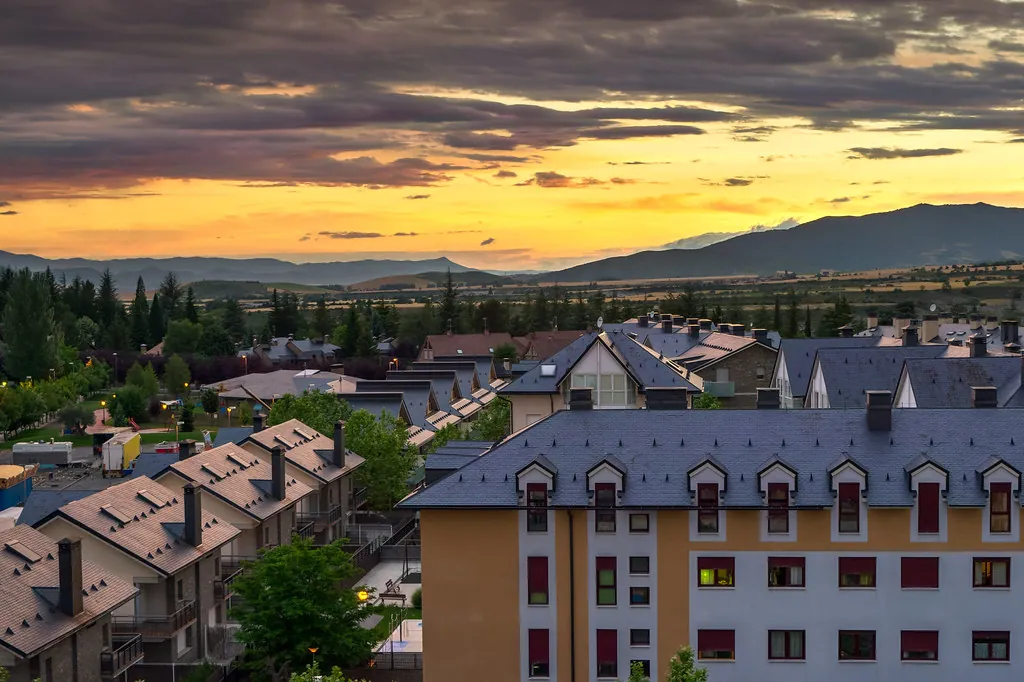
Walk five minutes from the main road and Castejón shrinks to lanes barely two metres wide. Houses here wear their age openly: slate roofs secured with hand-hewn beams, balconies painted the colour of oxidised wine, stable doors that still smell of livestock. The 12th-century church of San Miguel squats at the highest point, its Romanesque apse patched so many times the stone looks quilted. Inside, Baroque retablos glimmer dimly; bring 50 cents for the lights or you'll need the torch on your phone.
There is no picturesque plaza mayor framed by arcades, no manicured geranium pots. Instead, the village centre is a widening of the road where the postal van performs a seven-point turn each morning at eleven. That informality suits the people who actually live here—781 at the last count, plus an indeterminate number of dogs that adopt whoever is eating jamón on a terrace. Farmers still drive tractors through the streets; if you hear a two-stroke engine at dawn it's probably 83-year-old Severino heading uphill to cut hay, not an early paraglider.
Food That Apologises to No One
Mealtimes are dictated by altitude hunger. Breakfast might be a buttered baguette the length of your forearm from Forn de Pa Núria, best eaten while watching thermals form above the opposite slope. By 1 p.m. the restaurants along Avenida de los Pirineos fill with pilots still wearing flight decks. At Restaurante Diamo, the set lunch (€18) starts with migas—fried breadcrumbs laced with pancetta and grapes, essentially Spanish stuffing and oddly comforting to British palates. Follow it with ternasco, milk-fed lamb roasted until the skin shatters, then chase everything with a bottle of Cierzo Brewing's pale ale, made 40 kilometres down-valley in Zaragoza and tasting reassuringly like something from Bermondsey.
Vegetarians face slimmer pickings. The fallback is pimientos rellenos—roasted red peppers stuffed with morcilla blood sausage—so clarify "sin carne" unless you want surprise pork. Casa Pepe will grudgingly swap chips for salad, but expect raised eyebrows; vegetables are still considered what food eats.
Trails Without the Tour Groups
Once the last paraglider has packed up, the village reverts to silence broken only by the Ésera rushing over polished boulders. Head north-east on the signed path to the Forau de Aigualluts, a pothole where the entire river vanishes underground, reappearing four kilometres later. The walk takes ninety minutes through beech woods whose floor is soft with last century's leaves; in October the canopy ignites into copper, a spectacle that draws precisely four coach-loads of Spanish pensioners per day, compared with the hundreds that swarm the nearby Ordesa Canyon.
Serious hikers can continue to the Refugio de la Renclusa, gateway to Aneto, the Pyrenees' highest summit at 3,404 metres. It's a six-hour pull from the village, so most people stay overnight in the hut (€17 for a mattress, blankets provided). What the guidebooks don't mention is the 4 a.m. stampede when forty climbers depart in synchronised crunch of crampons—light sleepers should bring earplugs.
When to Arrive, When to Leave
May and late-September offer the kindest balance of sunshine and quiet roads. By mid-July the campsite at the entrance to town is fully booked with Dutch caravans; rooms in the three small hotels triple in price and the bakery sells out of croissants before nine. October can be glorious, but the single daily bus from Benasque shrinks to three times a week after the 15th, and the pharmacy shuts for siesta at 2 p.m. sharp, sunscreen or no.
Winter strips the village to its bones. Snow arrives sporadically—some years barely a dusting, others enough to collapse the slate roof of the municipal store. The paragliding schools move to Morocco, restaurants close on random Tuesdays, and the only reliable source of hot food becomes the petrol station on the main road where a surly microwave dispenses flaccid croquetas. Yet on windless February mornings the valley traps a temperature inversion: villagers breakfast in minus-five sunshine while the lower Ebro plain disappears under a frozen sea of cloud. For photographers, it's worth the trip; for everyone else, check the forecast and pack snow chains.
The Honest Verdict
Castejón de Sos will not dazzle anyone seeking medieval ramparts or boutique charm. Its gift is simpler: space to breathe at a height where the air carries the scent of pine and the nights are still dark enough for the Milky Way. If you paraglide, come; if you hike, come between May and October; if you need room service, museums or flat whites, stay in Barcelona. Bring cash, a phrasebook and an appetite for lamb. Leave before the first big storm, or book an extra night and accept that the mountains, not the itinerary, will decide when you can leave.