Full Article
about Castel de Cabra
Ocultar artículo Leer artículo completo
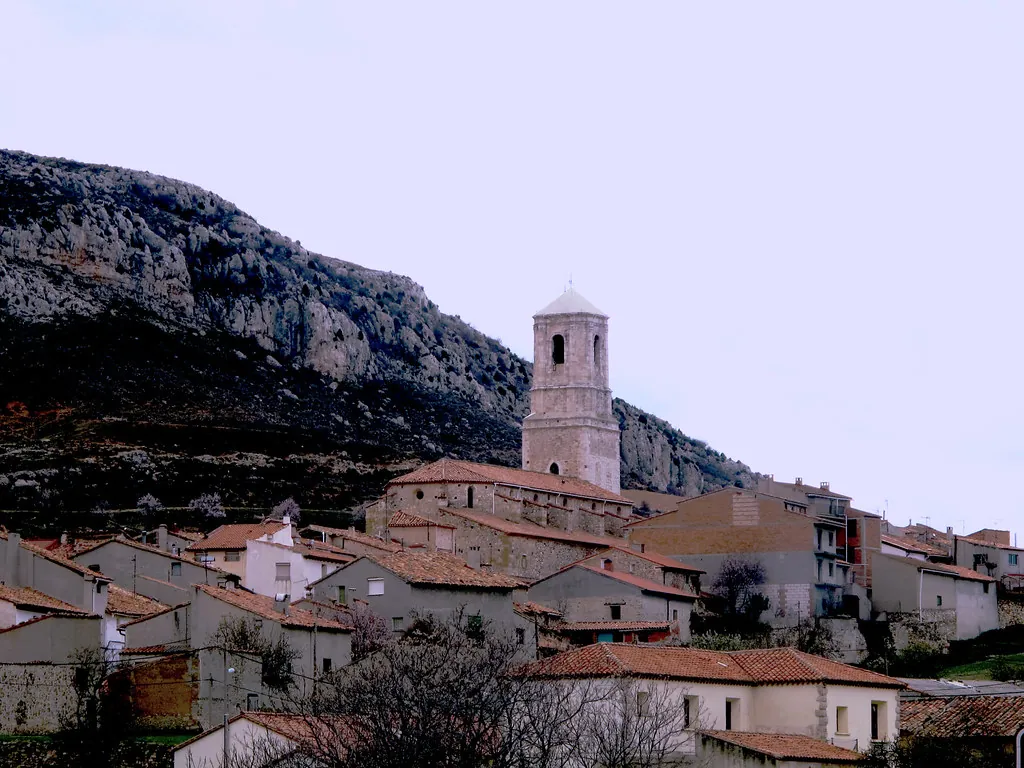
The TE-V-3131 turns to tarmac only after the last almond trees give way to rock. One more hair-pin and the bonnet points at a ridge crowned with houses the colour of dry toast. Castel de Cabra appears so abruptly that drivers instinctively check the rear-view mirror, half-expecting the village to have dissolved into heat shimmer. It hasn’t. At 1,088 m the air is thinner, the sierra rolls away like a crumpled blanket, and the only sound is the cooling engine ticking in neutral.
A village that never quite filled its outline
Ninety-five residents, three streets, two bars and a church whose bell still marks the quarters—Castel de Cabra is small enough to survey in the time it takes a kettle to boil. Yet the place feels larger than its head-count because the stone houses, shoulder-to-shoulder along volcanic outcrops, once imagined a future twice this size. Roofless shells interrupt the terraced row like missing teeth; their timber balconies long gone, staircases climbing to sky. Some have been stitched back into life as weekend casas rurales with double-glazing and slate showers, but restoration stops abruptly where the money does. The effect is honest: a village ageing in real time rather than frozen for postcard duty.
There is no centre in the British sense—no bench-lined square or Pret-equivalent. Instead the tarmac widens for eight metres outside the Panadería-Carnicería and locals treat that apron as high street, café and noticeboard. Bread arrives from Ejulve at 10:30; if the van is late, word spreads faster than the internet could manage. The shop shuts for lunch between 14:00 and 17:00, so visitors self-catering should finish provisioning before the shutters clatter down.
Walking through copper and rosemary
Castel de Cabra sits on the lip of the Cuencas Mineras, the coal basin that kept Aragón’s lights on until the late 1980s. Head south along the unsignposted footpath that leaves from the cemetery gate and within fifteen minutes the scent of sun-baked thyme is cut by something metallic. Old spoil heaps, now greened with rosemary and young pine, rise like low pyramids. A rusted gantry leans over a sealed shaft; a geode of copper ore glints where someone has cracked a rock. These are not museum pieces—no ticket booth, no hard-hat tour—just industrial archaeology weathering into habitat. The GR-8 long-distance footpath skirts the village, but the OS-style maps sold in Alcañiz petrol station mark the route with dotted optimism; after rain the clay sticks to boots like molasses and waymarks vanish beneath thistle.
Morning walks should start at dawn when golden eagles use the updraft from the barranco. A circular loop to the abandoned Mina Virginia takes two hours, gains 250 m and returns via the Pitarque river where Iberian midwife toads plop into pools the colour of weak tea. Mid-summer hikers need three litres of water apiece; the only fountain is in the village and July temperatures nudge 38°C. In winter the same path turns powder-white with almond blossom and the sierra may wear a transient crown of snow—beautiful, but the TE-V-3131 becomes a toboggan run without guardrails.
What passes for lunch
There is no restaurant, only the two bars. Casa Ramón keeps two tables inside a former stable; the menu is whatever Loli is stirring. Expect migas arrieras—fried breadcrumbs laced with bacon and grapes—served in a terracotta bowl big enough to bathe a cat. Vegetarians get a plate of roasted piquillo peppers and no apology. The wine is Somontano Garnacha poured from a plastic jug, softer than Rioja and easier on tomorrow’s head. Price: €12 a head including coffee that could float a spoon. Opposite, Bar la Sierra opens randomly; if the metal blind is up, order the ternasco slow-roast lamb. It tastes milder than Welsh hill lamb, the meat dissolving under a fork with none of the lanolin tang that puts off some British palates. Both bars close on the same mysterious Tuesday each month—locals claim coincidence, visitors should stock the fridge just in case.
Night skies and day trips
By 22:30 street lighting—three lamps—dims to a sodium glow. The council installed them to save energy, inadvertently creating a five-star observatory. Lay a blanket on the threshing floor south of the church and the Milky Way arcs like spilled sugar. Shooting stars are so frequent you stop pointing them out.
When silence becomes claustrophobic, drive 25 minutes to Ejulve for the nearest cash machine, or 40 minutes to Albarracín, a sandstone hill-town so pretty it hurts. Closer, the Pitarque gorge offers emerald pools deep enough for a wild swim; follow the cattle track from kilometre-marker 14 on the A-226 and scramble down where the guardrail is dented.
The practical grit beneath the romance
- Getting there: No public transport reaches the village. From Zaragoza take the A-23 to Ejulve, then the TE-V-3131 for 19 km of single-track with passing bays. Reverse into them; locals do not. The last reliable fuel is at Alcañiz—allow a 70 km round-trip if you need diesel later.
- Where to stay: Three casas rurales share the same booking website and all close in January. Weekend rates €90–€120 for two nights; mid-week discounts run to 30%. Heating is by pellet burner—bags cost €5 at the grocer.
- Weather: Mid-summer nights stay above 20°C; bring a fan because none of the houses have air-con. Winter can drop to –5°C; snow tyres are not obligatory but advisable.
- Cash & connectivity: No ATM, no card machine in the shops. Phone signal is two bars on EE, zero on Vodafone. Download offline maps before arrival.
Leaving without the hard sell
Castel de Cabra will not suit travellers who need museums, souvenir magnets, or somewhere to plug in an EV. What it offers instead is a calibrated sense of scale: human settlement measured against sierra, time calibrated by a church bell rather than a timeline. Stay two nights and you start recognising the two white dogs that patrol the upper lane. Stay three and the baker anticipates your order. Stay longer and you may begin to understand why people choose to remain on this windy ridge long after the coal seams closed. Or you may simply leave with dust on your boots and rosemary in your pocket—equally valid souvenirs, and free.