Full Article
about Castillazuelo
Ocultar artículo Leer artículo completo
The church bell strikes noon and the only other sound is a tractor labouring through the narrow lanes. Castillazuelo has 162 residents, one bar, and zero traffic lights. This isn't somewhere that photographs well for Instagram—it's better than that.
Perched above the Somontano region's sea of cereal fields and vines, the village sits at that precise point where the Pyrenean foothills decide they've had enough of being dramatic and slope gently towards the Ebro Valley. The result is a working agricultural settlement that happens to have rather good views, rather than the other way round.
Stone, Slate and the Slow Passage of Centuries
San Miguel Arcángel church dominates the small plaza, its Romanesque bones showing through later renovations like an old house with layers of wallpaper partially stripped. The portal dates from the 12th century, though the bell tower got a Baroque makeover when someone decided the village needed a bit of flourish. Inside, the air carries that particular dust-and-wax scent of Spanish village churches everywhere—incense from last Sunday's mass mixing with centuries of candle smoke.
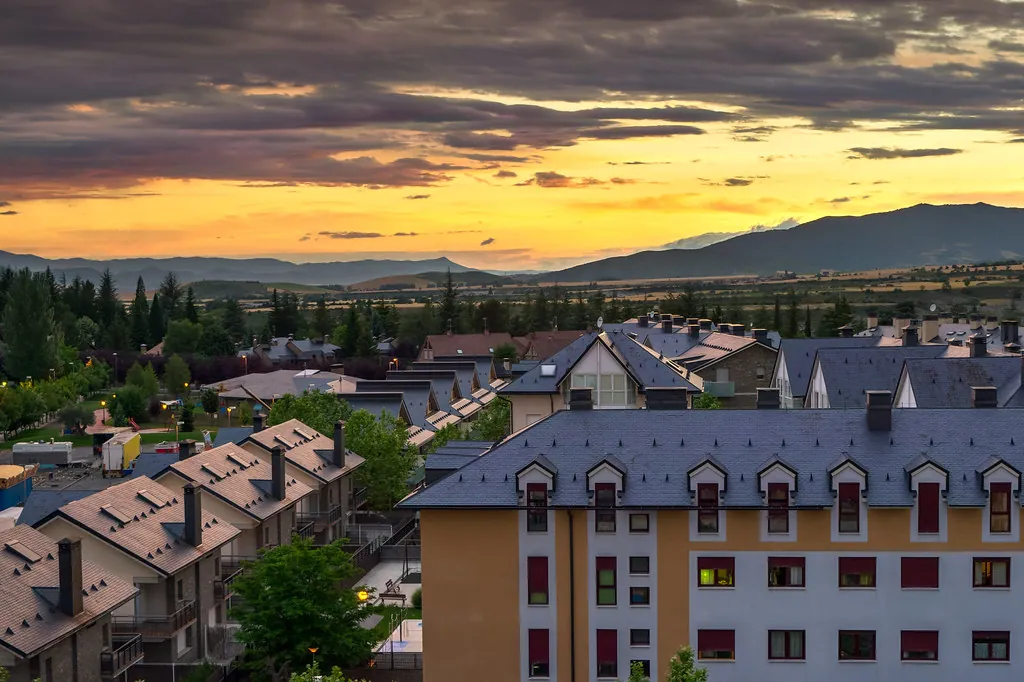
The streets radiate uphill from here, following the contours in that organic way medieval planners favoured. Houses are built from local stone the colour of burnt honey, roofed with slate that turns silver-black in the rain. Balconies sag slightly under the weight of geraniums. Doorways are just tall enough to remind you that people were shorter when these places went up.
Wander upwards and the village spills out into agricultural land almost immediately. There's no gentle transition—one minute you're among houses, the next you're looking across vineyards towards the bulk of the Sierra de Salinas. The landscape reads like an economic history lesson: irrigated fields green with winter wheat, dry-farmed almonds clinging to poorer soil, abandoned terraces reverting to scrub where someone gave up fighting the economics of small-scale farming.
Wine Without the Pretension
The Somontano denomination stretches across these slopes, and Castillazuelo sits within comfortable staggering distance of several bodegas. Bodegas Ras-Vals operates from a converted farmhouse on the village edge, offering tastings that start at €8 and don't involve anyone using words like 'mouthfeel' unless you ask them to. Their Moristel goes well with the local lamb, should you find yourself cooking later.
The wine route proper centres on Barbastro, 20 minutes south by car, where proper wineries offer proper tours with proper spitting buckets. But there's something to be said for the informal approach—turning up at a small producer, finding someone who'd rather be tending vines but will fetch a couple of glasses anyway.
Food here follows the Aragonese template: robust, pork-heavy, designed for people who've spent daylight hours doing physical work. Migas—fried breadcrumbs with garlic and grapes—appear on every menu within 50 kilometres. The local lamb, lechal asado, arrives at table having been milk-fed and slow-cooked until the meat slides off the bone. Vegetarians will find themselves eating a lot of tortilla and learning to ask whether the beans contain 'tocino'.
Walking Through Five Hundred Years of Footprints
Morning walks start from the upper edge of the village, where a properly way-marked path follows an old drove road towards the abandoned hamlet of Los Molinos. It's 6km there and back, gaining 200 metres of altitude through almond and olive groves. The track surface varies from packed earth to "recently washed away by winter rains"—decent boots recommended, particularly after weather.
For something gentler, the 3km loop around the village perimeter passes threshing floors carved into flat rock, now redundant grandmothers of modern agriculture. Interpretation boards appear at intervals, though someone seems to have nicked the English translations. The Spanish works fine if you can manage "trigo" means wheat and "viñedo" means vineyard.
Serious hikers should head for the Sierra de Salinas proper, half an hour's drive north. The GR-45 long-distance path crosses these ridges, offering proper mountain walking without the Pyrenean crowds. Spring brings wildflowers and temperatures perfect for walking; summer means starting early and finishing by midday when the thermometer hits 35°C.
When the Village Wakes Up
September's fiesta transforms the place. San Miguel Arcángel gets his annual outing, carried through streets that suddenly feel too narrow for the purpose. The population quadruples as former residents return from Zaragoza and Barcelona, swapping city clothes for something that can handle agricultural dust. Brass bands play until the early hours, and the village bar runs out of beer by Sunday afternoon.
August's summer festival is more modest—three days rather than a week, centred on the plaza with its single plane tree providing inadequate shade. The paella contest draws competitors from neighbouring villages; standards are taken seriously and arguments about saffron quantities can last for years.
Winter shrinks the place back to its essential self. Days start with frost on the slate roofs and finish with wood smoke drifting across cold air. The bar opens at seven for the agricultural workers and stays open until the last customer leaves, which might be nine-thirty if it's been a hard day. This is when you learn whether you really like small villages or just like the idea of them.
Getting There, Staying There, Managing Without
Barbastro, 18 kilometres south on the A-22, has supermarkets, petrol stations and a Monday morning market worth timing your visit for. From there, the HU-334 winds uphill for 15 minutes through increasingly agricultural landscape until Castillazuelo appears round a bend like it's been waiting for you to notice it.
Public transport exists in theory—a bus on Tuesdays and Fridays, another on market days if the driver's mother isn't ill. Hiring a car in Zaragoza (two hours away) or Huesca (50 minutes) makes infinitely more sense, particularly if you want to visit wineries or walk anywhere that isn't directly accessible from the village.
Accommodation options are limited to B&B Ra Tenaja, three rooms above a house on the main street. It's clean, cheap (€45-60 depending on season) and run by someone whose family has lived here for generations. Breakfast involves homemade jam and coffee strong enough to wake the agricultural dead. For anything more luxurious, Barbastro has hotels with Wi-Fi that actually works and restaurants that stay open past ten.
The village shop sells basics: bread delivered daily from Barbastro, tinned goods, wine that costs less than water. Anything exotic—fresh fish, decent cheese, vegetables that aren't seasonal—requires a trip to town. Plan accordingly, or embrace the local diet of pork, beans and more pork.
Castillazuelo won't change your life. It's not that kind of place. What it offers instead is the chance to spend time somewhere that continues regardless of whether visitors turn up, where agriculture isn't heritage and where the church bell still marks time for people who've heard it every day of their lives. Come for the wine routes, stay for the revelation that places like this still exist just three hours from London, doing what they've always done and wondering what all the fuss is about.