Full Article
about Chia
Ocultar artículo Leer artículo completo
The church bell tolls at noon, but nobody hurries. An elderly man pauses mid-conversation to count the chimes, then carries on explaining to the baker why his grandson's studying in Zaragoza rather than taking over the goats. This is Chía, a stone village 1,200 metres above sea level where the mountains dictate the rhythm, not the clock.
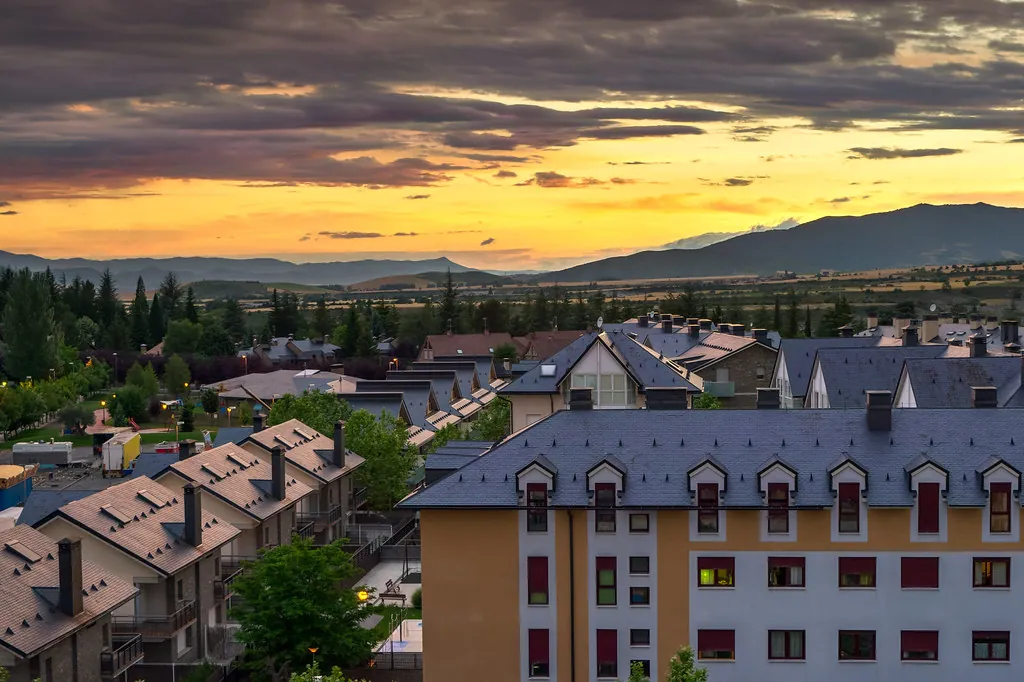
At first glance, the place looks abandoned. Stone houses with slate roofs climb a ridge in the Aragonese Pyrenees, their wooden balconies shuttered against the sharp mountain air. Then you notice the details: smoke curling from a chimney, a tractor parked beside a 16th-century archway, fresh chrysanthemums on a window ledge. The 81 permanent residents haven't so much preserved their village as simply refused to abandon it.
The Architecture of Survival
Every building here tells the same story: adaptation to altitude. Walls built from local limestone, two feet thick, keep interiors cool during brief, fierce summers and retain heat through eight-month winters. Roofs slope at precise angles calculated over centuries to shed heavy snow without collapsing. Even the church tower, Romanesque in origin but patched through successive centuries, leans slightly into the prevailing wind.
Walking the single main street takes ten minutes if you dawdle. Side alleys, barely shoulder-width, lead to pocket-sized plazas where medieval granaries have been converted into weekend homes. These pajares—stone storage buildings raised on stilts to deter rodents—now house tasteful rentals with underfloor heating and espresso machines. The conversions happened slowly, mostly since 2005, bringing essential cash without the fake-rustic aesthetic blighting many Spanish villages. Planning regulations here insist on original stone facades; satellite dishes must be hidden behind chimneys.
Mountain Weather, Mountain Food
The altitude changes everything. Spring arrives three weeks later than in the valley below. October brings frost by mid-afternoon, while August nights require jumpers. The bakery, open three mornings weekly, sells out of bread by 10 am because locals know to stock up before afternoon storms roll in.
These conditions shape the food. In the single restaurant, attached to the Hostal Pirineos, the menu changes with what's available from surrounding pastures. Spring means wild asparagus and tender lamb. Autumn brings game stews thick with mushrooms foraged from nearby beech forests. The cheese plate features raw ewe's milk queso from a farm two kilometres up the track—tangy, slightly smoky, nothing like the plastic-wrapped supermarket versions. A three-course lunch costs €18, wine included, but don't expect choice. You eat what's been cooked that day or go hungry.
Walking Into the Past
Tracks radiate from Chía like spider webs, following ancient paths used for moving livestock between summer and winter pastures. The most straightforward walk, marked with yellow dots, circles the village through abandoned terraces where farmers once grew rye and potatoes. It takes ninety minutes, including stops to catch breath at 1,400-metre viewpoints.
More ambitious hikers can tackle the three-hour climb to Collado de Chía, a 1,800-metre pass where vultures ride thermals overhead. The path passes through La Garganta, a narrow defile where beech trees turn copper-gold in October, creating natural cathedrals of colour. Summer weekends see occasional groups from Benasque, twenty kilometres distant, but mid-week you'll have the trail to yourself except for shepherd dogs and the odd jabalí rustling through undergrowth.
Winter transforms these routes. Snow arrives reliably by December, sometimes lingering until May. The village becomes inaccessible to ordinary cars for days at a time; locals keep 4x4s parked at the nearest ploughed road, two kilometres below. Cross-country skiers use the farm tracks, though there's no rental equipment available—bring your own or make friends with residents who might lend kit.
When the Village Comes Alive
August changes everything. The population swells to perhaps 300 as chiainos return from Zaragoza, Barcelona, even London. They come for the fiesta mayor, three days around Assumption Day when the church plaza hosts communal paellas and late-night jotas—traditional Aragonese dancing that looks like controlled stomping.
The romería on August 14th involves carrying the village's virgin statue to a mountain spring, a three-hour procession accompanied by brass bands and considerable wine consumption. Visitors are welcome but it's not tourist theatre; participants know the hymns by heart and argue about route changes introduced in 1997. If you attend, bring sturdy shoes and expect to be handed food by strangers who knew your grandfather's cousin.
September brings quieter pleasures. The jornadas micológicas—mushroom weekends—see local experts leading walks through beech forests, explaining why níscalos grow near certain oaks and which boletus specimens to avoid. These aren't guaranteed; they happen when someone decides to organise them, advertised by handwritten notices taped to the bakery door.
Getting There, Staying Put
Reaching Chía requires commitment. From Huesca, drive the N-123 north through increasingly dramatic scenery until Graus, then follow the A-139 towards Benasque. After 22 kilometres, a sharp left turn climbs precipitously for five kilometres, hair-pinning past abandoned farmhouses. Meet oncoming tractors at your peril; reversing uphill on single-track roads isn't for nervous drivers.
Public transport exists but tests patience. ALSA buses run twice daily from Barbastro to Benasque, stopping at the Chía turn-off on request. From there it's a 45-minute uphill walk with luggage. Sunday services don't operate from October to June.
Accommodation options reflect village size. The Hostal Pirineos offers eight simple rooms from €45 nightly, heated by pellet stoves that staff light at dusk. Three self-catering pajares sleep four-six people from €80 nightly, bookable through the village website—functional but not luxurious, with solar-powered showers that run cold if the sun doesn't shine. There are no supermarkets; the minuscule shop opens two hours daily and stocks basics like milk, tinned tomatoes, and surprisingly good local wine for €4 a bottle.
The Honest Truth
Chía won't suit everyone. Evenings are quiet—dead, frankly, once the restaurant closes at 10 pm. Mobile signal drops to one bar if the wind blows wrong. Rain can trap visitors indoors for days. The village offers no nightlife beyond what you create with a bottle of Somontano and conversation with whoever's in the bar.
Yet for those seeking mountain authenticity without ski-resort artifice, Chía delivers something increasingly rare: a living village that happens to accept visitors rather than a tourist attraction pretending to be real. The stones are real, the silence is real, the shepherd you meet at 7 am driving his flock through the main street is definitely real. Come prepared for mountain weather, pack walking boots, and leave expectations of entertainment behind. The village provides scenery, solitude, and occasional moments of surprising hospitality—not theme-park Spain, but something far more interesting.