Full Article
about Ejulve
Ocultar artículo Leer artículo completo
A village that starts where the tarmac ends
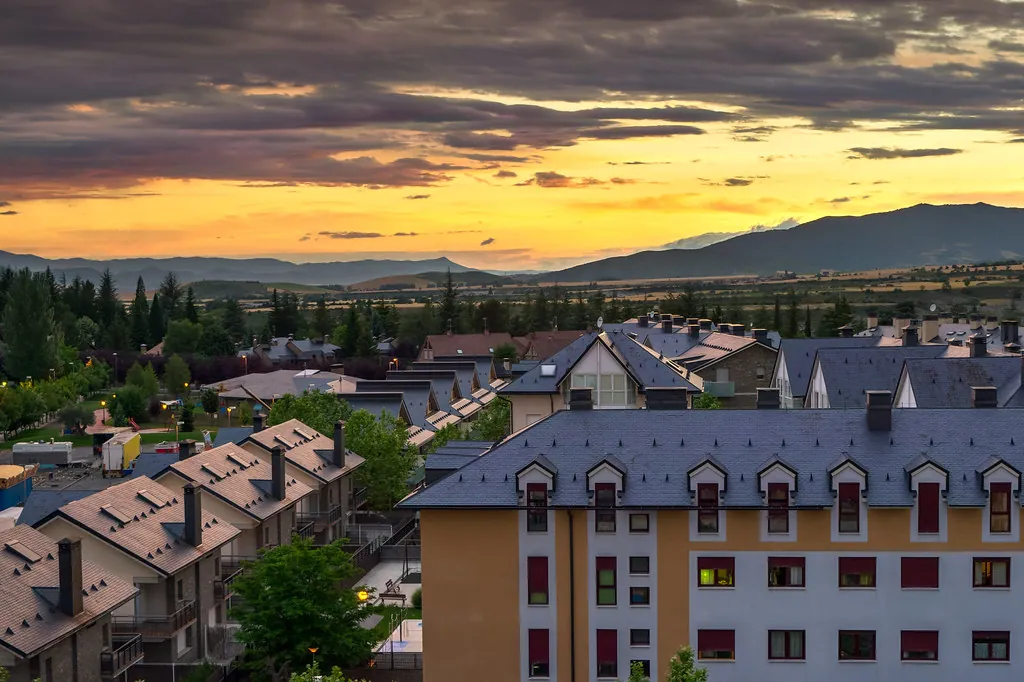
The last sign before Ejulve reads “1.100 m” and feels like a warning. Engine temperature drops, ears pop, and the pine-scented air coming through the window is ten degrees cooler than it was down in the Alfambra valley. Suddenly the road quits climbing, the guardrail disappears, and a knot of stone houses slides into view, glued to a ridge like swallows’ nests. This is not a place you reach by accident: the A-1702 wriggles up 26 km of switchbacks from the N-211, and the only traffic you’ll meet are local farmers in patched Land-Rovers and the occasional British biker counting hairpins for fun.
Ejulve’s altitude – 1.130 m at the church door – shapes everything. Sunsets arrive early, winter nights touch –8 °C, and even in July you’ll want a fleece after nine o’clock. The village faces south-east, so the first light skips across the stepped roofs and lights up the stone troughs where neighbours still wash spinach. Below, the land falls away in pleated ridges until it melts into the Ebro basin 50 km distant. On a clear morning you can clock the lighthouse at Peñíscola flashing on the horizon, a flicker of Mediterranean blue that reminds you how far inland you really are.
Streets built for donkeys, not drop-handlebars
Inside the walls the lanes narrow to shoulder width, paved with river pebbles polished smooth by centuries of hoof and boot. Google Maps gives up here; better to follow the baked-clay plaques hand-painted by the primary-school kids. One points to “La nevera – 200 m”, a shallow cave where snow was once compacted into ice blocks and dragged uphill by mule for the village’s only “fridge”. Another leads to the 16th-century portico of the Asunción church, its bell tower skewed slightly after the 1957 earthquake. The interior is plain, almost Presbyterian: no gilded altarpieces, just a single Baroque panel of the Virgin flanked by farmers’ crutches left after miraculous harvests.
Don’t expect a museum ticket office or gift shop. heritage here is lived-in. A retired shepherd might open the sacristy if you ask at the bar, but he’ll also tell you the roof leaks and they’re short of €3,000 for repairs. Drop a couple of coins in the box; it’s the closest thing to an admission fee you’ll find.
Walking tracks that start at your door
Three way-marked paths fan out from the top end of the village. The gentlest, the Caleja del Huergo, drops into a limestone gorge where griffon vultures circle overhead and the only sound is your boots crunching on almond-sized fossils. Allow 45 minutes down, an hour back up – the return is steep enough to make a Cornish coastal path feel polite. For something longer, follow the red-and-white dashes of the GR-8 south-west towards Albarracín. After 9 km you reach the Pitarque river, a string of emerald pools deep enough for a bracing swim; pack a towel and a packed lunch because there’s no kiosk for miles.
Winter walkers should note that snow can lie above 1.000 m from December to March; the same trails become powdery single-track for mountain-bikers who arrive in camper vans from Calais, drawn by YouTube clips promising “Spain’s answer to the Stelvio”. They’re not wrong: between Ejulve and Sarrión the A-1702 throws up 212 bends in 22 km, surfaced well enough for knee-down heroics yet quiet enough to meet more goats than cars.
One bar, one shop, zero pretension
The Plaza de la Constitución measures 25 paces across and contains the entire retail economy. Bar Deportivo opens at 07:00 for farmers’ brandy and closes when the last dice player leaves, usually around midnight. Coffee costs €1.20, tapas of spicy chorizo another €1.50; they’ll run a tab on the back of a lottery ticket if you ask. Next door, the grocer’s stocks UHT milk, tinned tuna and locally made truffle cheese that tastes like Stilton gone feral. Bread arrives on Tuesday and Friday; by Saturday only rock-hard baguettes remain. If you need diesel, the nearest pump is 35 km away in Aliaga – a round trip that burns more than it delivers, so top up before you climb.
For a proper meal, book a table at Mirador del Maestrazgo, a cluster of timber cabins five minutes above the village. The owner, Malcolm, swapped Guildford for Aragón in 2004 and still serves with a Surrey accent. Try the trout wrapped in serrano ham – mild, pink flesh, no river-mud flavour – followed by almond cake that deserves custard but arrives with thick Spanish cream. Three courses with wine run to €24; ask for the roof terrace after dark and he’ll lend you a red-filtered torch so you don’t spoil the star show. On moonless nights the Milky Way drips right down to the horizon, bright enough to cast shadows.
When to come, when to stay away
April and late-September offer 20 °C afternoons, wild rosemary in flower and zero crowds. Easter can be tricky: processions are heartfelt but accommodation within 40 km books out months ahead. August brings fiestas – brass bands, fireworks, communal paella for 600 – and an influx of returning emigrants who inflate the population to 500. It’s fun if you fancy spontaneous invitations to family barbecues, less so if you came for silence.
Deep winter is glorious or brutal, no halfway. Blue-sky days at 10 °C are perfect for solitary ridge walks; when the mistral-style “cierzo” wind arrives, the same thermometer reads –5 °C and the chill finds every seam of your supposedly breathable jacket. Snow chains are rarely obligatory but carry them anyway – the council grader clears the road “when we get round to it”, which may be days.
The bottom line
Ejulve will never tick the “Instagram hotspot” box. You won’t find artisan gelato, nor a souvenir fridge magnet. What you get is a working upland village where the butcher knows every lamb by name and the night sky is still dark enough to lose yourself. Come with a full tank, an empty memory card and a tolerance for church-bell timekeeping. Leave before breakfast on Sunday and you’ll meet the baker hauling loaves up the hill, steam rising into the thin mountain air – a reminder that some places, for now, still run on bread, wood smoke and conversation.