Full Article
about El Frago
Ocultar artículo Leer artículo completo
The church bell strikes noon, and for a moment the only sound across El Frago's 629-metre ridge is the wind moving through wheat. Then a tractor starts somewhere below, its diesel engine echoing off stone walls that have stood since the 17th century. This is rural Aragon at its most honest: no gift shops, nointerpretation boards, just a farming village that happens to be spectacularly positioned above the cereal plains of Cinco Villas.
Stone and Silence
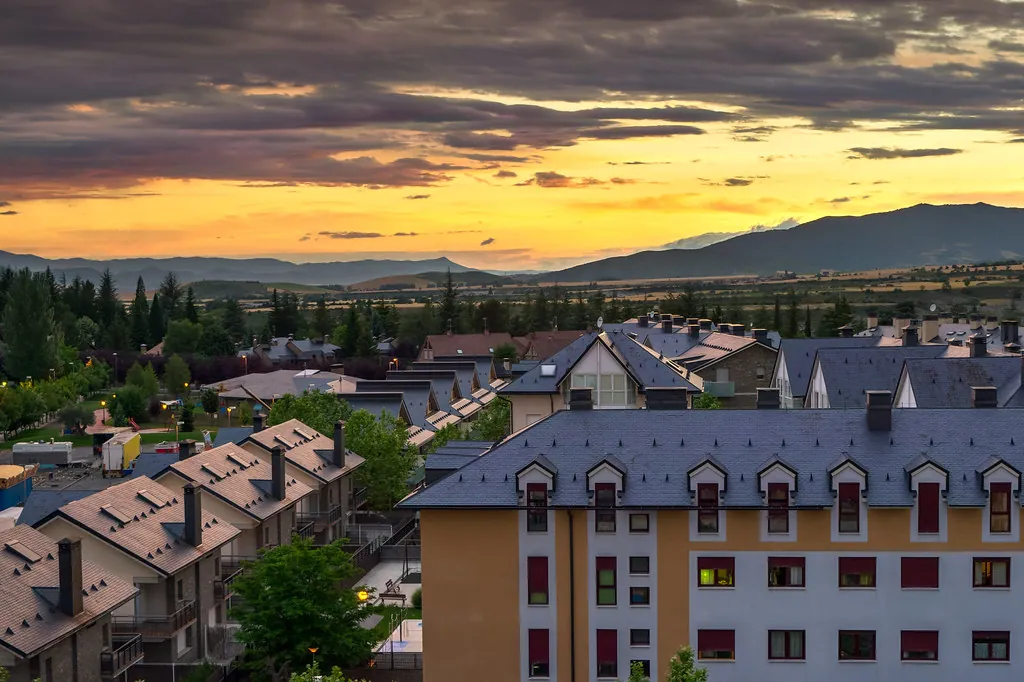
Seventy kilometres northwest of Zaragoza, El Frago sits high enough that the summer heat loses its edge. Even in August, when the Meseta turns furnace-hot, evenings bring cooler air that smells of dry earth and thyme. The village's 115 permanent inhabitants live in stone houses that cascade down a spur, their terracotta roofs creating a terraced effect against the limestone ridge. It's the kind of place where laundry still dries on wrought-iron balconies and where elderly men wearing berets emerge at dusk to discuss rainfall statistics.
The architecture speaks of hard winters and agricultural prosperity. Doorways carved from single blocks of stone frame entrances just wide enough for a laden mule. Windows are small, set deep into walls sixty centimetres thick. These houses weren't built for the Instagram age – they're working buildings designed to keep grain dry and families warm when temperatures drop below freezing. That they happen to photograph beautifully in the golden hour is incidental.
Walking the village takes twenty minutes if you dawdle. Calle Mayor curves past the single bar – more of a social club really, where the owner knows everyone's coffee preference – before narrowing into alleyways barely two metres wide. Vehicles larger than a Fiat 500 need not apply. The parish church of San Pedro anchors the upper quarter, its square tower visible for miles across the surrounding plains. Inside, the air carries centuries of incense and candle wax, plus something less definable: the scent of a community that has celebrated marriages and mourned deaths beneath these same wooden beams for four hundred years.
The View from the Ridge
Step outside the village proper and the landscape opens dramatically. To the north, the Pyrenees float on the horizon like a distant promise. Southward, wheat and barley fields stretch toward Ejea de los Caballeros, creating a patchwork that shifts from emerald in April to bronze by July. The footpath network isn't marked with flashy signage – locals will point you toward the Sendero de las Ermitas, a circular route that passes two ruined chapels and provides eagle-eye views across the valley.
Spring brings poppies and wild asparagus growing along field margins. Autumn turns the stubble fields silver, and the air fills with the smell of burning vine prunings. Winter can be sharp; snow isn't uncommon at this altitude, and the village access road becomes treacherous when ice forms. Summer, despite cooler temperatures than the coast, still hits 35 degrees at midday. The difference is in the nights, when temperatures drop enough that you'll reach for a jacket while sitting outside the bar, nursing a caña and watching satellites cross the exceptionally dark sky.
That darkness deserves special mention. Light pollution maps show El Frago in a black zone – perfect for stargazing. On moonless nights the Milky Way appears with startling clarity, something that prompts even the most phone-addicted teenager to look upward. Bring binoculars if you have them; the Andromeda Galaxy is visible to the naked eye from the cemetery hill.
What to Expect (and What Not To)
Let's be clear: El Frago offers limited infrastructure. One bar means one bar. It opens at seven for the agricultural workers, closes at ten, and serves basic tapas – think tortilla, local cheese, perhaps some migas if you're lucky. For proper meals you'll need to drive fifteen minutes to Sos del Rey Católico or thirty to Ejea. The nearest supermarket is in Uncastillo, twelve kilometres away along winding roads that demand full attention.
Accommodation consists of three self-catering apartments and one rural house, all bookable through Spanish websites that may or may not respond to English emails. Casa Torralba gets mentioned by the few British visitors who make it here; expect rustic décor, properly equipped kitchens, and prices that seem laughably low compared to anywhere in the UK. Fifty pounds per night for a two-bedroom apartment isn't unusual, though you'll need to bring your own coffee unless you enjoy the Spanish preference for torrefacto.
The village festival happens in mid-August, when the population temporarily quadruples. Former residents return from Zaragoza and Barcelona, children who've never lived here run through streets their grandparents walked, and the single bar extends its opening hours until an unprecedented eleven thirty. It's either enchanting or overwhelming, depending on your tolerance for fireworks at three in the morning.
Making the Journey Work
Driving remains the only practical option. From Zaragoza airport, take the A-127 towards Ejea, then switch to the A-1202 towards Uncastillo. The final twelve kilometres involve narrow roads where meeting an oncoming lorry requires one vehicle to reverse. Petrol stations become scarce after Ejea – fill up before you leave the main road.
Visit in late April for green fields and pleasant walking temperatures. Late September offers harvest colours and the grape harvest in nearby Borja, whose wines provide excellent souvenirs. Avoid August if you want the village to yourself; avoid January unless you're prepared for possible snow blocking the access road.
El Frago doesn't offer the drama of Spain's famous villages – no hanging houses here, no medieval walls. Instead it provides something increasingly rare: a working agricultural community that happens to occupy a spectacular ridge, where the rhythm of life follows seasons rather than tourism schedules, and where the simple act of watching sunset paint the wheat fields gold feels like discovering something private. Just don't tell everyone.