Full Article
about El Pobo
Ocultar artículo Leer artículo completo
The church bell strikes noon, yet nobody appears. Not a single shop door opens, no café chair scrapes against stone. At 1,400 metres in the Sierra de Albarracín, El Pobo keeps its own timetable—one dictated by altitude, livestock, and the long memory of winters that can stretch from October to May.
Stone Against Wind
From a distance, the village looks like a geological accident: honey-coloured houses clamped to a ridge, their Arabic tiles the same colour as the surrounding rock. Up close, the architecture reveals itself as a centuries-old defence strategy. Walls are thigh-thick, windows pint-sized, doorways carved from single blocks of local limestone. Every detail serves the same purpose—keeping the heat in and the wind out.
The Iglesia de San Miguel anchors the summit. Part-Romanesque, part-baroque rebuild, it doubled as a granary during the 1937 siege when Republican forces held the surrounding hills. Step inside and the temperature drops another five degrees; the smell is of candle wax, damp stone, and the pine firewood stacked in the baptistry for weekday heating. Sunday mass still draws twenty-odd parishioners—roughly a fifth of the permanent population—who arrive early to warm the pews.
Wander downhill and you’ll pass dwellings that have never heard the word ‘façade’. Granite and shale are mortared with lime and sheep’s wool; balconies sag under the weight of last year’s pepper harvest. One house displays a datestone: 1642. The roofline sits lower on the right—centuries of snowload pressing the structure into the hill. It remains occupied, curtains twitching when strangers linger too long.
Tracks, Not Trails
El Pobo is not a theme-park interpretation of rural Spain. Waymarking is erratic; the tourist office (open Tuesday and Thursday, 10–13:00, or when María finishes the baking) stocks a photocopied map that hasn’t been updated since 2009. This is either a warning or an invitation, depending on your appetite for self-reliance.
The most rewarding walk starts behind the cemetery gate. A stony track climbs north-west through reforested Scots pine, gaining 250 metres in forty minutes. At the top you’ll meet the Cerro de la Nevera, an Iron-Age fort whose ramparts frame a 40-kilometre sweep of the Jiloca valley. Bring a windproof; the same elevation that clears the view also channels Atlantic weather systems straight across the Meseta. In May the hillside is polka-dotted with wild peonies; by mid-July every leaf is edged with bronze, the plants conserving moisture for the next drought.
Serious hikers can link this to a 14-km loop that drops into the Barranco de la Horadada, where griffon vultures nest in sandstone caves. The path is clear enough if you remember one rule: whenever the pine plantation ends, turn left along the drystone wall. Miss the junction and you’ll spend an hour thrashing through juniper before emerging on the Cella road, eight kilometres from the village with no mobile signal.
What Winter Leaves Behind
Visit in March and you’ll understand why half the houses are shuttered. Snow can arrive overnight, drifting up to first-floor height; the access road from Cella (60 km from Teruel) is chained off at the slightest forecast. Residents stock firewood in September and don’t open the woodshed again until Easter. Those empty properties? Mostly inherited by siblings who fled to Zaragoza or Valencia; they return for the fiesta in August, sweep the cobwebs, then lock up for another year.
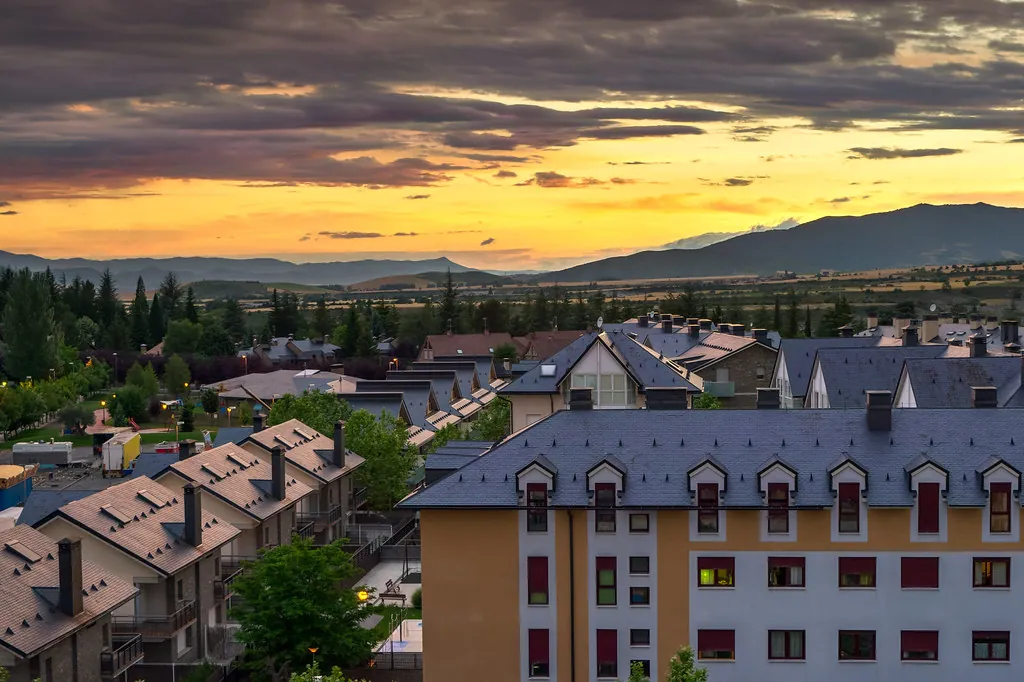
Yet the season has its own stark beauty. Sunsets reflect off snowfields the colour of apricot flesh; at night the Milky War feels close enough to snag on the church cross. The village’s single bar—Casa Julián—keeps a fire going from 18:00. Order a cortado and you’ll be offered a plate of migas made with yesterday’s bread, chorizo from a pig slaughtered in December, and a glass of red that costs €1.80. Conversation defaults to the price of diesel, the wolves that came down to the rubbish containers in January, and whether the council will ever fix the spring pipe.
August Explosion
On the night of 14 August the population multiplies by ten. Returning emigrants pitch tents in almond orchards; cars with Barcelona plates squeeze into alleyways designed for mules. The fiesta programme is printed on pink paper and taped to every door: dawn procession, mass with the bishop of Teruel, paella for 600 cooked in a field, then fireworks launched from the fort ruins. Dancing starts at midnight under a canvas marquee that blocks the only through-road; at 04:00 the DJ switches from reggaeton to jotas and the pensioners take over.
Book accommodation early—there are exactly six rental houses, none with more than three bedrooms. Prices triple for the week; sheets that smell of mothballs are considered part of the charm. If you miss out, base yourself in Albarracín (25 km) and drive up after dinner. The road is safer in darkness: no wandering livestock, fewer blind bends above 100-metre drops.
Eating What the Land Spares
Gastronomy here is less about creativity than survival. Lamb is roasted until the skin shatters; beans arrive dried, then stewed with pig’s ear for bulk. Vegetarians should lower expectations: even the lettuce is cooked with scraps of jamón for ‘flavour’. The local speciality is ternasco de Aragón—milk-fed lamb under 90 days old—served on Sundays at Mesón del Obispo in neighbouring Cella. Expect to pay €22 for a half-kilo portion that feeds two, plus extra for vegetables that have been boiled into submission.
Mushroom hunters visit in autumn, but permits are required and the Guardia Civil patrols popular patches. Better to tag along with Paco, the retired shepherd who supplements his pension with níscalos. He’ll charge €30 for a morning’s guidance and insists on keeping half the haul; what you keep, he’ll cook back at the bar in olive oil and garlic, refusing payment beyond a beer.
Getting Here, Getting Out
Teruel’s provincial capital has the nearest railway station, linked to Zaragoza and Valencia by sporadic Media Distancia trains. From Teruel, a hire car is essential; the Hertz office closes at 14:00 on Saturdays and doesn’t reopen until Monday. Fuel up before leaving—only two pumps accept British cards on the entire route, both in Cella. If the weather turns, chain up before you reach the forest: the last safe lay-by sits at kilometre 42, after which the tarmac resembles a bobsleigh run.
Leave time for the detour to the rock art of the Río Martín gorge, 20 km east. The Levantine paintings are 7,000 years old, yet the custodian still lives in a hut without electricity and asks for a €2 donation in an empty tuna tin. That combination—Stone Age art, medieval village, and a 21st-century struggle against depopulation—sums up El Pobo better than any brochure.
Come prepared, tread lightly, and the village may just break its silence for you. Ignore the altitude, the weather, or the scarcity of cappuccinos, and you’ll leave cursing the gradients, the wolves, and the indifferent mobile coverage. Either way, you won’t forget the place in a hurry.