Full Article
about Estopinan del Castillo
Ocultar artículo Leer artículo completo
The castle that gave Estopiñán del Castillo its name survives only as a jagged outline against the sky. Climb the stony path at dusk and you'll find foundation walls no higher than your knee, but the view stretches clear to the central Pyrenees forty kilometres away. At this altitude—780 metres above the dry Ribagorza plains—thermals rising off the limestone create a natural lift for griffon vultures; on most evenings a dozen circle at eye level, close enough to count the fingered slots in their wings.
A Village That Refuses to Become a Museum
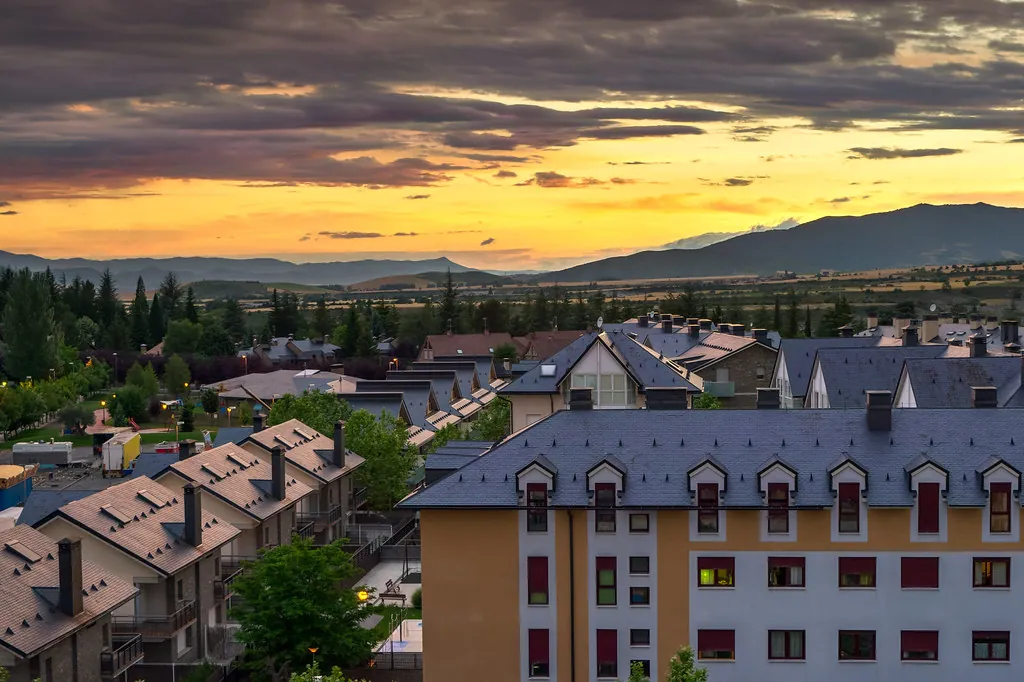
Permanent residents number 116. Many houses are locked tight, their owners working in Barcelona or Zaragoza and returning only for August fiestas. Others stand roofless, swallow-wort threading through empty window frames. Yet the place is alive: a tractor coughs to life at seven, someone burns pruned olive branches, and washing flaps on a line strung between medieval stone. British visitors expecting a prettified "heritage site" sometimes feel disorientated; Estopiñán is a working hamlet where renovation happens when money allows, not when tour guides demand.
The single street climbs from the 16th-century church to the crag-top ruins in less than five minutes. Along the way you pass a trough fed by a copper pipe—water still tastes of the mountains—and a stone bench carved with the date 1834. No plaques, no gift shop, just the bench and the view. Mobile signal drops in and out; offline maps are essential if you plan to walk beyond the houses.
Walking Without Waymarks
Official hiking leaflets don't exist here. Instead, farmers' tracks head off across almond terraces and into gullies shaded by holm oak. A useful strategy is to park by the church, note your elevation on a phone app, then simply keep contouring north-west; within thirty minutes the path tilts upward onto an open ridge where the Ebro Valley appears as a hazy slit far below. Total ascent is modest—around 250 m—but carry more water than you think necessary; the dry air sucks moisture out of you.
Spring brings the best colour: green wheat streaked with crimson poppy, plus the faint sound of melt-water somewhere under the scree. October is sharper, the terraces roasted ochre, and the low sun throws long shadows that make every stone look archaeological. Mid-summer walking is possible if you start before eight; by eleven the thermometer nudges 32 °C and shade is scarce.
Eating: Bring It With You
There is no shop, no bakery, no cash machine. The only commercial enterprise, Hostal la Rurala, keeps six guest rooms and a small dining room, but its kitchen closes on Mondays and Tuesday lunchtimes. If you arrive outside mealtimes you'll go hungry unless you've planned ahead. The nearest supermarket is a Spar in Graus, 19 km down the A-138—a road that twists like a dropped rope, so allow 25 minutes each way.
When the hostal is serving, order the ternasco, Aragón's protected-origin suckling lamb. The joint is roasted plain, just salt, rosemary and oak-wood embers, the meat pink and less fatty than British spring lamb. A half-kilo portion (€18) feeds two amply and arrives with only a wedge of roasted potato; this is meat-centric country, vegetarians should negotiate ahead. House red from Somontano—juicy, tempranillo-led—costs €12 a bottle, roughly half UK restaurant price.
What a Monday Looks Like
Turn up on the wrong day and the village can feel abandoned. The bar is shuttered, the church locked, and the only sound is a cockerel with questionable time-keeping. Yet that stillness is also the point. Sit on the castle knoll and the human horizon shrinks to a handful of roofs while the natural one widens to include Griffon vultures, a distant tractor and, if the tramontana wind is blowing, the faint clank of a cowbell from a farm two valleys over. British hikers used to sign-posted rights-of-way sometimes panic at the lack of infrastructure; others discover they like not being sold anything for hours on end.
Where to Sleep (and Why You Might Not)
Hostal la Rurala is the only roof available inside the village. Rooms are simple—terra-cotta tiles, pine furniture, bathroom showers the size of a phone box—but spotless, and the Wi-Fi reaches most corners. Doubles with breakfast cost €55 even in high season, a reminder that Aragón hasn't adopted UK pricing yet. English is basic; phone bookings work better than email because replies arrive in Spanish and three days late.
Alternative: stay 30 km away in the market town of Graus where Hotel Papa Luna has a pool and lift access (doubles €75). The drive up to Estopiñán then becomes a morning excursion rather than an overnight gamble, useful if you need an ATM, petrol station, or simply fancy a beer after six o'clock.
Getting There Without the Drama
Neither Ryanair nor EasyJet mentions Estopiñán in their onboard magazines, which helps keep the place quiet. Fly to Zaragoza (two hours from London Stansted), collect a hire car, and head north-west on the A-23 past Huesca. Turn onto the A-138 at Barbastro and follow the river Ésera through almond terraces until a small brown sign points left for Estopiñán. Total driving time from airport to village: 2 h 15 m on tarmac that's perfectly smooth but narrow enough to make you thankful you didn't bring the caravan. Fuel up at the Repsol on the Barbastro ring road; after that pumps are scarce.
Public transport is non-existent. A twice-weekly bus links Graus to Barbastro, but it stops at the junction five kilometres below the village, and taxis refuse to come that far into the hills unless pre-booked in Spanish.
Weather Reality Check
At 780 m winter arrives early. Daytime highs of 8 °C and night frosts are routine from mid-November to March; the castle track turns slick with ice and the hostal shuts for several weeks. April can still fling sleet at you, so check the forecast if you've earmarked Easter walking. May-June and September-October offer the kindest balance: 20 °C afternoons, cool nights, and daylight enough for a ridge walk before dinner. July-August is hot but bearable if you adopt the Spanish rhythm—out at dawn, siesta through the blast-furnace middle of the day, resume activity after five.
Leaving Without the Gift Shop
There are no fridge magnets, no "I ♥ Aragón" tea towels. The village offers instead an unfiltered slice of pre-tourism Spain: silence you can lean against, lamb that tastes of the meadow it grazed, and a ruined castle whose best feature is the breeze that hits you when you reach it. If that sounds like enough, Estopiñán del Castillo will deliver; if you need a visitor centre and a flat white by ten a.m., keep driving towards the ski resorts. Either way, fill the tank in Graus—because once you climb those 19 kilometres, the nearest cappuccino is a very long way back down the hill.