Full Article
about Fanlo
Ocultar artículo Leer artículo completo
The church bell strikes noon. Nobody appears. A shepherd's dog barks once, then thinks better of it. In Fanlo, altitude 1,320 metres, the only other sound is the Ara river rushing through the meadow three hundred feet below. Thirty-odd residents, two streets, one shop that may or may not open before dusk: this is the Sobrarbe region working exactly as it has for centuries, only now the Wi-Fi password is stuck to the bakery door.
Fanlo sits halfway up the Ordesa valley, a left-hand turn after Aínsa that climbs fourteen kilometres of switchbacks so tight you could play the steering wheel like a piano. Meet an on-coming coach and someone reverses; the edge is stone, the drop is vertical, and the view straight across to the limestone amphitheatre of Cotatuero makes you forget which pedal your foot was hunting for. First-timers should arrive in daylight; sat-navs lose nerve here long before drivers do.
Stone and slate, not postcards
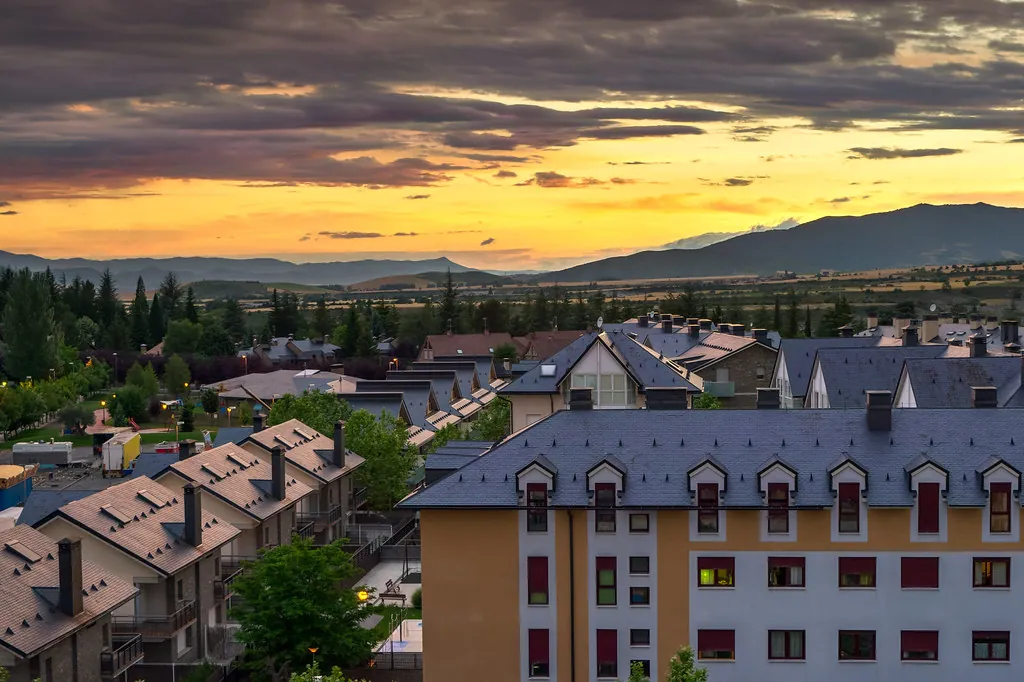
Houses are built from the mountain they stand on. Granite blocks, quarried a mile away, are locked together without mortar gaps; roofs are black slate split thick enough to survive the Atlantic storms that roll in over the French border. Chimneys taper like factory funnels because winter draughts demand it, and front doors are studded with iron bolts wide as a farmer's wrist. Some façades have been restored with German precision, others wait their turn, timber props holding up balconies until next summer's work gang returns. The effect is neither chocolate-box nor ruin-porn; it is simply a village on its own schedule.
The only public building of note is the Romanesque church of San Lorenzo, remodelled so often that the apse is twelfth-century while the bell-tower is late nineteenth. Step inside and the temperature drops ten degrees; the font is still used for annual baptisms, the priest drives in from Broto, and the hymn numbers are changed by a girl who cycles up the hill every Sunday morning. Services are in Spanish, but the responses echo in Aragonese if the older parishioners outnumber the tourists.
Museum in a manor
Casa Mazo, the seventeenth-century manor on the upper lane, keeps the village's clocks wound. Its ethnology collection occupies four floors of low-beamed rooms: hemp looms, oak cheese presses, a shepherd's cloak that weighs more than the lamb it once guarded. Opening hours are written weekly on a chalkboard; if nobody turns up by eleven the caretaker locks the door and goes mushrooming. Entry is four euros, cash only, and the hand-written labels are worth reading—one card explains how snowshoes were woven from chestnut withes "before the French invented aluminium".
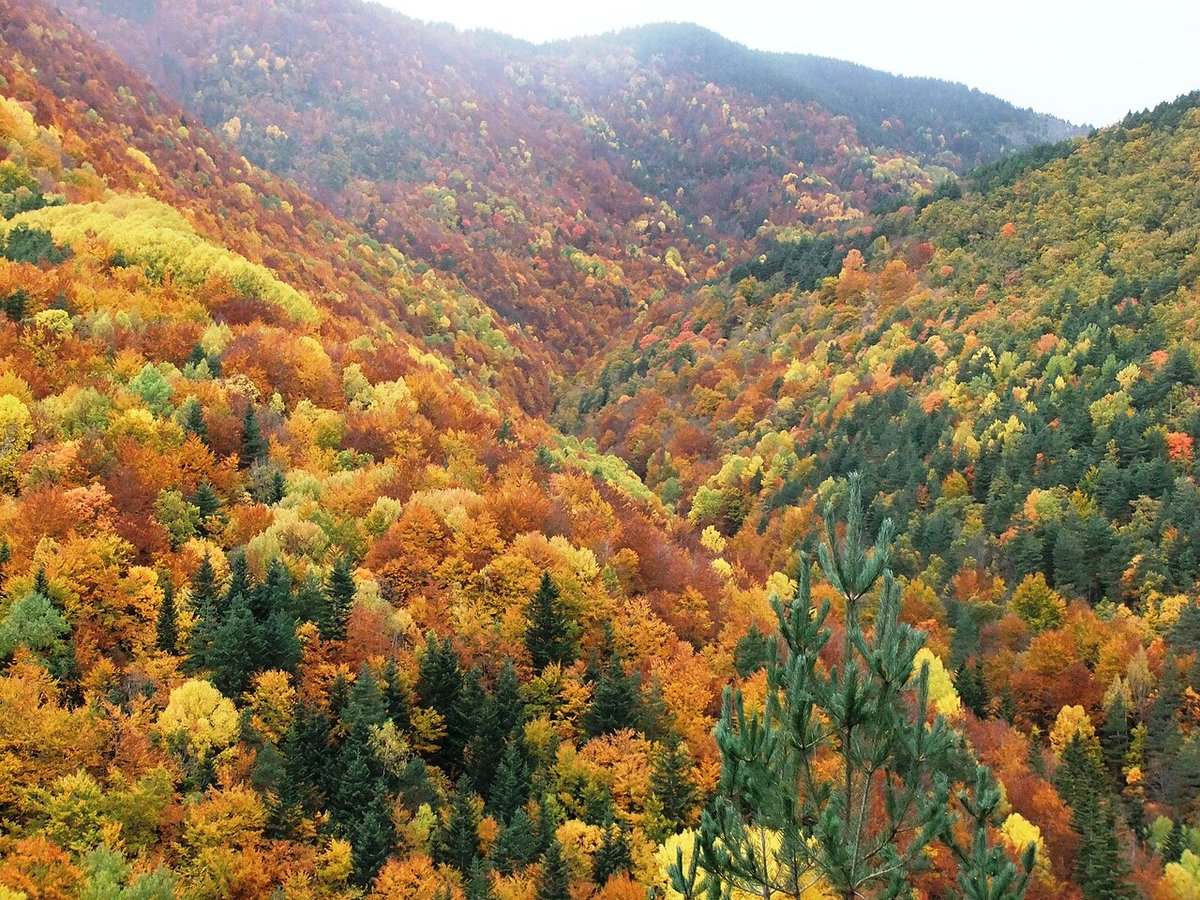
Beyond the last slate roof the path drops through beech woods to the Ara. This is not a gentle English stroll: the river is already a torrent fed by Pyrenean snowfields, and the track fords two side-streams that can rise knee-high after an afternoon storm. Walkers aiming for the Circo de Cotatuero should start early; the climb gains 900 metres in under five kilometres, scree replaces soil two-thirds of the way, and mobile reception disappears exactly where you will want to check the weather radar. The balcony opposite the waterfall rewards the effort with a view straight across to Monte Perdido, but turn back if clouds build—steel-grey mist can drop the temperature fifteen degrees in ten minutes.
Lower ambitions are better rewarded. A forty-minute circle through hay meadows brings you to an irrigation channel built by Moorish prisoners in the tenth century; water still runs ankle-deep, buttercups brush your calves, and Lammergeiers circle overhead like flying garden shears. Evening light turns the stone walls bronze, cowbells mark time, and you understand why the Spanish speak of "la hora mágica" without irony.
Food before eight
Evenings require planning. The village merendero lights its oak fire around seven; beyond that you are hostage to whatever the owner bought in Broto market. Order the ternasco—milk-fed lamb rubbed only with salt and thyme—then watch it grill until the crackling blisters. Chips arrive in a separate dish, salad is iceberg with home-pressed olive oil, and the red wine is from Somontano forty miles south, decanted into a plain glass bottle. Vegetarians get a slab of goat cheese the size of a paperback, melted until it oozes over toasted bread; vegans should have filled the hire-car boot in Huesca.
Puddings are optional but crespillos are not. These thin pancakes are closer to Breton crêpes than to American fluff, served rolled and drenched with local honey that tastes of rosemary and high-altitude thyme. Eat them on the terrace while the last climbers limp down from Ordesa, boots slung over shoulders, already arguing about tomorrow's weather forecast.
Where to sleep
Accommodation is self-catering or nothing. Eight apartments occupy restored houses; beams are original, Wi-Fi is theoretical, and the heating is oil-fired so bring slippers for stone floors. La Casa del Puente has the best river view but the balcony is two metres above the road—lorry headlights sweep across the bedroom at six when the baker delivers. Book early for May and October; walkers reserve a year ahead for the blossom and beech-colour weeks. Winter lets are cheaper, but snow can trap cars for days and the shop shuts entirely from January to March.
Practical truths
Cash is king. The nearest ATM is in Aínsa, twenty-five minutes down a road that ices over by dusk. Fill the tank there too—mountain petrol is ten cents dearer and pumps close at siesta. Phone signal flickers between 3G and none; download offline maps before leaving the motorway. Supermarket choice in the village is chorizo, tinned beans, UHT milk and local cheese that smells stronger than it tastes. Proper shopping means a cool-box run to Broto on Monday morning when the market stalls set up under the medieval arcade.
Leave the drone at home. Lammergeiers are protected, locals value quiet, and the Guardia Civil fine first-time offenders €1,500. Dogs must be on leads—sheep graze the commons until November and farmers carry shotguns loaded with rock salt for careless pets.
Last orders
Fanlo does not sell itself. There are no souvenir stalls, no flag-waving guides, no sunset yoga on the village green. What it offers instead is a calibrated sense of scale: rooms built for bodies, not crowds; paths carved by feet, not excavators; silence deep enough to hear a beech leaf land. Come for three nights, stay for five, drive away before the church bell reminds you the real world is still waiting downstream.