Full Article
about Fonz
Ocultar artículo Leer artículo completo
The fountain in Plaza Mayor flows with the same water it served in 1567. Stand here for five minutes and you’ll see the entire village timetable: a baker hauling almond tarts into Bar Centro at seven, farmers gossiping over cortados at eight, the 09:15 school-run convoy of three Fiats, then silence—apart from the water—until the market clock strikes ten on Tuesday. Fonz, population just under a thousand, runs on ritual, not rush.
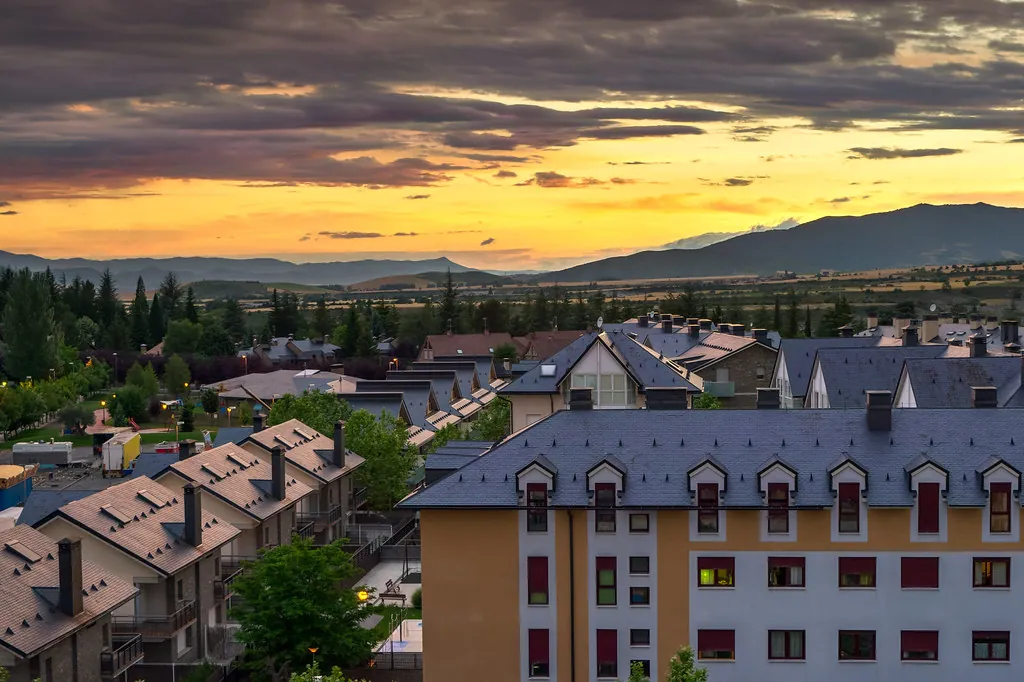
At 471 m above the cereal plains of Cinca Medio, the place is high enough for the air to carry a faint thyme scent from surrounding almond groves yet low enough that winter rarely blocks the single road in. Snow sometimes dusts the rooftops overnight, but by elevenses the cobbles are dry and the elderly men have reclaimed their bench outside the chemist’s. Most British visitors arrive by accident—usually when the A-22’s new tarmac persuades them to “just nip across” from Zaragoza airport to the Pyrenees. Forty minutes later the car crests a low ridge and a scatter of Renaissance stone mansions appears, absurdly grand for a settlement you can walk end-to-end in eight minutes.
Stone, Shield and Sunday Roast
Fonz was never a “hidden” anything; it simply had the good luck to be bypassed by the railway in 1894 and the bad luck to lose half its young men in the 1936 war. What remains is an accidental time capsule: seventeenth-century town houses with carved escutcheons still readable if you know Latin tags, and a church tower you can use as a sundial because the bells still strike the quarters by hand. The parish of San Martín keeps the door unlocked until 13:00; inside, the air smells of candle wax and the previous night’s incense, the stone floor worn into shallow cups by five centuries of pilgrim boots and, more recently, by British walking groups in sensible Merrells.
There is no ticket office, no audio guide, and that is precisely the appeal. The caretaker, Miguel, will point out the 1492 Flemish triptych if you ask; he’ll also tell you that the oak roof beams came from a ship broken up at Barcelona and carted inland by mule. Don’t expect polished marble or baroque excess—this is mudéjar brickwork and timber, sturdy rather than pretty, and all the more convincing for it.
Where to Eat Without Missing the Last Loaf
Meal times are non-negotiable. Kitchens open at 14:00 sharp and last orders are 15:30; try strolling in at 15:55 and you’ll be offered a bag of crisps and a apology. Bar Centro (the one with the unofficial loo) does a fixed-price menú del día for €14 that would shame many a London gastropub: roast ternasco (milk-fed lamb, milder than Welsh salt-marsh), proper chips, and a glass of Somontano garnacha that slips down like Beaujolais. Vegetarians get escalivada—smoky aubergine and peppers topped with sheep’s-milk cheese—because the chef’s daughter studied in Brighton and insisted.
On Tuesdays the travelling market sets up twelve stalls beside the fountain: one greengrocer, one haberdasher, one knife-grinder who looks like a retired roadie. Locals advise arriving before eleven; by noon the baker has sold out of tarta de almendras and the organic almond buyer from Barbastro has cleared the stall. If you need picnic fodder for a walk, the ultramarinos on Calle Mayor will slice jamón to order and let you fill a plastic cup with local olives for €1.20. Close early Monday—both shops shut, full stop.
Flat Trails and Big Sky
The walking is gentle rather than heroic. A signed 7 km loop, the Camino de la Solana, leaves from the back of the church, climbs 120 m through pink almond blossom (March) or rust-red soil (September), then contours back along the river Cinca. You’ll pass more stone threshing circles than people; the only sound is hoopoes arguing in the pines. Cyclists can follow the old service road to Barbastro—dead flat, tarmac mostly intact, and shared with the occasional tractor whose driver will wave you through the dust cloud.
Serious hikers sometimes sniff at the lack of altitude, but that misses the point. This is cereal-steppe country: huge skies, lammergeyers drifting over from the nearby Sierra de Guara, and night skies dark enough for Orion to throw a shadow. In April the fields turn emerald for three weeks, then bleach to platinum by June; bring sunglasses and a wide-brim hat—there is no shade once you leave the village.
When the Village Turns the Volume Up
Fonz keeps its fireworks for November. The fiestas de San Martín (7–11 Nov) start with a ram roast in the square and end with a community lunch at which every family brings its own wine. Visitors are welcome but seating is Bring Your Own Chair; plastic patio chairs stack three-deep round the fountain. If you prefer warmth and wall-to-wall pavement cafés, come for the August feria instead. The population doubles as expat children return from Zaragoza and Barcelona; brass bands march at 23:00 because midnight is still 32 °C. Parking then is a competitive sport—arrive before 19:00 or prepare for a ten-minute shuffle back from the almond depot.
Winter is the trade-off. Days are crisp, skies cobalt, and the stone houses glow honey-gold in low sun. But almost everything except the bar closes by 18:00, and January fog can park itself for a week. Chains are unnecessary on the A-22, yet a pair of walking poles helps when cobbles ice over. Bring a Spanish phrase book; English is thin on the ground from December to March.
How to Get Here, How to Leave
No trains, no Uber, no problem. Fly to Zaragoza (direct from London-Stansted with Ryanair, 2 hr), collect a hire car, and head north-east on the A-22—toll-free and scenic past wind-curved olive trees. Fonz sits 78 km from the airport, 22 km before Barbastro. If you’re already in the Pyrenees, it’s a 45-minute downhill glide from Aínsa on the N-123, then a left turn at the Repsol station whose coffee, locals admit, is “better than it looks.”
Leave early enough and you can breakfast on a cortado in Fonz, picnic on the river walk, buy a bottle of Somontano red from the cooperative shop (€6 if you hand over your own bottle), and still reach the coast for supper. Just remember the baker’s clock: when the church bell tolls 13:30, the ovens switch off and the village slips into siesta. The fountain, of course, keeps going—ready for whoever rolls in next, looking for somewhere that never asked to be found.