Full Article
about Foradada del Toscar
Ocultar artículo Leer artículo completo
The church bell strikes noon, yet nobody appears. A farmer loads hay onto a mule fifty metres away; otherwise Foradada del Toscar is silent except for the wind rattling the slate roofs. At 980 m above sea-level, this Ribagorza hamlet has 158 permanent neighbours, three guest cottages and one bar. If you arrive hoping to tick off monuments, you will be finished by teatime. Come prepared to sit on a stone wall, watch lammergeiers ride the thermals and remember what low-season Britain felt like before traffic and phone masts, and the place begins to make sense.
Rock, Forest and Sky
The name means “the holed one”, a nod to the perforated limestone cliffs that rise immediately east of the houses. Those crags are the reason most foreigners ever hear of the village. British climbers began appearing about fifteen years ago when word spread that you could clip bolts on perfect grey rock while the rest of the Pyrenees vanished inside a cloud. The main sector, Peña Rueba, is a ten-minute walk from the last cottage; 70 m of rope covers almost everything, grades run from 4+ to 7c, and the belay ledges are sunny until four. January can be T-shirt weather here while only twenty kilometres away the A-22 is white with snow. That micro-climate has earned the area the local nickname “Sobrarbe tropical”; take it with a pinch of salt—nights still drop to 3 °C in mid-winter.
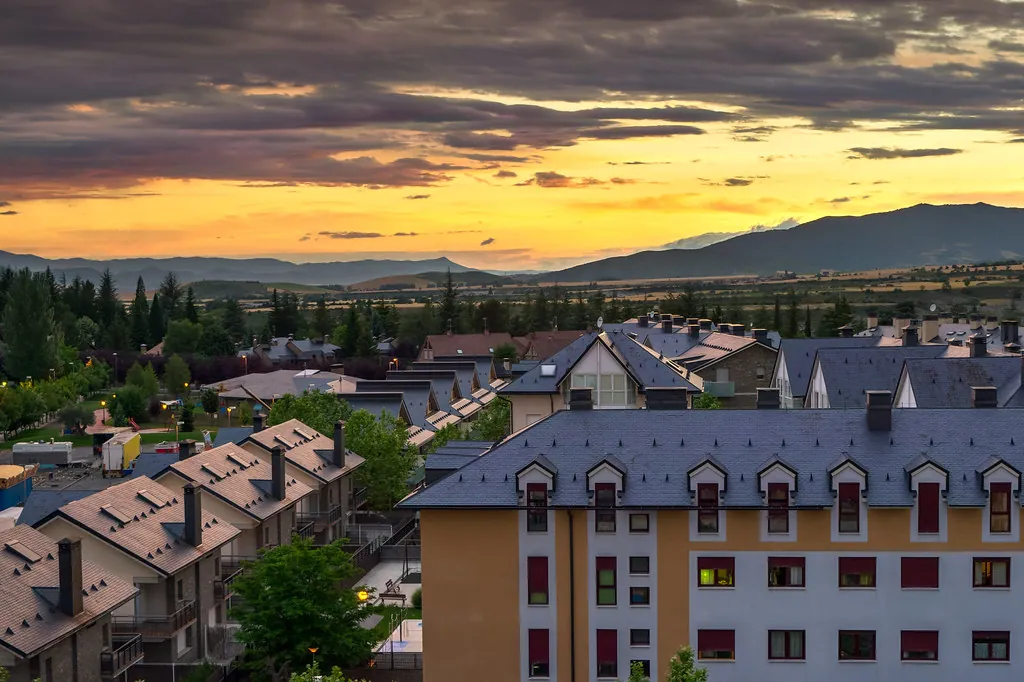
Below the routes, the village sits on a shelf of meadow and oak. Paths strike out in three directions: south along the Barranco de la Cilla, north towards the abandoned hamlet of Arascués, and west onto the open upland pasture called La Plana de Olsón. None of the trails is way-marked to British standards; a downloaded GPX file or the 1:25,000 Adrall map sheet is essential. The reward is middle-of-nowhere silence: red kites overhead, roe-deer slots in the mud and, in May, sheets of purple-flowering thyme that smell like a Kent orchard in high summer.
What Passes for High Street
Foradada’s single lane is barely two cars wide. Houses are built from the mountain itself—lower walls of chunky limestone blocks, upper storeys timbered with beams of dark chestnut. Most doors open straight onto the track; a couple have been converted into self-catering lets with wood-burning stoves and star-view skylights. Booking is straightforward until July, impossible after mid-August when entire Spanish families reclaim their grandparents’ cottages and every spare mattress is spoken for.
The only public building is the 12th-century church, much altered, its bell-tower patched with different stone like a quilt. Inside, the air smells of candle smoke and dust; outside, the tiny plaza gives the best vantage point west along the valley towards the honey-coloured town of Graus. Sit on the bench long enough and someone will nod good afternoon; that is the extent of the social whirl.
Groceries require forward planning. The village colmado opens 17:00–19:00, sometimes, and stocks tinned tuna, UHT milk and not much else. Fill the car in Barbastro (45 min) or at the Consum in Aínsa (30 min). The nearest cash machine is in Campo, 8 km down the hill; the card reader in La Sociedad bar works only when Jupiter aligns with Mercury, so bring notes.
Eating, Drinking and Other Civilised Pursuits
La Sociedad doubles as café, village hall and climbers’ information point. The menu del día costs €12 and runs to soup thick enough to stand a spoon in, followed by chilindrón lamb or pork shoulder slow-cooked with sweet red peppers. Portions are heroic; sharing is socially acceptable. Wine comes in half-litre carafes, coffee is proper espresso, and pudding is usually cuajada, a sort of tangy junket. Vegetarians get tortilla or salad—choose the tortilla.
If you need chips-with-everything, drive ten minutes to Campo and ask for “patatas fritas, inglés style” at Casa Félix. They will arrive thin, crisp and reassuringly familiar, beside trout pulled that morning from the Ésera river. For something fancier, Aínsa has a clutch of gastro-bars doing modern Aragonese cooking; allow €30 a head and book ahead even in March.
Bring tea bags. The village water is soft and tastes wonderful, but Spaniards regard tea as a form of scented water; builders’ strength is unknown. A jar of Marmite will earn you the awed respect of every homesick Brit at the crag.
When to Turn Up, When to Stay Away
April–June is the sweet spot: long daylight, green meadows, orchards in blossom and stable, dry weather. September–October brings colour to the beech woods and temperatures perfect for walking; it also brings hunters, so stick to waymarked routes on Sundays and wear something bright. July and August are hot in the valley (32 °C) but nights remain cool; cottages are booked solid and the otherwise silent farmer opposite will mow at 07:30 sharp. November can be glorious or foul; if the Cierzo wind is blowing, dust whips up the valley and walking feels like sand-blasting. December–February is proper mountain winter: brilliant starry skies, snow two boots deep on north-facing paths, and the bar may close for a fortnight while the owner visits grandchildren in Zaragoza. Chains are compulsory on the N-123 several days each winter; the road is cleared quickly, but without them you will be turning round.
Getting There and Getting Out
Ryanair’s Stansted–Zaragoza flight lands at 13:40 local time; collect a hire car, join the A-22 south of the city and stay on it until Barbastro. From there the N-123 winds up the valley—spectacular, but allow ninety minutes for the final 55 km. Barcelona is an alternative (three-and-a-half hours on the N-260) and works if you fancy combining a couple of days cragging with city tapas on the way home. Public transport stops at Graus; from there a Monday-only bus reaches Campo, leaving you 8 km from the village with no taxi service. In short, you need wheels.
Leaving is easier: south to Huesca and the high-speed AVE back to Madrid, or over the Puerto de la Serra towards the Costa Brava in two hours. The mountains recede in the rear-view mirror; phone signal returns; the 21st century switches itself back on.
Worth It?
Foradada del Toscar will never feature on a “Top Ten Spanish Villages” list—there are no craft shops, no wine museum, no sunset yoga on the village green. What it does offer is space at face value: limestone walls you can walk to with a rack and a sandwich, nights so dark you can read the Milky Way, and a café where the price of coffee has not risen since 2019. If that sounds like your sort of nowhere, come before the rest of Britain realises the mountain is out of bounds everywhere else.