Full Article
about Frescano
Ocultar artículo Leer artículo completo
A village that forgot to shout about itself
The loudest sound in Fréscano at midday is usually a tractor reversing. Stand on the single main street and you can hear the diesel echo off stone walls, bounce past the closed bar, and fade towards the vineyards that start where the pavement ends. Two hundred and four people live here, give or take a cousin at university, and the place behaves accordingly: shutters open at sunrise, dogs nap in the shade of the church, and nobody appears to mind that Google Street View last visited in 2012.
Altitude is a modest 302 m, low enough for the Ebro Valley to feel the full force of the cierzo, the cold north-west wind that can push a cyclist sideways and sandblast exposed ankles. The compensation comes in autumn when the wind scours the sky to a hard blue and the surrounding vineyards turn the colour of rust. On those days the Campo de Borja looks less like wine-country postcard and more like the surface of Mars, only with more tractors.
What passes for sights
San Miguel Arcángel, the parish church, squats at the top of the only slight hill. Parts of the walls are 16th-century, the tower is 18th, and the interior smells of candle wax and floor polish. Inside, three retablos painted in ox-blood and gold survive from the days when local wine profits paid for stone saints rather than satellite dishes. The building is usually open; if not, the key lives with the sacristan whose house is the one with the vine trellis and the perpetually half-open door.
A slow circuit of the lanes takes twenty minutes and delivers a crash course in Aragonese building stone: soft honey-coloured blocks at the lower levels, harder reddish stuff above, brick wherever the budget ran thin. Some doorways still carry the family crests of minor nobility who thought a coat of arms might disguise the smell of the pigsty. Most houses are in good repair; a handful have slipped into elegant decay, roof tiles missing like teeth in an old boxer. There is no ticket office, no audio guide, and nobody trying to sell you a fridge magnet. Refreshing, until you realise you have already seen everything.
Lunch, if you remembered to book
Fréscano does not do restaurants. The bar opens when the owner returns from the fields, shuts when the last customer leaves, and may declare a private fiesta without warning. Your best shot at food is to ring the ayuntamiento (976 898 002) the day before and ask whether anyone is laying on comida for outsiders; usually one house will cook for four covers if you promise to eat whatever emerges from the oven. Expect roast peppers, migas fried in olive oil, and lamb so tender it slides off the shoulder blade. Bring cash; cards make people laugh. Price hovers around €14 a head including wine that arrives in an unlabelled bottle and tastes of blackberries and dust.
If nobody answers the phone, drive nine kilometres to Magallón where Bar Casa Ramón serves a three-course menú del día for €12 with waiters who still wear white jackets. The journey takes twelve minutes and feels like cheating, but hunger is hunger.
Walking without drama
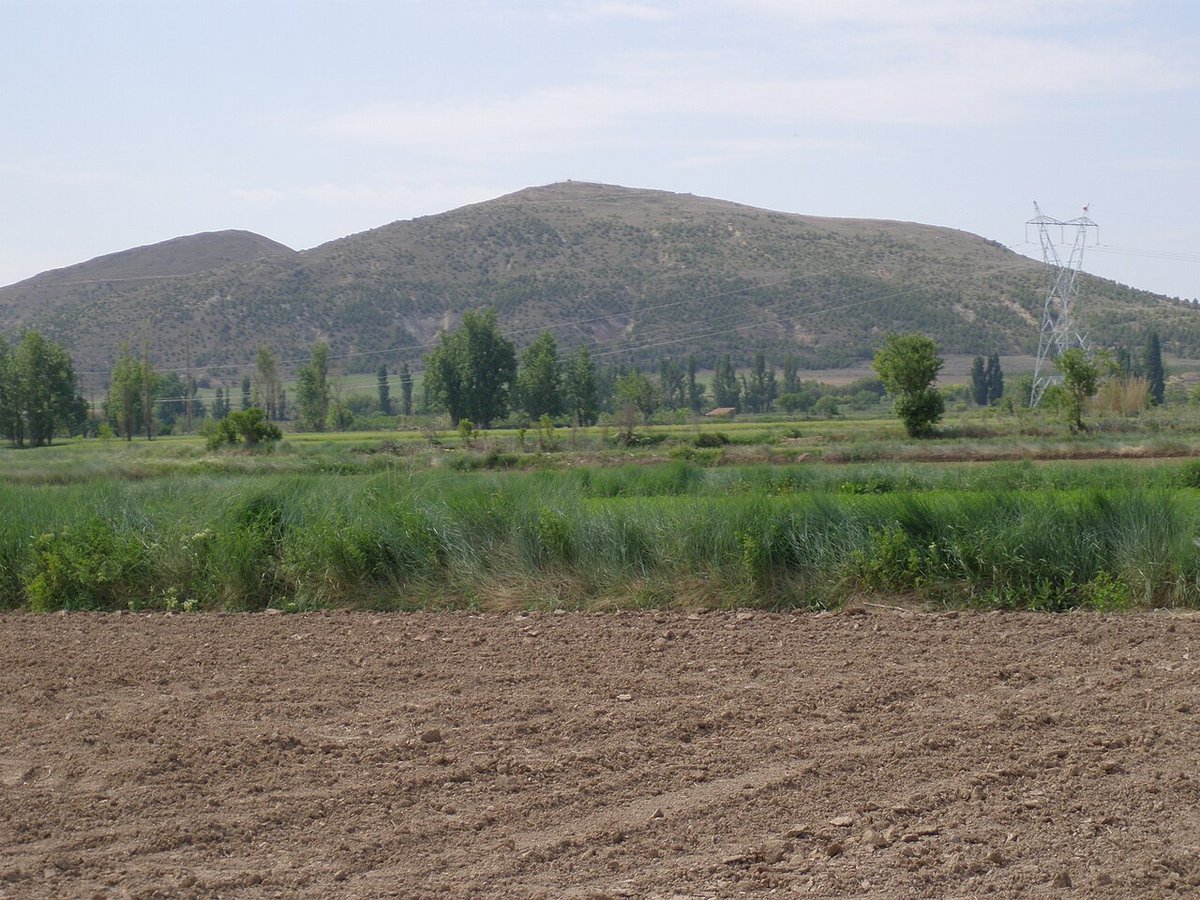
Three farm tracks leave the village, graded gravel wide enough for a combine harvester. The yellow-blazed route to Vera de Moncayo is the gentlest: 7 km, flat, no shade, so start early. In April the wheat is knee-high and green; by late June it has turned blonde and hisses in the wind. Vineyards dominate the middle distance, garnacha vines head-high and thick as a man’s wrist, trained low to snatch moisture from the soil. You will meet more lizards than humans.
Carry water; there are no fountains. Mobile reception flickers in and out, mostly out. The payoff is a horizon that stretches from the snow-dusted Moncayo massif to the flat blue line of the Ebro, uninterrupted by golf courses or industrial estates. Turn back when you feel like it; the landscape looks much the same for the next twenty kilometres.
Wind, wine and winter
Spring and autumn are the comfortable seasons. Daytime temperatures sit in the low twenties, nights cool enough to justify a jumper. Summer is a furnace: 38 °C is routine, shade is scarce, and the cierzo can feel like a hair-dryer set to max. Winter brings the opposite problem: grey skies, temperatures hovering just above freezing, and that same wind knifing through every layer you own. Snow is rare but not impossible; if it arrives the village becomes a cul-de-sac until the plough reaches the N-122.
The local wine cooperative, Bodegas Campo de Borja, runs tastings in nearby Ainzón (Monday-Friday, €5). Their garnacha is cheap, cheerful, and punches above its weight at 14.5%. Driving is unavoidable; Spanish drink-driving limits are stricter than the UK’s, so draw lots for a designated driver or spit politely.
Getting here without tears
From Zaragoza airport, pick up a hire car and take the A-68 towards Logroño. Exit at junction 17 (Mallén) and follow the Z-502 through endless wheat. The final approach involves a right turn at a petrol station that looks closed but isn’t, then ten minutes of straight road. Total distance: 65 km, fifty minutes if you resist stopping for photographs of abandoned threshing circles. There is no bus; a taxi from the airport costs around €90 and the driver will assume you are lost.
Parking is wherever you can squeeze a wheel without blocking a barn door. Saturday morning fills up with returning offspring and the streets narrow alarmingly; if you value your wing mirrors, leave the car on the edge of the village and walk in.
When to bother
Come in late April for the agricultural fair at nearby Borja: tractors polished like museum pieces, stalls selling garlic braids, and elderly men arguing over the price of a second-hand plough. Late September brings the fiestas de San Miguel: three days of processions, brass bands that have not quite mastered the concept of tuning, and a paella cooked in a pan the diameter of a satellite dish. Both events double the population and guarantee somewhere to eat, though beds are still scarce; book in advance or plan to drive back to Zaragoza.
Outside those windows Fréscano reverts to its default setting of quiet, wind-scoured and indifferent. That is both its virtue and its limitation. Turn up expecting entertainment and you will be disappointed. Arrive happy to watch wheat grow and you might understand why some people choose to stay.