Full Article
about Frias de Albarracin
Ocultar artículo Leer artículo completo
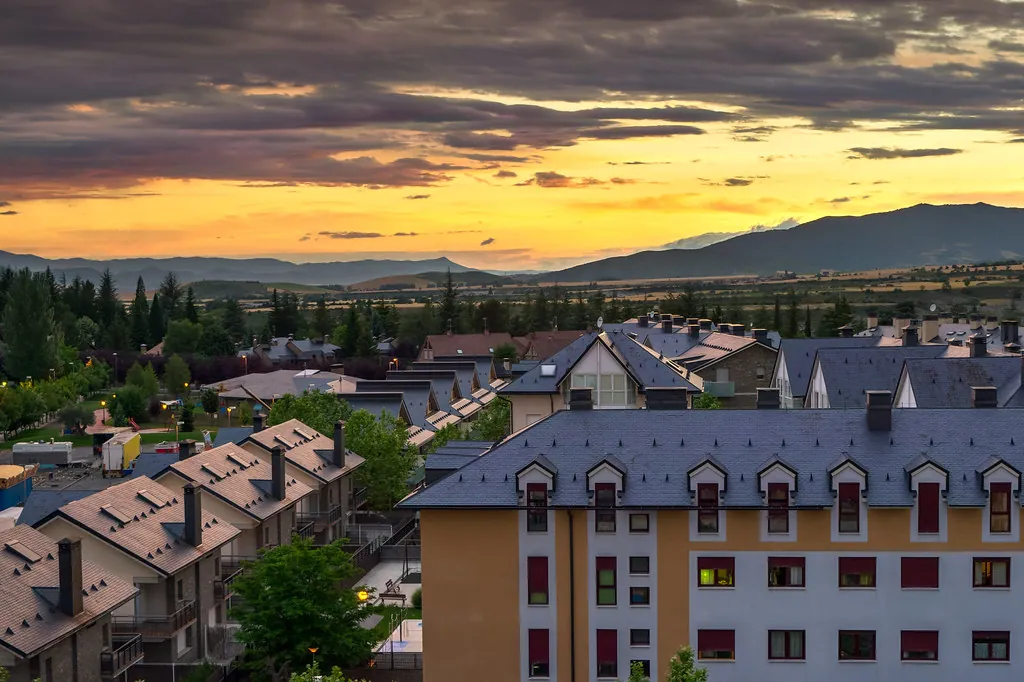
The stone roofs still carry snow at Easter. From the single bench outside the church you can look south-east and count four distinct ridges before the land flattens somewhere beyond Cuenca. At 1 400 m the air thins faster than you expect; bring a fleece even if Valencia is sweltering two hours away.
Frías keeps a different calendar to the rest of Spain. When the weekenders leave Albarracín – the famous walled town 35 km back down the TE-V-9013 – the lane to Frías carries on climbing through pine and empty pasture until phone signal dies and the tarmac narrows to one cautious car’s width. The village appears suddenly: a tight cluster of reddish stone houses stapled to the slope, smoke rising straight up in the windless dusk. Officially 105 people live here; on a wet Tuesday in February you will meet perhaps six of them.
Stone, silence and the smell of pine
No souvenir stalls, no ticket office, no coach park. The centre is simply the point where two lanes meet beside the sixteenth-century parish church. Its bell tower serves as both clock and weather vane; when the bronze strikes noon the sound ricochets off the opposite crag loud enough to make walkers glance up from the path that doubles as Calle Mayor. Houses are built shoulder-to-shoulder, walls sharing the same geological bedrock. Roofs pitch steeply so winter snow can slide off; gutters are lined with fist-sized lumps of quartz that sparkle after rain. Frost-shattered tiles are replaced from a stack kept beside every woodstore – maintenance is a neighbourly affair rather than a municipal one.
Frías is not pretty in the picture-postcard sense. It is coherent: every element answers to altitude and isolation. Windows are small, doors open inwards, and the single bar keeps winter hours (shut Monday, Tuesday, Wednesday if the caretaker’s back plays up). What you get instead of architectural flourishes is space – the sort of high-country emptiness that makes conversation drop to a murmur. Stand on the concrete lip above the last house and the valley drops away into a hush broken only by chainsaws two hills over and, occasionally, a raven.
Walking without way-markers
The village makes a natural base for half-day rambles rather than epic hikes. A gravel track leaves from the top fountain, passes an abandoned threshing floor, then splits: left follows the ridge towards the Sima de Frías, a limestone sinkhole 3 km on; right descends through Scots pine to the Guadalaviar tributary where kingfishers work the pools. Neither path is signed in English, both are clear enough if you download the 1:25 000 map beforehand. The Sima circuit adds up to 8 km with 250 m of ascent; the final viewpoint is fenced but the wooden rails are rotten, so keep dogs and children back. On a clear April morning you can pick out the white salt pans of the Mancha, 120 km south.
Autumn brings the colour – not the soft ochres of New England but a sharper Spanish palette: russet oak against black pine, broom yellow on the scree, and the sudden scarlet of rowan berries where groundwater seeps. It is also mushroom season. Local families set off at dawn with knives and wicker baskets; outsiders may collect up to 3 kg a day but need a regional permit (€7 online, printable at the Teruel tourist office). Even without a licence it is worth tagging along on the village foray – the mycologist who leads it charges €15 pp and will explain why the local bolete smells of blue cheese.
Food designed for the cold
Lunch options inside Frías are limited to the bar, which opens at 13:00 and serves whatever María has decided to thaw. Expect cordero al estilo de Teruel – slow-roast lamb scented with bay – or migas pastoriles, a hearty fry-up of breadcrumbs, garlic and scraps of bacon that tastes like Christmas stuffing. Vegetarians usually get a plate of setas sautéed in olive oil and a lecture on the correct way to slice a níscalo. Wine comes from Cuenca in plastic litre bottles; water is safe but high in calcium, so tea drinkers will need two bags.
If you want choice, drive ten minutes down to Toril y Masegoso where two competing restaurants offer weekday menús for €14. Both do a respectable trucha a la navarra, the local trout stuffed with serrano ham, and in season you will see venison cannelloni (canelón de ciervo) dense enough to fuel an afternoon on the ridge. Puddings are stodgy: arroz con leche thick enough to stand a spoon, or quince jelly with fresh curd. Nobody counts calories at 1 400 m.
When to come – and when to stay away
Late May and early June give warm days, cold nights and a good chance of empty guest rooms. The village fiesta is 15 August; former residents return from Zaragoza and Madrid, population swells to perhaps 400, and someone wheels a sound system into the plaza. If you enjoy spontaneous folk dancing and free-flowing vermouth, book early; if you came for silence, avoid that weekend. Winter is magnificent but serious: the TE-V-9013 is gritted only as far as the cattle shed 4 km below the houses, and the final hairpin ices over by dusk. Carry snow chains November-March even if the hire-car desk in Madrid shrugs and says “not forecast”.
Accommodation is the weak link. The only hostal occupies the ground floor of a house built in 1897; online photos show stone walls and a wood-burner, recent British reviews mention mouldy grout, lukewarm showers and sheets that smell of kerosene. Bring a sleeping bag liner and expectations calibrated to mountain refuge rather than boutique. Cleaner, warmer rooms are available 20 minutes away in Albarracín, but then you miss the night sky and the first coffee with locals who still measure distance in hours on foot.
Getting here, getting out
There is no railway. The weekday bus from Teruel reaches the turn-off at 16:45; from there it is a 4 km uphill trudge on tarmac with no verge. A hire car is simpler: Madrid-Barajas to Frías is 220 km, mostly motorway to Teruel then the winding A-1512. Budget two tolls (€13.40 total) and fill the tank in Teruel – the village has no fuel, no cash machine, and the nearest supermarket is a freezer chest in the bar. Phone coverage on EE/Three drops to 3G inside the houses; WhatsApp voice works, Google Maps sometimes does not. Download an offline track of the Sima walk before you leave the main road.
Leave time for the descent. After two or three days the silence recalibrates your ears to small noises: a pine cone dropping on stone, the soft clop of a neighbour’s mule on the cement track. Back on the lower road, when traffic resumes and the radio fuzzes back to life, you may find yourself driving slower than you arrived – still half tuned to mountain time, half reluctant to rejoin Spain in a hurry.