Full Article
about Gallocanta
Ocultar artículo Leer artículo completo
Dawn over the lagoon – minus three and worth it
At seven in the morning the thermometer on the church wall still shows –3 °C. Park at the mirador just outside the village, zip every pocket against the wind, and wait. First comes a low mutter that grows into rolling thunder: thirty thousand common cranes lifting off the water in ragged wedges, heading inland to feed on spilled maize. The sky turns from bruised violet to pewter as they pass overhead, wings creaking like old floorboards. No admission fee, no commentary, no café – just birds, wind and the smell of salt mud. British visitors tend to reach for the word “Serengeti”; locals simply call it el paso, the passage.
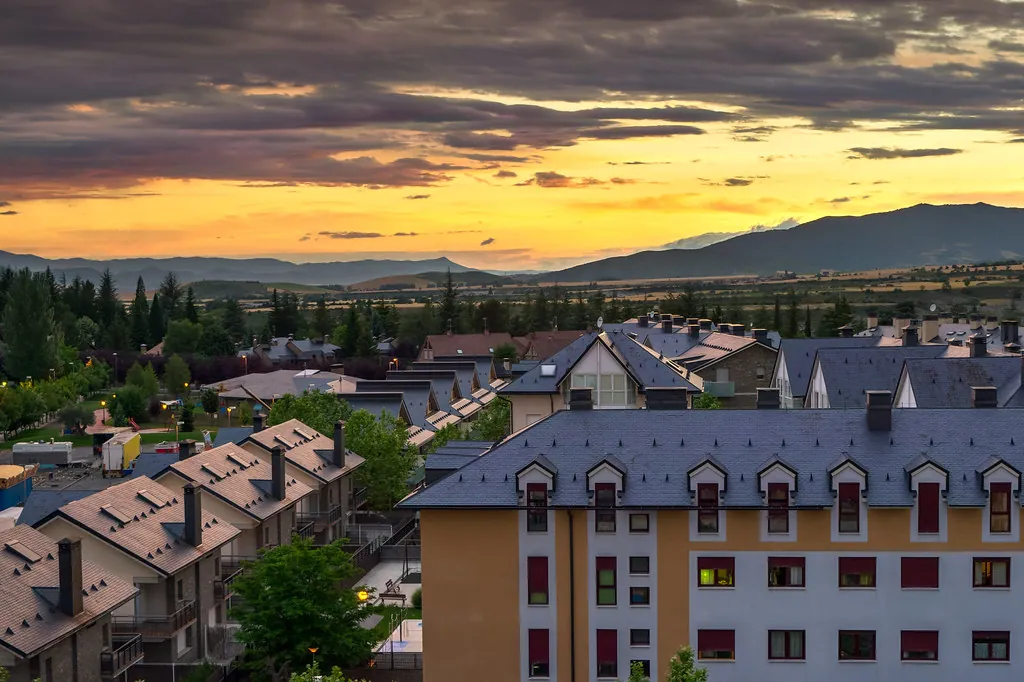
Gallocanta itself is a single-street village 1,011 m up on the Aragonese steppe, halfway between Zaragoza and Teruel. Stone houses, pan-tiled roofs, population 120 on a busy Sunday. The lagoon sits a short walk south – 1,400 hectares of shallow brine that can vanish entirely in drought years yet still pulls in half of Europe’s cranes each autumn. The draw is not scenery in the postcard sense but scale: you stand at the edge of a flat bowl the size of Jersey and watch wildlife numbers that make the Farne Islands feel intimate.
Getting your eye in
Crane viewing is refreshingly low-tech. The hides are wooden sheds with bench slits; the best, Ermita del Buen Acuerdo, sits two kilometres west along the dirt track sign-posted “Bello”. English labels are patchy, so pick up the bilingual leaflet at the Interpretation Centre first (open 10:00–14:00, 16:00–18:00; free). You do not need a Swarovski-scope – any 8×42 binoculars suffice – but without optics the birds resolve into grey commas. Arrive thirty minutes before sunrise or two hours before sunset; midday thermals send the flocks high and restless.
If you come in late October you will share the mirador with a dozen Spanish photographers wearing camouflage Snoods. Visit between Christmas and New Year and you may have the place to yourself – but the cranes will be in Extremadura, not here. Numbers peak mid-November and again in late February when passage birds heading north pause to refuel. Check the weekly census posted on @gallocanta_cranes before you set off; counts can swing from 60,000 to 6,000 in a fortnight if a cold front pushes through.
Walking the rim
A 14-kilometre gravel track circuits the lagoon. The going is level, but there is no shade and the wind scythes across the steppe even in April. Allow four hours, carry water, and expect your boots to cake with white salt paste. Halfway round you reach a stone chozo, a shepherds’ hut now used by conservation volunteers; they will refill a bottle and point out which field the cranes are using that day. Short on time? Do the eastern arm only – park at the agricultural depot, follow the markers for 45 minutes, then retrace as the views open onto the main sheet of water.
Spring brings a softer palette: black-winged stilts, avocets, the first flocks of lesser kestrels tumbling over the village roofs. By May the lagoon has usually evaporated into a cracked salt pan; temperatures hit 30 °C and snakes leave zig-zag prints across the track. Summer is for larks – Calandra, Crested, Thekla – but not for people unless you enjoy sunstroke.
Food, fuel and the four-hour lunch
Gallocanta has two bars and one restaurant, Allucant, on the main road. Opening times obey the rural clock: food 14:00–16:00, dinner 21:00–22:30; if you need an early plate for children phone ahead and they will grill a half-chicken at six. The set menú del día costs €14 and includes water, bread and a carafe of local Cariñena – softer than Rioja, easy on the head. Vegetarians get roasted peppers and a fried egg; beyond that choices shrink to omelette or omelette. Try migas aragonesas, fried breadcrumbs with grapes that taste like savoury bread pudding, ideal after a morning in the hide.
Fill the car in Daroca, 22 km north, because the village pump closed years ago. While there stock up at the supermarket on the Calle Mayor; Gallocanta’s only shop opens unpredictable hours and sells more shotgun cartridges than lettuce.
When the lagoon dries out
Gallocanta is honest about drought. Roughly one winter in five the rains fail and the basin becomes a mosaic of salty polygons dotted with dead tamarisk. Bird numbers drop, photographers stay away, and the village turns inward. Even then the trip is not wasted. Drive ten minutes south to the ruined Iberian settlement of Cerro de la Muela – stone walls 2,400 years old with no ticket office, no rope, just lizards and 360-degree steppe. Or head 40 minutes to the Monasterio de Piedra for waterfalls and a proper coffee machine, combining cranes one day with monastic gardens the next, a loop British road-trippers increasingly plug into autumn half-term.
Staying the night
Accommodation is limited and, crucially, heated. The standout is Casa Rural La Laguna, three stone cottages rebuilt around a hay loft, double rooms €70 including firewood and telescope. Breakfast brings local honey and thick hot chocolate capable of restarting circulation after a dawn hide session. Alternative: Hotel Gallocanta opposite the church – functional 1990s block, rooms €55, radiator guaranteed but charm scarce. Book ahead for February weekends; birders reserve a year out.
Mobile signal flickers between 3G and nothing. Download offline maps and your boarding pass before leaving the A-23 motorway. Snow closes the lagoon track two or three days most winters; carry chains if a cold front is forecast – the road from Daroca is ploughed late and never salted.
An honest verdict
Gallocanta will not suit everyone. There are no souvenir stalls, no boat trips, no sunset kayak rentals. If the cranes have moved on you are left with wind, horizons and a bar that may be shut. Yet for anyone who has queued to board a Scottish island ferry or jostled for space in a Norfolk hide, the emptiness is the point. Stand on the mirador at first light, watch thirty thousand wings beat overhead, and the M25 feels geological ages away. Come prepared – binoculars, layers, a full tank – and the village gives you Europe’s largest crane roost on its own quiet terms. Miss the season and you will still find steppe, salt and space, commodities growing rarer by the year.