Full Article
about Hinojosa de Jarque
Ocultar artículo Leer artículo completo
The only queue you’ll join in Hinojosa de Jarque forms at the village fountain on Saturday mornings, when four-wheel-drives from Teruel rattle in to fill 25-litre jerrycans. The water is free, the conversation minimal, and by half past ten the track is quiet again. At 1,224 metres, this scatter of stone houses and sloping roofs feels closer to the steppe than to any Mediterranean postcard: winters hit –10 °C, July sun fries the clay at midday, and the prevailing sound is wind moving across cereal stubble.
A Landscape That Forgot People
Drive the final eight kilometres from the A-23 and the tarmac narrows to a single lane gouged by tractor tyres. Pines give way to low, grey-green kermes oaks; the earth turns the colour of iron oxide for good reason—this is the southern lip of the Cuencas Mineras, a plateau hollowed out for lignite and copper until the 1990s. The village itself never grew beyond 250 souls, and the current head-count of 106 includes three dogs officially registered in the ayuntamiento census. Roofless miners’ cottages appear every few hundred metres, their beams removed for firewood, leaving doorframes that open onto miles of steppe.
Inside the settlement the streets are still laid out for livestock, not cars. A house width averages four metres: room for a mule and cart, tight for a modern SUV. Stone walls are capped with irregular Arabic tiles that have sagged like old biscuit. There is no souvenir shop, no information board, no ticket booth—just a noticeboard outside the church giving harvest times and the funeral list. British visitors expecting whitewashed Andalucían lanes may wonder if they’ve taken a wrong turn; the palette here is straw, rust and slate, relieved only by crimson peppers drying on a wire rack.
What There Is to See When There Isn’t Much
Start at the 16th-century parish church of San Pedro Apóstol. The building is locked unless you ask for the key at number 17 across the square; a woman named Vicenta will lend it while she finishes kneading bread. Inside, a single nave ends in a wooden Mudéjar ceiling—pine beams painted ox-blood red, the colour common to every farmhouse rafter in the county. No gold leaf, just the faint smell of beeswax and a 1940s loudspeaker still bolted to the bell-tower wall for Franco’s radio addresses.
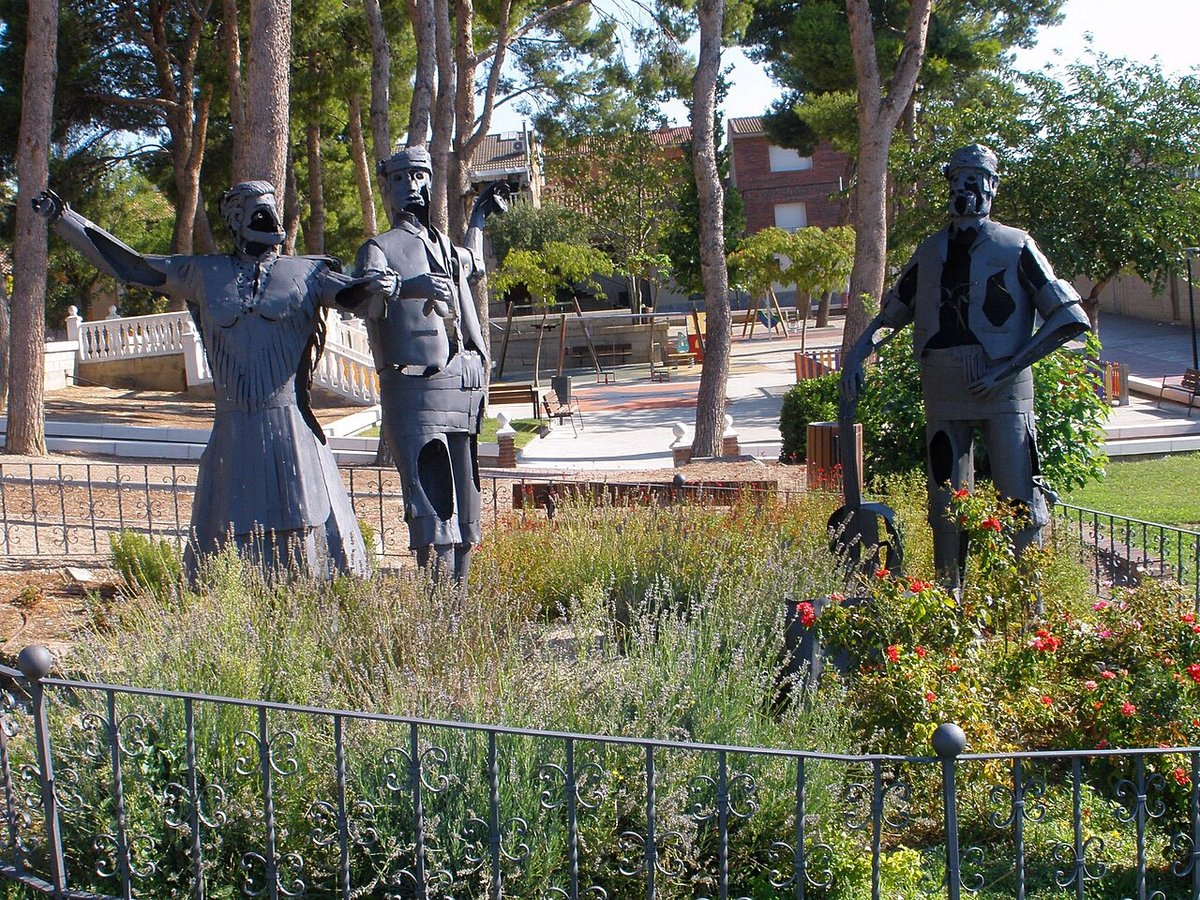
Fifteen minutes uphill on a stony path is the so-called Sculpture Park, an open-air project begun by Zaragoza art students in 2004. Fifteen rusted steel plates stand among thyme clumps, each cut with a line of verse from the local poet Manuel Vilas. The views east reach across a sea of monochrome scrub to a horizon that could be North Africa. Allow 45 minutes for the circuit; flip-flops will be shredded, proper shoes are non-negotiable.
Back in the village, peer through the window of the old school—closed since 1997—to see desks still arranged for twenty children who now catch a 6 a.m. bus to Montalbán. A hand-drawn map of Europe curls on the wall; Britain appears to float somewhere west of Iceland. The building doubles as the polling station, so if you visit on election day you may find more journalists than residents guarding the ballot box.
Walking Without Waymarks
Hinojosa works best as a base for short, self-reliant hikes. A farm track south-west climbs two kilometres to the ridge of Cabezo de las Cruces (1,460 m), where the only company is a herd of black Avileña cattle and the occasional griffon vulture sliding overhead. The path is unsigned but obvious: keep the antenna on your left, the Ebro basin on your right. In May the verges explode with purple viper’s bugloss and white asphodel; by late June everything is blond and crackles underfoot.
Serious walkers can link a 12-kilometre loop past the abandoned Mina María, a sandstone cutting fenced off for safety but easy to view from the rim. Bring water—there is none after the village fountain—and download an offline map; 4G flickers in and out like a bad radio station. In winter the same tracks become hard-packed snow and you can follow lynx prints without meeting another bootprint. Chains may be required on the approach road between December and February; the ayuntamiento grades it “black” when ice forms and will not answer the phone.
Food Meant for Shearers and Miners
There is no restaurant, so eating involves forward planning. The bakery in neighbouring Ojos Negros (15 minutes by car) sells excellent empanadillas filled with tuna and piquillo pepper—stock up before you arrive. If you want a sit-down meal, drive 25 minutes to Hotel La Trucha in Albentosa; their menu del día runs to three courses plus wine for €16. Order ternasco de Aragón, milk-fed lamb roasted in a beech-fired oven until the skin turns to smoky crackling. The flavour is milder than Welsh mountain lamb, closer to spring chicken, and arrives with proper chips rather than the feared frozen variety.
Back in the village, self-caterers can light the open hearth in most rental houses. Local pork belly costs €7 a kilo from the travelling butcher who parks outside the church every Thursday at eleven. He also stocks morcilla sweetened with onion—excellent crumbled into migas, a peasant fry-up of breadcrumbs, garlic and bacon that tastes like savoury Christmas stuffing. Wines from Cariñena start at €3.50 a bottle in the petrol station on the A-23; the Garnacha tinta punches well above its price and slips easily into a rucksack for sunset drinking on the ridge.
When the Village Throws a Party
Festivities centre on the weekend closest to 15 August. A sound system the size of a small house is wheeled into the plaza, and for thirty-six hours Hinojosa doubles in population as emigrants return from Zaragoza and Barcelona. The programme is reassuringly unchanging: Saturday evening, mass followed by procession behind a brass band; midnight, fireworks launched from a wheelie bin; Sunday midday, communal paella cooked in a pan two metres wide. Visitors are welcome to stir—just bring your own wooden paddle and accept that the rice will contain rabbit vertebrae. By 2 a.m. on Monday the last cousin has driven away and the village drops back into hush.
In winter the calendar shrinks to the Día de los Santos Inocentes (28 December) when teenagers drag a home-made nativity scene door-to-door on a tractor trailer, singing for sweets and anisette. It is the only time you will hear English spoken—usually a ten-year-old demanding “one pound for the kitty” because her uncle once worked in Slough.
Beds, Bills and How to Get Out Again
Accommodation is limited to three privately owned houses booked through Casai or Niumba. Casa Victoria sleeps ten, has proper central heating (rural Spain is finally discovering insulation) and allows dogs to roam the lane without causing traffic chaos. Expect to pay £110 a night for the whole house, minimum two nights. Mobile signal is strongest upstairs on the landing beside the bathroom—guests have been known to conduct conference calls perched on the bidet.
The nearest cash machine is 25 kilometres away in Teruel; the village shop closed in 2012, so bring everything including toilet paper. Petrol stations on the A-23 close at 10 p.m.—miss that and you are stranded until six the next morning. If the car fails, the village mechanic works Tuesdays and Fridays only; outside those days you will need the grúa from Teruel at €120.
Leaving, you retrace the same winding road, radio crackling between valleys. The emptiness that felt daunting on arrival now registers as a rare commodity—1,224 metres of silence, a place where Spain’s rush to the coast never arrived and the loudest Saturday night ends at the village fountain, jerrycans clanking into boots before the dust settles again.