Full Article
about Hoz de Jaca
Ocultar artículo Leer artículo completo
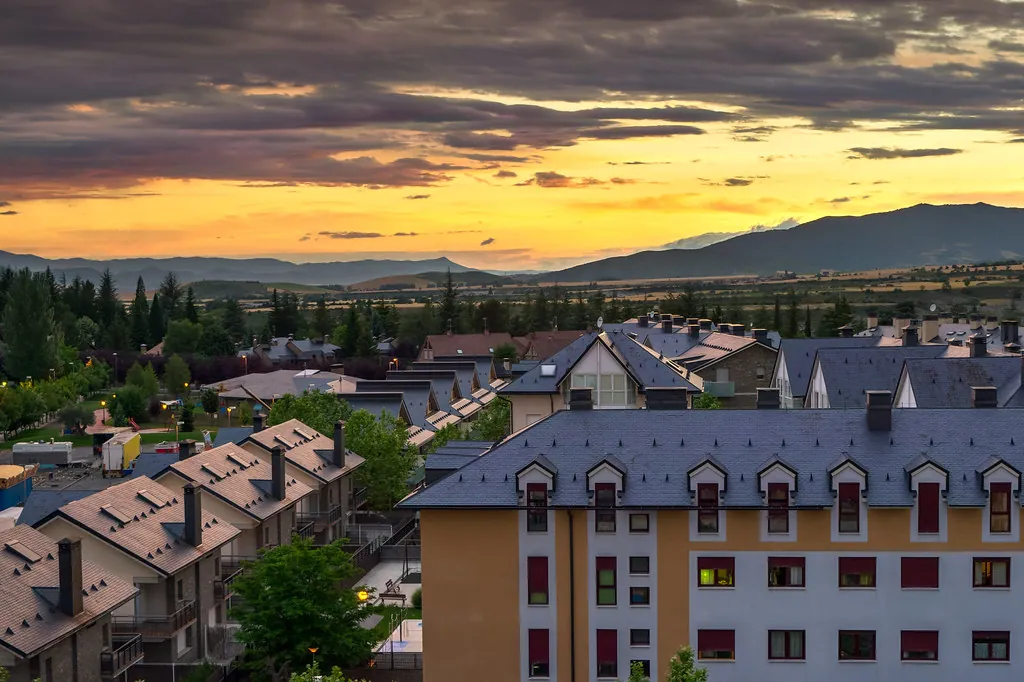
The church bell strikes seven as morning light creeps across the slate roofs, illuminating stone walls thick enough to withstand centuries of Pyrenean winters. Below, the Búbal reservoir glints like polished metal, 200 metres beneath the village edge. This is Hoz de Jaca at dawn—population seventy-six, altitude one thousand two hundred and seventy-two metres, and a world away from the Costa del Sol.
Living on the Edge
The village clings to a limestone ridge like a swallow's nest, its houses packed so tightly that neighbours can pass sugar across alleyways barely shoulder-width. Every dwelling faces south-west, angled to catch winter sun while stone porches deflect the northerly winds that whip through the Gallego valley. Walk the single main street—Calle Mayor, though it's scarcely two hundred metres—and you'll notice doorways wide enough for livestock, haylofts converted into studios, and balconies carved from single beams of chestnut. These aren't heritage features added for tourists; they're survival mechanisms perfected over five centuries.
The altitude changes everything. In April, when Zaragoza bakes at 25°C, Hoz de Jaca might still see frost. Summer evenings demand a fleece even in July, and winter snow can isolate the village for days. The local saying goes "nueve meses de invierno y tres de infierno"—nine months of winter, three of hell—but visit in late May and you'll find wild orchids blooming between limestone outcrops while vultures circle thermals above.
What You're Really Here For
Forget tick-box sightseeing. The village's single architectural highlight is the stone church of San Miguel, its squat bell tower more fortress than place of worship. Inside, faded frescoes date from 1783, though the building itself incorporates Romanesque elements from four centuries earlier. More telling are the practical details: gun slits rather than windows on the north wall, a doorway positioned to block prevailing winds, graves packed tight against the building for warmth—this is religion adapted to mountain life.
The real draw lies beyond the village edge. A ten-minute walk north brings you to the mirador, a simple stone platform where the ground drops away dramatically. From here, the Búbal reservoir stretches ten kilometres east-west, flanked by beech forests that explode into copper and gold during October. Bring binoculars: griffon vultures nest in the cliffs opposite, and occ asionally golden eagles drift past at eye level. The Pyrenees proper rise another thousand metres beyond—on clear days you can pick out the distinctive silhouette of Pico Collarada, its 2,886-metre peak still snow-capped in June.
Walking options range from gentle to properly demanding. The PR-HU 54 trail loops five kilometres through pine forest to neighbouring Búbal village, passing abandoned watermills and irrigation channels carved from living rock. More ambitious hikers can tackle the GR 11 long-distance path—stage 3 starts eight kilometres away at Formigal ski station, climbing 800 metres to the Collado de Petraficha before descending to Panticosa. Summer only: winter snow makes the route technical.
Eating and Drinking (Elsewhere)
Here's the honest truth: Hoz de Jaca isn't a dining destination. The single bar, Casa Julian, opens sporadically outside August—ring ahead to check. Instead, base yourself here but eat in neighbouring villages. Ten minutes down the mountain, Panticosa offers proper restaurants serving ternasco (milk-fed lamb) so tender it cuts with a fork. Try Casa Morillo's version, slow-roasted with local rosemary and served with patatas a lo pobre—potatoes fried with onions and green peppers. The set lunch menu costs €14 midweek, including wine.
For self-catering, stock up in Sabiñánigo before you climb the mountain. The village shop keeps Spanish hours (9am-2pm, closed Sunday) and stocks basics: bread delivered daily from Biescas, local cheese that tastes of wild thyme, and surprisingly good wine from Somontano vineyards an hour south. Bring cash—the ATM runs dry at weekends when Spanish families descend.
When to Visit, When to Avoid
Late May through June delivers wildflowers, empty trails, and daytime temperatures hovering around 22°C. September offers similar conditions plus autumn colours starting mid-month. August brings chaos: the village population swells to perhaps 400, parking becomes impossible, and the peaceful silence that defines Hoz de Jaca disappears under a soundtrack of car alarms and children's scooters.
Winter divides opinion. January transforms the village into a Christmas card scene—stone houses topped with snow, wood smoke scenting sharp mountain air, complete silence broken only by church bells. But access becomes problematic. The A-136 from Biescas features eight hairpin bends and requires snow chains when the white stuff falls. Even with 4WD, the final approach can close entirely during heavy dumps. Book accommodation with parking; navigating icy alleys with luggage isn't amusing.
The Practical Bits That Matter
Fly Ryanair from Stansted to Zaragoza (2h 10m), then hire a car—essential, public transport stops at Biesbas eight kilometres below. The drive takes ninety minutes via the A-23 and N-330, the final stretch climbing 600 metres through beech forest. Petrol up at Sabiñánigo; no fuel in Hoz de Jaca.
Accommodation splits between two options: Hotel Sabocos offers twenty rooms with underfloor heating and a small spa, doubles from €80 including breakfast. Alternatively, rent a casa rural—Casa Biescas sleeps six in a converted seventeenth-century house, €120 nightly with original beams and a fireplace that actually draws properly. Check exact location: some rentals sit twenty minutes uphill from the village proper, inaccessible without a car.
Pack for four seasons regardless of calendar month. Mountain weather shifts fast—yesterday's T-shirt becomes today's waterproof requirement. Sturdy walking boots essential; village streets are cobbled and steep. Evening temperatures drop sharply even in August—that fleece isn't optional.
Leaving the Mountain
Hoz de Jaca won't change your life. It offers no bucket-list attractions, no Instagram moments beyond that single dramatic viewpoint. What it provides instead is perspective: the realisation that communities still exist where neighbours share bread ovens, where church bells mark time, where altitude dictates every aspect of daily existence. Come for two nights, stay for three, leave before the silence becomes unnerving. And when you descend back to the heat and traffic of the lowlands, you'll find yourself calculating how soon you can return to that stone village suspended between earth and sky.