Full Article
about Hoz y Costean
Ocultar artículo Leer artículo completo
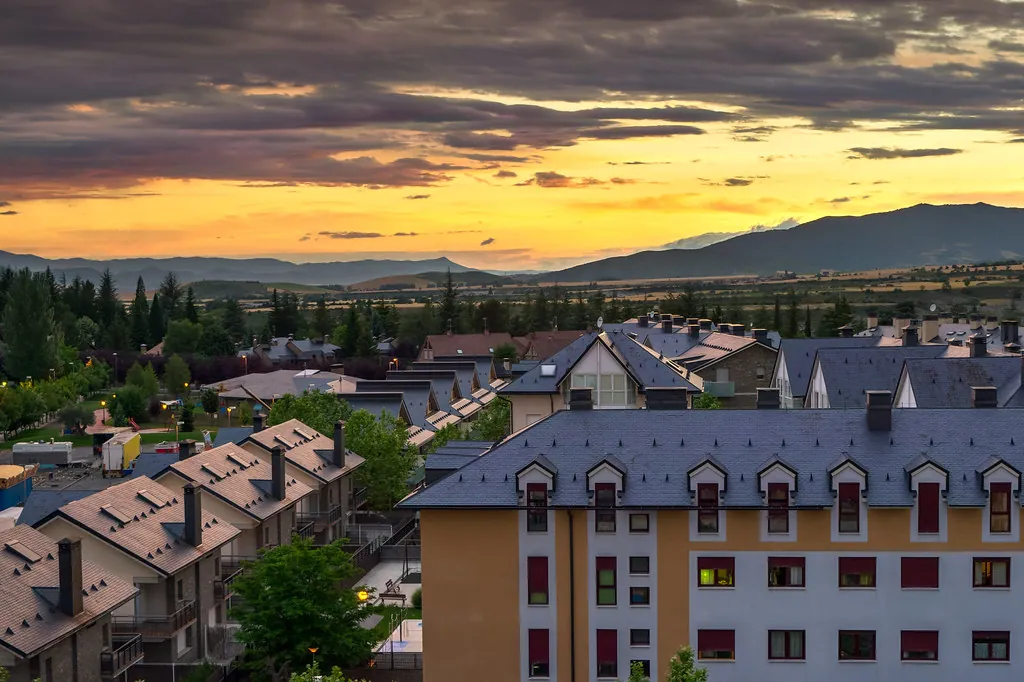
The church bell strikes nine and the only other sound is a tractor starting somewhere below the sandstone houses. From the bench outside San Miguel Arcángel you can see the entire municipality of Hoz y Costean: a scatter of stone roofs, three streets, and almond terraces that fade into the Vero valley. Population 138 on a good day, according to the mayor, plus whichever walkers have parked at the top of the village and are now wondering if the bar ever opens.
Five Hundred Metres Above the Rush
At 500 m the air is noticeably thinner than on the coastal plain, but this is still Somontano country – "under the mountain" rather than in it. Snow caps the Pyrenees to the north, yet the village itself rarely sees more than a dusting. The altitude does funny things to the seasons: almonds bloom in late February, a full month ahead of the valley floor, while October mornings can start at 6 °C and hit 24 °C by lunchtime. British drivers who arrive in August expecting "Spanish heat" are surprised to find mid-afternoon temperatures a good five degrees cooler than Barbastro, 25 km south.
The road in is a single-track HU-911 that wriggles up from the A-22. Sat-navs lose the plot after the third hair-pin; phone signal vanishes altogether. Hire cars return to base with wing-mirrors folded in and a thin dusting of ochre earth that no car-wash quite manages to shift. First-timers usually overshoot the turning by the ruined threshing floor and have to reverse 200 m while a local in a battered Land-Rover waits, arm draped over the wheel, amused.
Stone, Silence and the Smell of Bread
Architecture here is what estate agents would call "honest" and everyone else would call plain. Houses are built from the same honey-coloured sandstone they stand on; no grand plazas, no wrought-iron balconies dripping with geraniums. What you do notice are the carved crests above doorways – a sheep, a sheaf of wheat, the occasional date (1789, 1823) that tells you when a family had enough money to replace timber with stone. Most front doors still have the original wooden bolts; knock and someone inside slides them back as if you were arriving at a farmhouse in Dorset two centuries ago.
Inside San Miguel the temperature drops ten degrees. Baroque retablos glitter in the gloom, gold leaf catching the light from a single side window. The caretaker keeps the key on a nail behind the bakery – itself open only on Tuesdays and Fridays. Ask politely and she'll unlock the sacristy drawer to show you the parish archives: baptism records in copper-plate Spanish that trail off in 1936 when the priest fled to Barbastro during the Civil War and never came back.
Walks that End in Wine
Leave the church, turn left past the last street-lamp (solar-powered, installed 2019) and you are on the old drove road to Colungo. The path is wide enough for a single mule train; stone walls shoulder-height, almond blossom brushing your sleeves. After 40 minutes the gorge narrows and the Vero river appears 150 m below, a silver thread between limestone cliffs. Griffon vultures circle overhead, wingspan the length of a Mini Cooper. The track eventually drops to a derelict water-mill where shepherds still pen goats at night; from here it is another hour to the abandoned hamlet of Otin, but most people turn back for lunch.
Serious walkers can stitch together a 12-km loop via the hermitage of Santa María de las Viñas, though the final climb out of the riverbed is a calf-burner. Casual strollers prefer the 3-km almond circuit: flat, signed with hand-painted tiles, and finishing at Bodegas Lalanne where the owner pours a young Somontano called "Parraleta" that tastes like Beaujolais with a dash of black pepper. Tastings cost €5 and you get the glass to keep; ring first because he still tends the vines himself and the gate is often locked.
What Passes for Lunch
Food is rural Aragón stripped of theatre. The only bar – Casa Julian – opens at 07:00 for farmers, closes at 15:00, reopens 20:00-22:00 if Julian feels like it. A plate of migas (fried breadcrumbs, grapes, scraps of chorizo) is €6 and feeds two. Ternasco, the local suckling lamb, is roasted until the bone slides out like a spoon from custard; order a quarter-kilo the night before or they won't have enough. Vegetarians get tortilla, salad, and a lecture on why almonds need goats for fertilisation. Payment is cash only; Julian keeps a chipped ceramic dish for coins because the till broke in 2014 and he never replaced it.
For self-caterers the nearest supermarket is a Consum in Barbastro. Stock up on Manchego, tinned white beans and a bottle of Somontano crianza before you drive up the hill. The village cottage – only one exists for rent – has a proper oven and a French press, rare luxuries in this part of Spain. The owner drops fresh milk and oranges on the doorstep at 08:30, then disappears. Previous guests have left behind Marmite, Earl Grey and a 1,000-piece jigsaw of the Lake District, suggesting a certain type of Brit finds their way here.
When to Come, When to Stay Away
Late February to mid-March is the sweet spot: almond blossom photographs like confetti against blue sky, daytime 17 °C, village population temporarily doubles as pruners arrive from Valencia. May can be glorious but the Vero valley attracts white-water kayakers and the single road clogs with French vans. August is hot, 32 °C by noon, and the cottage books out with Spanish families who bring their own ham legs and loud opinions about Brexit. November is quiet, misty, occasionally spectacular when the vines turn scarlet – but days are short and Julian shuts the bar if no one shows by 13:00.
Winter brings a different risk. The HU-911 is officially "all-weather" yet the final kilometre sits on north-facing sandstone that turns into an icy slide after a cold night. In January 2021 three Brits in a Fiat 500 spent the night in the village hall after sliding sideways into a dry-stone wall; locals brought blankets and brandy, then towed them out with a tractor at dawn. Snow chains are overkill, but winter tyres and a steady right foot are wise.
The Honest Sell
Hoz y Costean will not change your life. You will not stumble upon a Michelin-starred revelation, nor dance until dawn at a secret fiesta. You might, however, spend a morning walking through almond snow, drink wine pressed from grapes you can see from the terrace, and eat lamb that was grazing the next valley three days ago. The village offers what much of rural Spain has lost: silence that is not interrupted by a ring-tone, darkness deep enough to read Orion, and a bakery that still sells yesterday's loaf for half price because tomorrow is baking day.
Come with a full tank, an empty diary and realistic expectations. Leave before you need a haircut, a cash-point or a conversation in English. And if Julian offers you a second glass of house red, say yes – the vineyard is three fields away and the vintage will never leave the province.