Full Article
about Jarque de la Val
Ocultar artículo Leer artículo completo
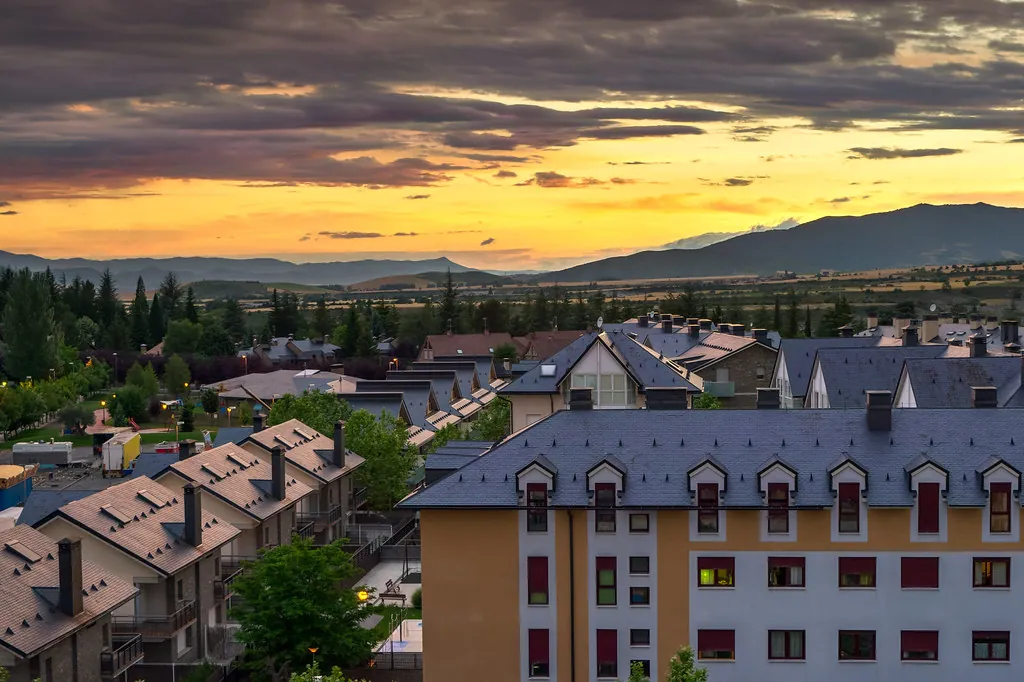
The church bell strikes noon and the only other sound is a neighbour’s front door clicking shut. At 1,269 metres, Jarque de la Val is high enough for the air to feel thinner, cleaner, and just a little bit sharper in the lungs. Sixty-odd souls live here, give or take a student who’s away at university in Teruel. The village doesn’t do souvenir shops, guided tours, or even a proper bar any more. What it does offer is a morning view across the Cuencas Mineras that makes Highland hikers wonder why they never thought to look south.
Stone, Silence and a Sky That Still Works
Every house is the colour of the ground it stands on—honey-coloured limestone chipped from the same ridge. Roofs are tiled in dark Arabic curve, thick enough to shrug off the snow that can arrive as early as late October. Streets are barely two arm-spans wide; if you meet a car, someone has to reverse to the last passing place. This tightness isn’t quaintness, it’s defence: winters are long, wind can be brutal, and a compact cluster stays warmer.
Because the place sits well above the inversion layer, night skies stay crystal. On moonless evenings the Milky Band looks like someone has smudged chalk across navy felt. Bring a decent pair of 10×50 binoculars and you’ll spot the Andromeda Galaxy from the little plaza outside the church; light pollution registers zero on the Bortle scale.
Summer mornings begin fresh—15 °C at 7 a.m.—and climb to a dry 28 °C by midday. Afternoon siesta is less custom, more survival strategy. In January the thermometer can languish at –8 °C for a week and the final 6 km access road ices over. Chains or winter tyres aren’t optional; they’re the difference between a room with a view and a very cold night in the hire car.
A Village That Ate Its Own Shop
Jarque once had two grocerías, a bakery and a bar. One by one they closed as owners retired and suppliers refused to drive up the TE-V-9011 for sixty residents. Today the only commerce is the weekend bread-van that toots at 10 a.m. on Saturdays. Stock up in Teruel before you leave the A-23; after exit 210 there is nothing but fuel stations that close at dusk and a vending machine in Gea-Trinidad that sometimes works.
What the village does still produce is food—just not for sale on the street. Ask at Casa Rural Italuna and Chris and Elena will slip an extra jar of rosemary honey into your breakfast basket. The couple left Sussex five years ago, renovated a roofless stable and now run the only guest house with a sauna for miles. Breakfast includes almond turrón that tastes like Christmas pudding solidified into a slab; the almonds come from twenty trees at the back of the garden.
If you’re self-catering, knock on the door opposite the church around 5 p.m. when the lamb truck arrives. A leg of ternasco (milk-fed lamb) costs about €18 per kilo and will fit in a cool box for the drive home. Rub it with garlic and mountain rosemary, roast fast and hot—Spanish cooks swear by 220 °C for twenty-five minutes a kilo. The result is closer to a British Sunday joint than anything you’ll find on the Costas, minus mint sauce.
Walking Tracks That Expect You to Think
No ticket booths, no way-marked “heritage loops”, just sheep tracks that keep going until you remember to turn round. Head north past the cemetery and the path climbs onto the Loma de la Cruz; twenty minutes later the village shrinks to Lego-size and the only sound is your own breathing. Keep ascending another hour and you reach the abandoned Mina de San José, a lead seam that closed in 1968. Stone walls still prop the entrance; a rusted ore wagon lies on its side like a discarded toy. The interior is gated for safety but the track offers a handy picnic table of flat slate warmed by the sun.
Southbound, a faint footpath drops into the Rambla de Valdemorillo, a dry riverbed that springs into life after heavy rain. Early May brings pools deep enough for a bracing dip; by August the same spot is a bowl of cracked mud patterned like the inside of a Florentine biscuit. Either way you’ll share the water, or the mud, with exactly no one.
Carry water—there are no cafés, fountains or ice-cream vans. A one-litre bottle per person is fine for a three-hour loop; in July double it. Mobile signal is patchy: Vodafone picks up one bar on the ridge, EE gives up entirely. A paper map beats a dying smartphone, and the IGN 1:50,000 sheet “Teruel-149” actually shows the footpaths, unlike Google.
When the Village Throws a Party—and Who’s Invited
Fiestas patronales happen on the third weekend of August. The population swells to perhaps two hundred as grandchildren and emigrants return. Saturday night drags a sound system into the plaza; someone’s uncle plays Cuencas folk songs that sound suspiciously like Country & Western sung in Aragonese. Entry is free, beer €2 a plastic cup, and nobody cares if you dance badly.
Easter is the opposite: a dozen elderly women in black shuffle behind a brass band that can just about manage a hymn without the trumpets colliding. There are no hooded processions, no incense, no photographers. The priest drives in from Teruel; if the road is snowed off, the service is cancelled and everyone goes home. British visitors sometimes find this refreshing—religion as private habit rather than Instagram backdrop.
The only other date that matters is 1 November. Families picnic by the graves, share almond cakes and pass around a bottle of anís. Tourists are welcome but there’s nothing to watch; it’s maintenance of memory, not performance for outsiders.
Getting Here, Staying Warm, Leaving Without a Rescue Bill
Fly Ryanair from London-Stansted to Zaragoza (2 h 10 m), pick up a hire car and head south-west on the A-23. After Teruel, take exit 210, signposted “Cuencas Mineras”. The final 22 km twist through juniper and abandoned farmhouses; Google will swear it’s 35 minutes, reality is 50. Add another half-hour if dusk or fog have settled.
Accommodation is limited to three legal casas rurales; only one stays open year-round. A double room at Italuna starts at €95 including breakfast and the aforementioned sauna. Hotel La Val, simpler and Spanish-run, closes from December to March because heating bills exceed revenue. Wild camping is tolerated on the municipal boundary provided you’re above the tree line, leave no trace and depart by sunrise—basically the Scottish access code without the signage.
Petrol and cash both run out before the weekend. Fill the tank in Teruel and withdraw enough euros for dinner; the nearest functioning ATM is 22 km away in Albarracín and it charges €2.50 per transaction. Sunday drivers should know the village road is last on the gritting list; if snow is forecast, park at the bottom and walk the last kilometre. Tow trucks cost €150 and the local farmer who owns one prefers to finish his breakfast first.
Leave before checkout time and you’ll still hear the church bell counting the hours. It keeps going long after the car rounds the first bend, a metallic metronome reminding you that most of Spain still runs to a rhythm set long before Wi-Fi. Back on the A-23 the lorries accelerate towards Valencia and the moment dissolves in rear-view mirrors. Whether that’s a reason to come or a reason to hurry away depends on how much silence you can carry home.