Full Article
about Jaulin
Ocultar artículo Leer artículo completo
The church bell strikes noon and the only reply is a dog barking somewhere beyond the stone houses. In Jaulín, population 278, the siesta isn't a tourist gimmick – it's the logical response to a place where the loudest traffic is a combine harvester shifting gear on the edge of town.
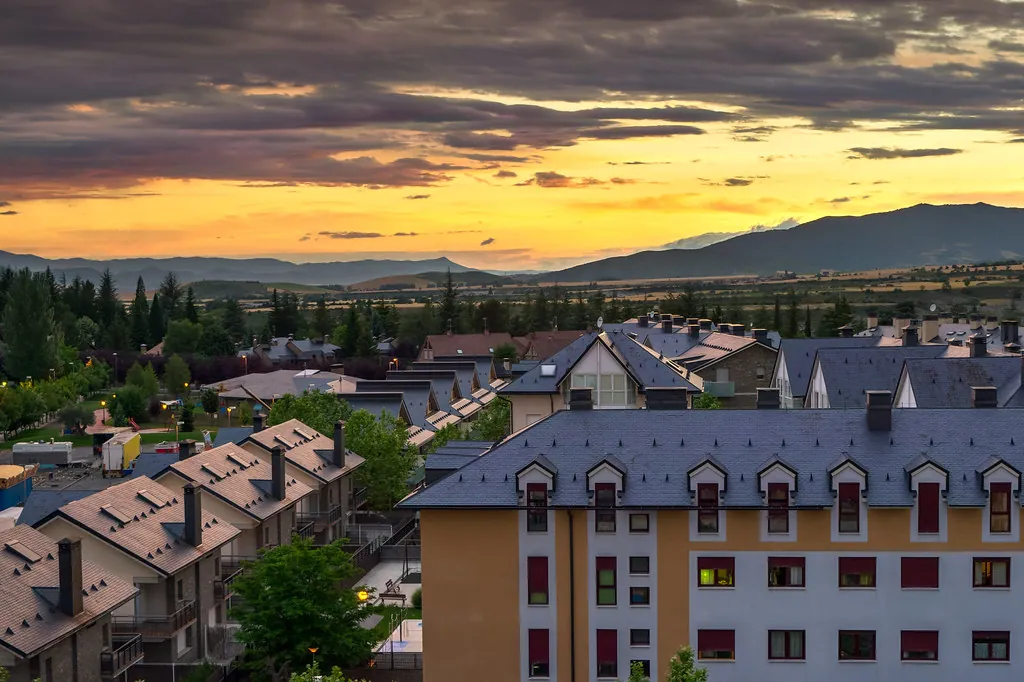
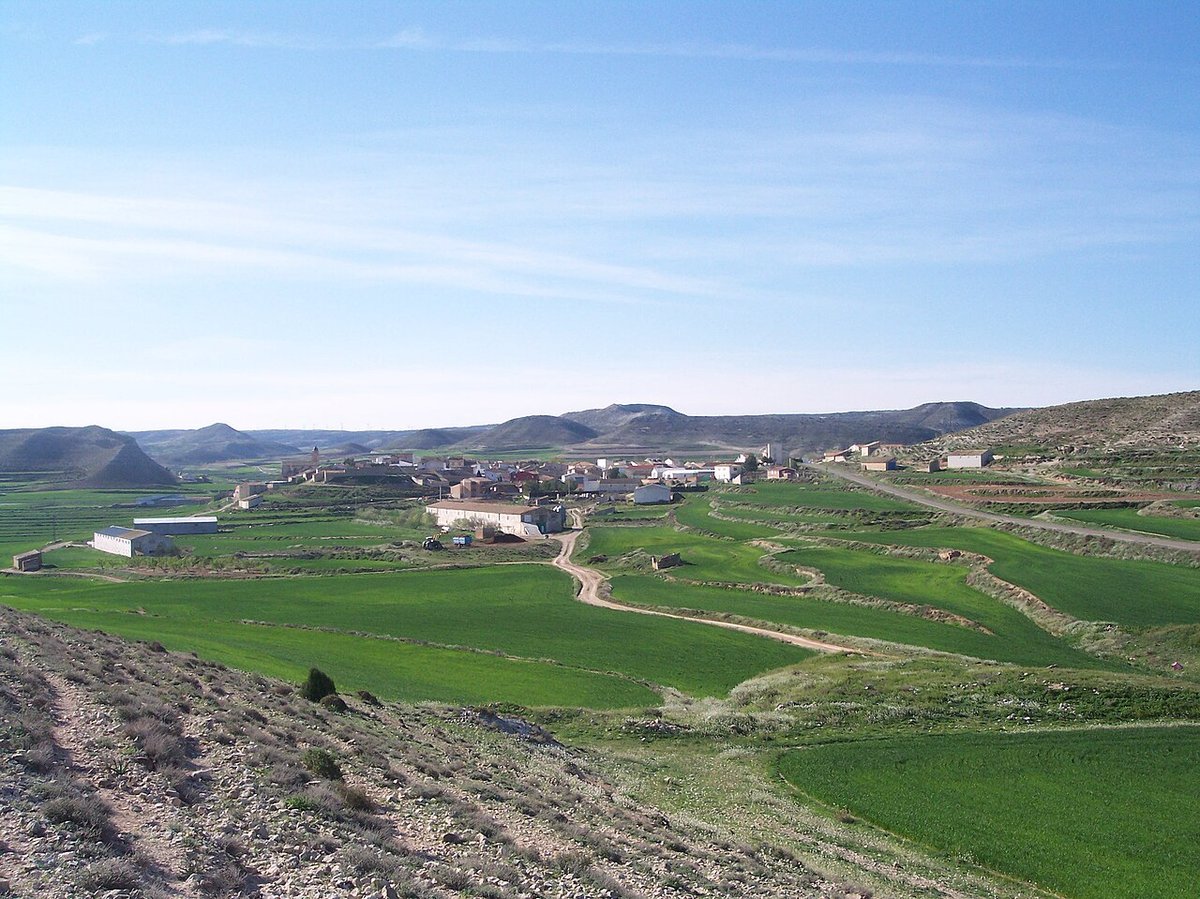
Five hundred metres above sea-level and half an hour's drive south-east of Zaragoza, this single-street village sits squarely in the cereal bowl of Aragon. Wheat and barley roll right up to the doorsteps; vineyards stripe the red soil beyond. There is no dramatic gorge, no Instagram-ready castle, just an unfiltered slice of rural Spain that most motorists flash past on the A-220.
Stone, Brick and the Smell of New Bread
The centre is a five-minute walk end to end. Houses are built from whatever the ground yielded: ochre stone at the base, brick above, roofs of curved terracotta. Wooden eaves project just far enough to throw shade on the pavement; limewash fades from white to butter-yellow depending how fierce the previous summer was. Peek through an open gateway and you will still see the old underground bodegas—short, arched cellars where families once made wine strong enough to survive a mule journey to Calatayud market.
The parish church, patched up after every century since the 1500s, is the one vertical punctuation on the horizon. Its tower is visible ten kilometres away across the pancake-flat plateau, a navigational aid for farmers working fields the colour of digestive biscuits. Inside, the air smells of candle wax and the stone-cool hush that only rural Spanish churches seem to manage. Don't expect gilt overload; the treasure is a sixteenth-century polychrome Crucifixion attributed to the workshop of Juan de Lumbier, awkward and moving in equal measure.
When the Fields Change Colour
Come in late May and the wheat is knee-high and incandescent green. By early July it has turned the colour of old pound coins and the air fills with chaff dust. August is golden, September brings rusty vines, and November strips everything back to soil the shade of Builder's tea. The rhythm is predictable, but the light shifts daily: enormous skies and the kind of clarity that makes painters swear.
A simple loop south of the village follows a gravel farm track to the ruined ermita of San Cristóbal, abandoned during the 1830s desamortización. The walk is 4 km return, dead-level, and you are more likely to meet a tractor than another human. Take water; there is no bar at the far end. If you want mileage, a signed agricultural lane continues to neighbouring Langa del Castillo (population 102), where the bar opens at seven in the evening and serves grilled lamb chops that taste of the surrounding scrubland.
Cyclists use the tarmac web between Jaulín, Maluenda and Romanos. Traffic averages six cars an hour mid-week; the hazard is the north-westerly cierzo wind that can arrive without warning and turn a gentle 25 km ride into a slog worthy of the Vuelta. Plan eastward legs for the morning, coast home after lunch when the wind usually flips.
What Arrives on the Back of a Lorry
There is no daily market. Instead, a refrigerated van pulls into the plaza every Tuesday and Friday at eleven, horn blaring. Locals shuffle out for chickens, cheese and vacuum-packed morcilla from Soria. Bread arrives at the same time; buy two barras because the next batch is twenty-four hours away.
For anything more exotic you drive to Calatayud, 18 km west, where the Mercadona stocks Dorset tea and Marmite for the British engineers working at the wind-turbine plant. In Jaulín itself, food is resolutely local: chickpea-and-spinach stew thick enough to hold a spoon upright, pork loin slow-cooked in wine from the cooperative in Cariñena, and ajoarriero—salt-cod pounded with garlic and olive oil—that originated as muleteer provisions on the drove roads to Castile.
The village bar, Casa Ramón, opens at six-thirty in the morning for field workers wanting a brandy-and-coffee. Closing time is whenever the last customer leaves, rarely before midnight. A caña costs €1.20, a plate of jamón €6. They do not serve food between four and eight; turn up at five and you will be handed a bag of crisps and a resigned shrug.
Saints, Sack races and a Mobile Disco
Festivities centre on the third weekend of August, when the population quadruples. The programme is pinned to the church door and follows the same template every year: Saturday evening mass followed by a procession behind a silver-trimmed Virgin; Sunday lunchtime paella for 400 cooked in a pan the diameter of a satellite dish; Sunday night sack race for under-twelves, then a mobile disco belting out 1990s Spanish pop until the mayor pulls the plug at three. Visitors are welcome to join in; bring your own chair if you do not fancy standing.
Holy Week is quieter. A drum squad from Calatayud leads a single procession on Good Friday, the only night the street lights are switched off so the parade moves by candlelight. Temperatures can dip below 5 °C; wrap up.
Getting There, Staying Over
No train comes closer than Calatayud. From London, fly to Zaragoza (two hours on Ryanair from Stansted, Tuesday and Saturday), hire a car and drive the A-220 south-east for 32 km. Petrol stations on the motorway close at ten; fill up in the city if you land late.
Accommodation is limited. The ayuntamiento rents two duplex cottages on the main street—stone walls, Wi-Fi that works when the wind isn't blowing, €60 a night with a two-night minimum. Book by emailing [email protected]; expect replies in Spanish within 48 hours. The nearest hotel is the Castillo de Ayud in Calatayud, a four-star parador set inside a ninth-century fortress; doubles from €110 including breakfast.
Mobile coverage is patchy; Vodafone and O₂ pick up a bar on the church steps, EE drops out entirely. The village shop sells basic groceries but shuts between two and five; Sunday hours are ten till noon only. If you need cash, the ATM in the plaza swallowed cards twice last year—drive to Maluenda instead.
The Catch
Jaulín is not pretty in the postcard sense. There are half-finished breeze-block extensions, satellite dishes bolted to medieval walls, and a resident population older than the average Saga cruise. English is rarely spoken, menus do not offer gluten-free options, and nights are silent to the point of tinnitus. That, of course, is exactly the point—provided you did not come hunting for tapas trails and flamenco troupes.
Come with a phrasebook, a pair of walking shoes and low expectations of entertainment. Leave with floury bread in the passenger footwell, dust on your boots and the realisation that somewhere between the wheat and the horizon, Spain still keeps a clock that refuses to hurry.