Full Article
about La Puebla de Alfinden
Ocultar artículo Leer artículo completo
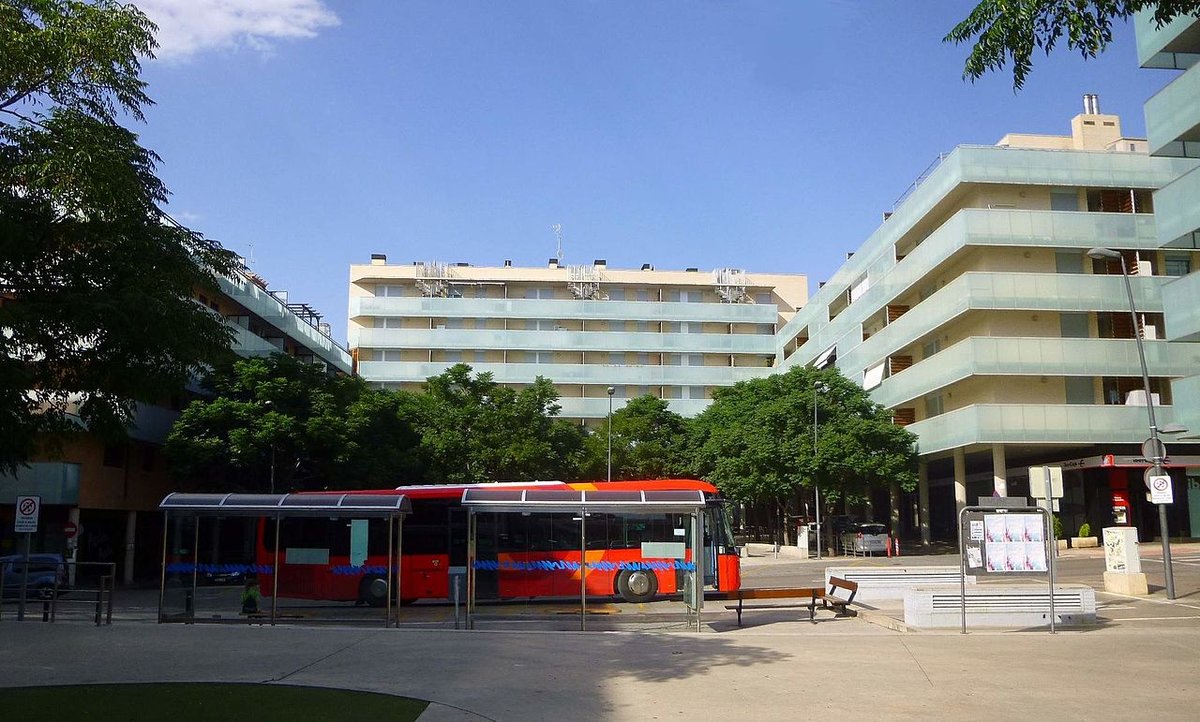
The 11 a.m. coach from Zaragoza pulls in beside the brick church tower and empties within thirty seconds. Laptop bags, hi-vis jackets, a grandmother with two full shopping trolleys—everyone knows exactly where they’re going. By half past, the square is quiet again except for the clack of dominoes drifting out of the bar. This is La Puebla de Alfindén: not a timeworn hamlet frozen for tourists, but a working Spanish village that happens to be twenty minutes from a city of 700,000.
Between the Ebro and the Iberian foothills
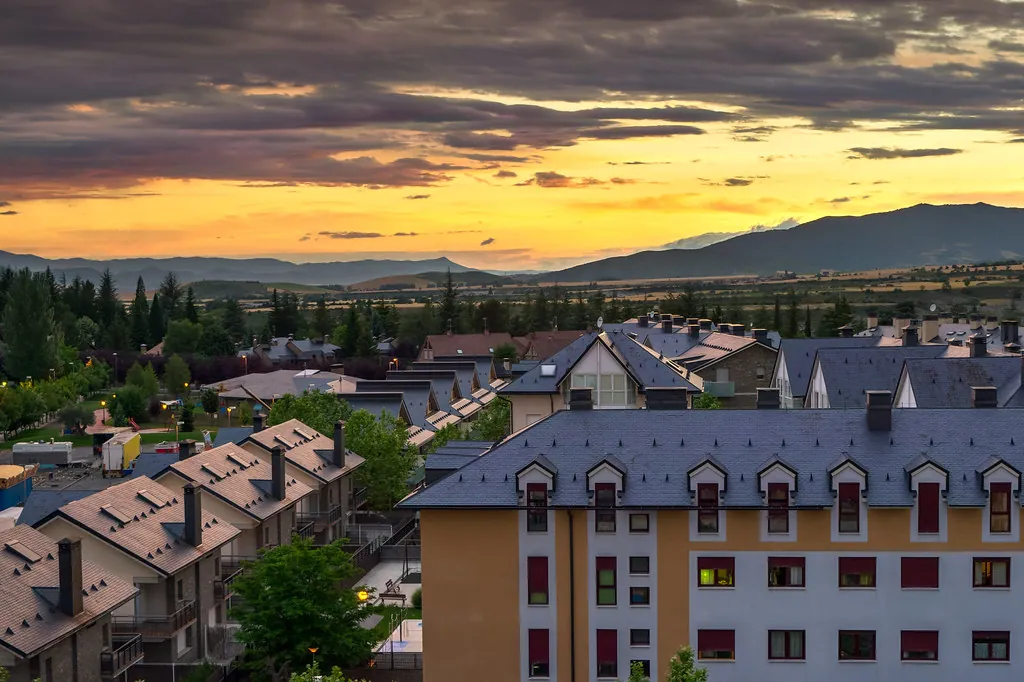
Stand on the brow of the low ridge north-west of the village and the geography makes sense. Below you, the river plain stretches away in ruler-straight irrigation lines; behind, the land wrinkles into low, dusty hills that mark the start of the Iberian System. La Puebla sits on the hinge, 197 m above sea level, which explains why the place feels flat until you cycle five minutes out of town and find yourself on a gentle climb that loosens the calves.
The soil is dry-farmed for barley and olives, but look closely and you’ll spot the tell-tale grid of market-garden plastic farther east—locally called plásticos—that supplies Zaragoza’s supermarkets with tomatoes even in January. Swifts arrive in March to hunt over the fields; by July they’re replaced by storks that stand like supervisors on the electricity pylons. The air is clear enough on most days to pick out the jagged outline of Moncayo, 80 km to the east, though summer haze can wipe the horizon clean.
A parish tower you can navigate by
San Miguel Arcángel is not a cathedral in miniature. It is a sturdy brick box whose 16th-century tower was finished in the aerated, Mudéjar style—think of it as a lighthouse built from baked earth. Inside, the single nave is refreshingly cool even at midday, and the gold-leaf altarpiece gleams under a battery of spotlights that were installed when the town raised funds by selling plaques on the new pews. The priest still refers to the scheme as "our Wi-Fi moment"—the moment the parish books balanced.
Walk a slow circuit of the compact centre and you’ll see what growth looks like when a village doubles in size inside forty years. Traditional two-storey houses of exposed brick sit beside 1990s apartment blocks whose ground floors host estate agents and orthodontists. The effect is oddly honest: no-one has tried to fake an old façade, so the architectural timeline reads like a core sample. The weekly market occupies the same patch of tarmac every Tuesday; if you need a replacement phone charger, a kilo of spring onions or your watch battery changed while you wait, this is the place.
Eating without the theatre
British visitors sometimes arrive expecting tapas theatrics; they won’t find them. What you will find is solid Aragonese cooking aimed at people who’ve spent the morning fixing tractors. In Casa Amador (Calle San Pedro, no website, just turn up) the chuletón for two arrives on a wooden board the size of a small coffee table. Medium-rare is understood; chips come separately, singed at the edges the way locals like. Vegetarians should order borrajas—a regional green that tastes somewhere between spinach and seaweed—cooked down with potato and garlic. House red is served chilled in a plain glass; the bottle usually costs €6 if you want to take one home.
If you prefer breakfast to dinner, arrive at Panadería La Central when the shutters rise at 7 a.m. The napolitanas (custant-filled pastries, nothing to do with Naples) sell out by eight, snapped up by commuters who eat them standing at the bar before catching the 8:15 into the city. Coffee is €1.20; they’ll do you a café con leche in a paper cup if you ask, but you’ll get a look.
Flat roads, big skies
Cyclists appreciate the grid of unsigned farm tracks that fan south towards Lécera and Belchite. Distances are written on the road surface in fading white paint: Km 3, Km 5. The surface is hard-packed limestone; a 28 mm tyre is plenty. Wind is the challenge—this stretch of the Ebro corridor funnels the cierzo, a northwest gale that can gust to 50 km/h in February. Plan outward legs into the wind; enjoy a silent, tail-assisted cruise home.
Walkers can follow the signed Ruta de los Barrancos, a 9 km loop that climbs a shallow ravine to a viewpoint above the solar farm. Interpretation boards explain how medieval farmers terraced the slopes for vineyards; the terraces are now planted with almond whose blossom turns the hillside white for ten days in late March. Allow two hours, carry water—there is none en route—and expect to meet only the occasional dog-walker from the new estate on the hill.
Fiestas that belong to the village
Third weekend of September, everything changes. The Fiestas de San Miguel begin with a chupinazo (rocket) fired from the tower balcony, followed by three days that double the population as former residents return. The jota dancing starts at midnight in the square; by 1 a.m. grandmothers are still clapping while toddlers sleep across chairs. Sunday’s highlight is the toro de fuego—not a real bull, but a metal frame loaded with fireworks that is pushed through the streets at a brisk walking pace. Spectators follow behind, dodging sparks. Foreign visitors are welcome; just don’t expect bilingual signage or crowd barriers. Earplugs advised.
Practicalities without romance
Ryanair’s Stansted–Zaragoza flight lands at 11:40 a.m.; by 12:30 you can be on the A-68 heading south. A hire car is essential—public transport exists but the weekday bus back to Zaragoza stops at 9 p.m., and there is no Sunday service at all. Accommodation is limited: Hotel Chané on the eastern bypass has 32 rooms, free parking and a 24-hour reception aimed at logistics drivers. Rooms cost €65–75 including breakfast; ask for one facing the pool, not the truck bays. The nearest alternative is a five-room guesthouse above a bar whose Saturday-night karaoke finishes at 3 a.m.—choose carefully.
Daytime temperatures swing wildly. In April you can breakfast at 8 °C and lunch at 24 °C; in July the mercury can hit 40 °C by noon and stay there until eight in the evening. August nights remain above 25 °C—air-conditioning is not a luxury. Winter is colder than coastal Britain: frost is common in January, but snow rare. If you do see white stuff, it will probably be gone by lunchtime.
When to come, when to leave
Come in late March for almond blossom and daytime highs of 18 °C, or in mid-October when the stubble fields turn gold and the light is soft enough for photography. Avoid August unless you enjoy the sensation of opening an oven door. Stay two nights, three at most—long enough to eat a proper chuletón, walk the barranco loop and stock up on cheap wine before you drive back to the airport. La Puebla de Alfindén will not change your life, but it might recalibrate your sense of what ordinary Spain looks like when no-one is watching.