Full Article
about Laspuna
Ocultar artículo Leer artículo completo
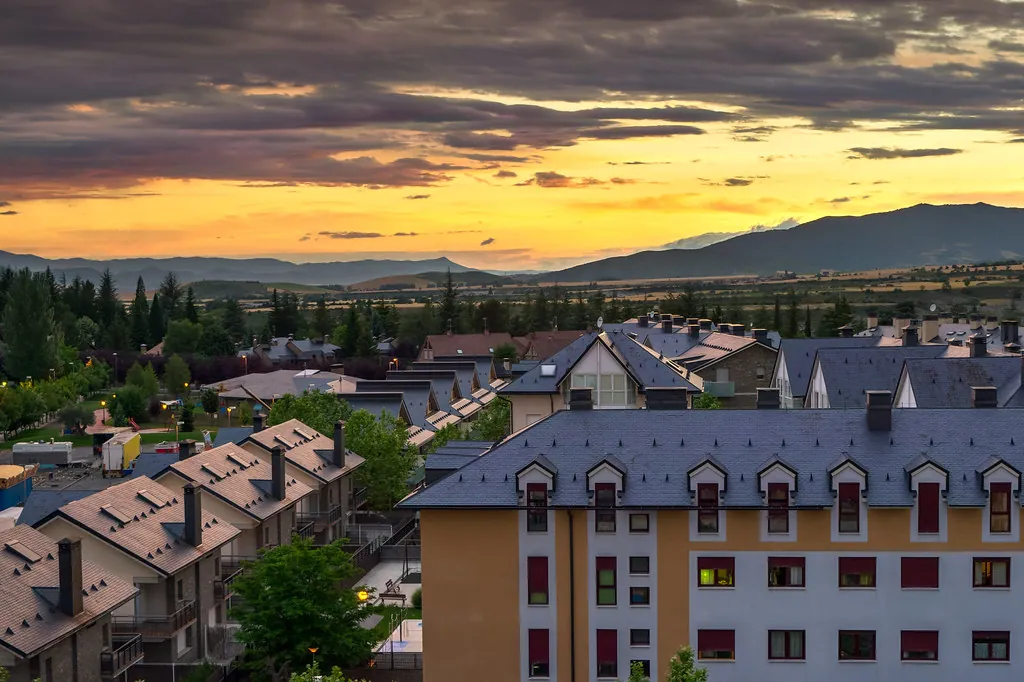
The bells of San Pedro strike seven and the only other sound is a tractor coughing into life somewhere below the church tower. From the upper lanes of Laspuña you look straight across the Ara valley at Peña Montañesa, a wall of grey limestone that catches the first sun like a flood-lit cathedral. Nothing in the village is higher than that rock, and nothing seems to have changed much since the stone was split to build the houses.
Laspuña sits at 725 m, low enough for holm oaks to survive among the slate roofs yet high enough for the air to feel rinsed. It is neither ski resort nor postcard hamlet; it is a working parish of 256 souls where the butcher’s van parks on Plaza Mayor every Thursday and the baker still chalks up the price of a baguette on the door. Most visitors pass through on the way to Ordesa or Aínsa, realise the valley road has no petrol for 40 km, and stay the night. By morning they have usually decided to stay another.
Walking into the picture
You do not need a grand trailhead. Leave the village on the signed path above the cemetery and within fifteen minutes the beech wood swallows the rooftops. The track climbs gently to the Ermita de San Juan, a stone hut with a bell the size of a teacup, then forks: left for a two-hour loop back to the river, right for a stiff pull to the Collado de Millera at 1,350 m. The latter gives you the full stage set – the Cinca river coiling through hay meadows, the abandoned village of Jánovas on its cliff, and the Pyrenees marching off in saw-tooth succession. Spring brings a lime-green haze over the oaks; mid-October turns the slopes into a mash-up of copper and rust that would make a Cumbrian fell walker blink.
Maps are trustworthy but the contour lines lie: 300 m of ascent feels like 600 in the dry air. Take water; there are no cafés on the ridge, only stone cairns and the occasional griffon vulture sliding overhead. If the day is clear you can pick out the white glint of the Ordesa glacier, 25 km away as the crow flies and two hours by road.
What passes for high street
The village centre is a triangle of alleles no wider than a London bus. House numbers stop at 42; several doors have no number at all. There is one grocery, one baker, one bar. The shop stocks UHT milk, tinned peppers, local honey labelled with the beekeeper’s mobile number and, mysteriously, a shelf of PG Tips. It shuts between two and five. The bar opens at seven for coffee and stays open until the last customer leaves, usually the village mayor masquerading as a card player.
Saturday night is different. The N-260 fills with leather-clad bikers doing the Pyrenean loop from Jaca to Aínsa. They park outside Casa Sallán, order chireta (lamb-and-rice haggis) and almond cake, then argue about horsepower under the streetlights. Rooms at the only hostal front the square; ask for the back if you prefer owls to exhaust pipes.
Eating what the hill gives
Menus are short and seasonal. Trout from the Cinca appear in May, simply grilled with a wedge of lemon that probably travelled less than the fish. Migas – fried breadcrumbs with egg and pancetta – is safe comfort food for children who won’t touch the local lamb. Winter brings estofado de jabalí, wild-boar stew thick enough to grout tiles. Vegetarians survive on tortilla and roasted piquillo peppers; vegans should self-cater. The nearest supermarket with tofu is in Barbastro, 55 km back towards Huesca.
Buy cheese early. Queso de oveja from the shepherd above Bierge sells out by noon on market day, wrapped in greaseproof paper and still smelling of thyme. A small round costs €8 and will perfume your rucksack for the remainder of the trip.
When to come and when to stay away
Late April to mid-June is the sweet spot: daylight until nine, orchids along the verges, cafés just waking from winter hibernation. The third weekend of May hosts the Navata flotilla festival, when locals lash pine trunks into rafts and ride the river down to Aínsa. It is cheerful, chaotic and booked solid a year ahead; arrive the following Tuesday and you will have the streets to yourself.
August is hot in the valley (32 °C at midday) but the village fills anyway. Spanish schools are on holiday; grandparents rent houses so children can run free. Parking becomes a game of Tetris and the bakery runs out of croissants by nine. If you must come then, head for the higher trails at dawn and nap through the afternoon.
Winter is quiet. Snow rarely settles in Laspuña itself but the road to Torla-Ordesa climbs to 1,600 m and can ice over without warning. Carry chains even if the sky is cobalt. On the plus side, hotel prices drop by half and the bar keeps a fire going. Bring a book; night skies are properly dark and Orion looks close enough to touch.
Getting here, staying here
There is no railway. From Zaragoza take the A-23 to Huesca, then the N-240 and A-138 via Barbastro. The final 30 km is a mountain highway engineered by someone who enjoys hairpins. Fuel in Aínsa; the village pump closed years ago. Buses from Huesca reach the main road twice daily except Sunday, when there is no service. Hitch-hiking the last 2 km is acceptable and usually quicker than waiting for the connecting taxi that may or may not exist.
Accommodation is five small guesthouses and a scattering of self-catering casas rurales. Expect stone floors, wood-burning stoves, Wi-Fi that flickers when the wind is in the north and a notice asking you not to flush anything exotic. Prices hover around €70 a night for a double, breakfast not included. Sheets are cotton, towels are white and the view is almost always of Peña Montañesa watching you back.
Leave the car keys in the fruit bowl and walk everywhere. The village ends where the fields begin, and the fields end where the mountain says stop. That line moves with the seasons; so, if you have any sense, will you.