Full Article
about Layana
Ocultar artículo Leer artículo completo
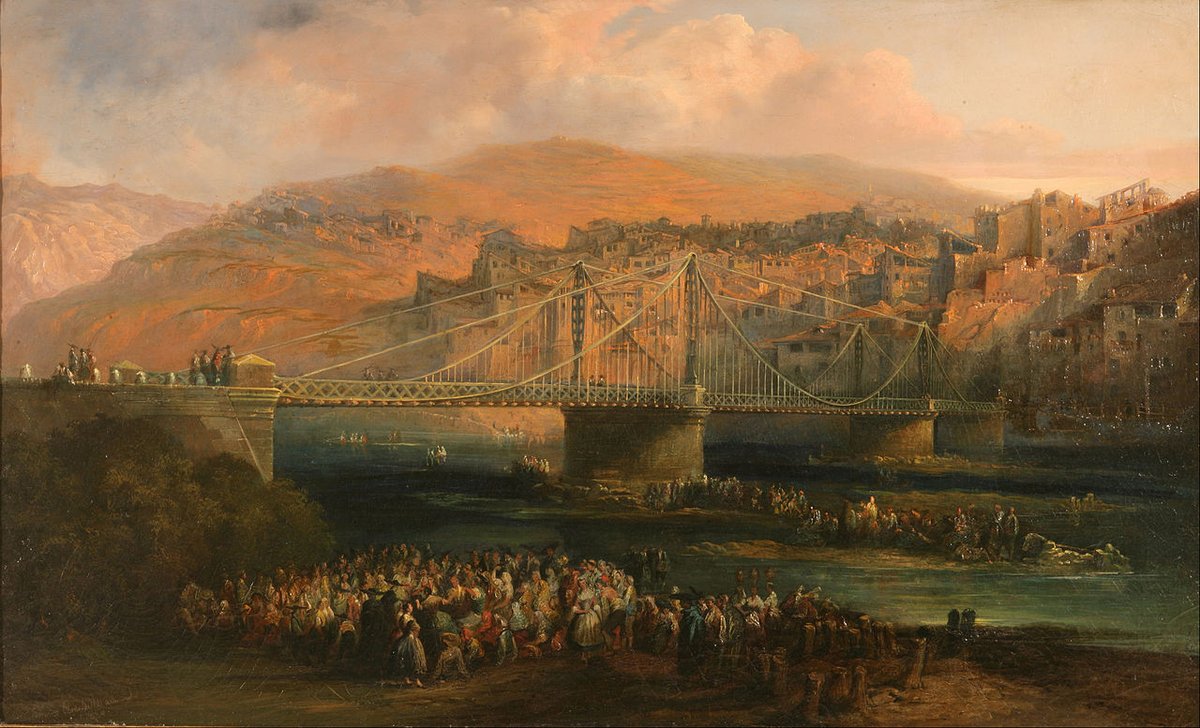
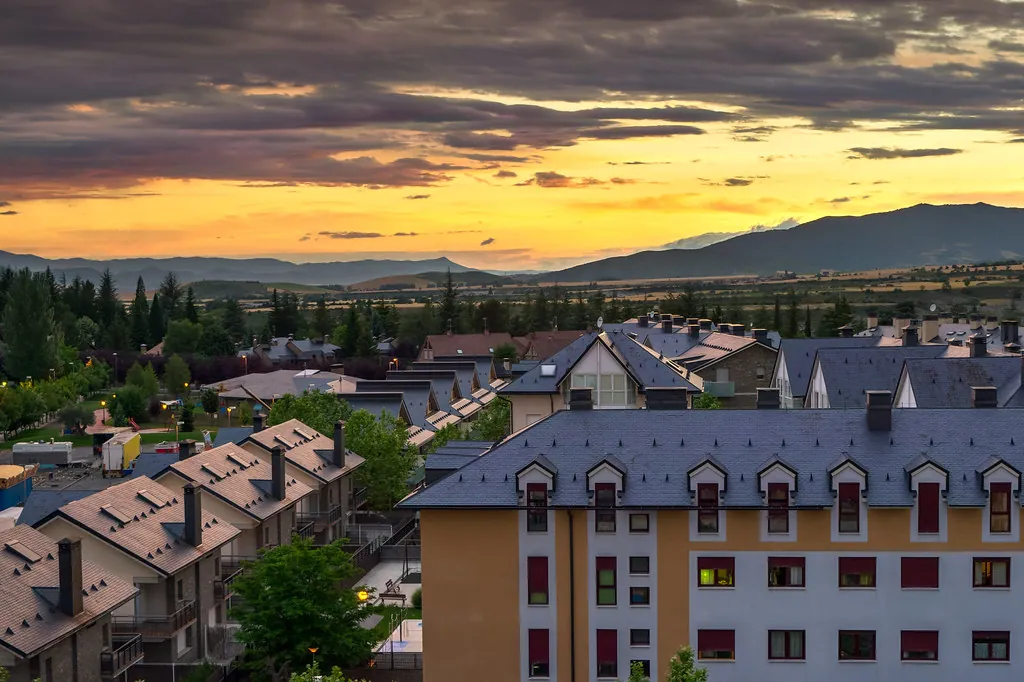
The church bell strikes noon, yet only birdsong answers back. At 486 metres above the steppe, Layana's silence feels almost deliberate—96 souls spread across sandstone houses that have weathered centuries of border warfare, wheat booms, and steady decline. This is rural Aragon without the gloss: no boutique hotels, no craft breweries, just stone, sun, and the occasional tractor rattling through narrow lanes built for mules.
Stone Chronicles in a One-Hour Circuit
Start where every villager does: Plaza Mayor, a rectangle of porticaded buildings that explains the town's geometry in one glance. The sandstone here isn't the golden stuff of tourist brochures—it's a muted ochre, pitted by wind that sweeps up from the Ebro valley. Look up to see 17th-century noble houses wearing their coats of arms like faded military medals. The Martínez de Azagra family's escutcheon shows a lion pierced by arrows; locals claim it commemorates a crusading ancestor, though no one can quite remember which crusade.
From the plaza, Calle Mayor climbs gently to the parish church of San Miguel Arcángel, whose tower serves as both spiritual and cellular beacon—Vodafone's signal is strongest here. Inside, the baroque retablo gilded in 1734 still smells faintly of beeswax and incense. The priest visits only twice monthly now; on other Sundays, a recorded mass plays to rows of empty pews. Touch the right aisle's wall: damp rises waist-high after autumn rains, peeling paint into delicate maps of Aragon's rivers.
Behind the altar lies Layana's best-kept secret. A door usually locked (ask at the house opposite for Señora Pilar, who keeps the key) opens onto a 14th-century crypt where three stone sarcophagi hold crusader knights. Their carved faces have been chiselled smooth—iconoclasm during the Civil War—yet their chain mail remains intricately detailed. No admission charge, though Señora Pilar appreciates a two-euro coin for her grandchildren's sweets.
Walking the Borderlands
Layana sits at the southern edge of Las Cinco Villas, a frontier zone that buffered Aragon from Navarre until the 17th century. Footpaths still follow medieval livestock routes; one such track, the Camino de los Fueros, drops 200 metres in three kilometres to the Alcanadre river. Spring walkers find wild asparagus sprouting beside the path; locals carry plastic bags for impromptu harvests. The return climb takes forty minutes—longer if the afternoon levante wind is blowing, carrying dust that stings eyes and camera sensors alike.
For gentler terrain, follow the signed 5-kilometre loop eastward towards Urrea de Gaén. The path skirts wheat fields that shift from emerald in April to bronze by June. Keep an eye out for Montagu's harriers quartering low over the crop; their grey wings cut distinctive arcs against the sierra. Autumn brings mushroom hunters wielding curved knives—boletus edulis fetches 28 euros per kilo at nearby markets, so don't expect locals to reveal their spots.
Winter transforms these tracks into clay quagmires. January temperatures hover around 7 °C, but the wind-chill from 40 km/h gusts makes it feel closer to freezing. Snow falls perhaps once yearly, melting within hours into slurry that cakes hiking boots. Unless you're equipped with gaiters, postpone rural walks until March when the soil firms and almond blossom scents the air.
Eating (Elsewhere)
Layana hasn't had a restaurant since Hostal El Cruce closed in 2018. The nearest dining option is in Biel, four kilometres north along the A-127. There, Casa Roman serves ternasco asado—milk-fed lamb roasted with potatoes and bay leaves—for 18 euros. Portions feed two modest British appetites or one Aragonese farmer. Book ahead on weekends; Roman's wife answers the phone sporadically.
Better strategy: shop in Ejea de los Caballeros, fifteen minutes by car. The Friday market stocks local cheese from Los Fayos village—a semi-cured sheep's milk round costing 14 euros that pairs surprisingly well with quince paste. Buy crusty bread from Panadería Nieto on Calle San Gregorio; their coca de cebolla (onion flatbread) stays fresh for two days if wrapped in a cotton tea towel.
Back in Layana, Plaza Mayor offers two stone benches perfect for impromptu picnics. The fountain water is potable, though it carries a mineral tang that some visitors find metallic. Sunset occurs around 21:30 in midsummer—time your meal to watch swifts dive between church tower and telephone wires, their screams echoing off stone like faulty brakes.
When Silence Isn't Golden
Visit during September's fiesta and Layana briefly triples its population. San Miguel Arcángel brings processions, brass bands, and a paella cooked in a pan two metres wide. The church bell rings continuously from noon Saturday until Sunday dusk; light sleepers should book accommodation in distant Biel. Accommodation within Layana itself comprises two rural houses: Casa Chueca (sleeps four, 90 euros nightly) and Casa del Infanzón (sleeps six, 120 euros). Both require minimum two-night stays during fiesta; bring earplugs.
August afternoons hit 38 °C in shade that barely exists. The stone houses act like storage heaters, radiating warmth until well after midnight. Only the church interior stays cool—its walls maintain 19 °C year-round, making afternoon visits less spiritual than thermoregulatory. Carry water; the village shop closed in 2020, and the nearest cold drink involves a 12-kilometre round trip.
Rain transforms Layana's charm into hazard. Sandstone becomes slick within minutes; medieval drainage channels overflow, sending torrents down Calle Mayor. On such days, the village feels like a ship taking water—doors bang, dogs howl, and the electricity fails with metronomic regularity. Check the Aemet weather app the night before; if orange alerts flash, divert to Tarazona's indoor attractions instead.
Departing Through Wheat
Leave Layana as arrivals should: at dawn. From the cemetery ridge, watch the sun lift over the Moncayo massif, turning cereal fields into rippling copper. The village below resolves into a single street of roofs, television aerials silhouetted like broken antennae. By 08:00, tractors will be moving, and the day's first dust cloud will drift towards undulating horizons. Drive south on the A-127; within ten minutes Layana merges back into steppe, its stone memory shrinking in the rear-view mirror until only the church tower marks where 96 people weather another year.