Full Article
about Letux
Ocultar artículo Leer artículo completo
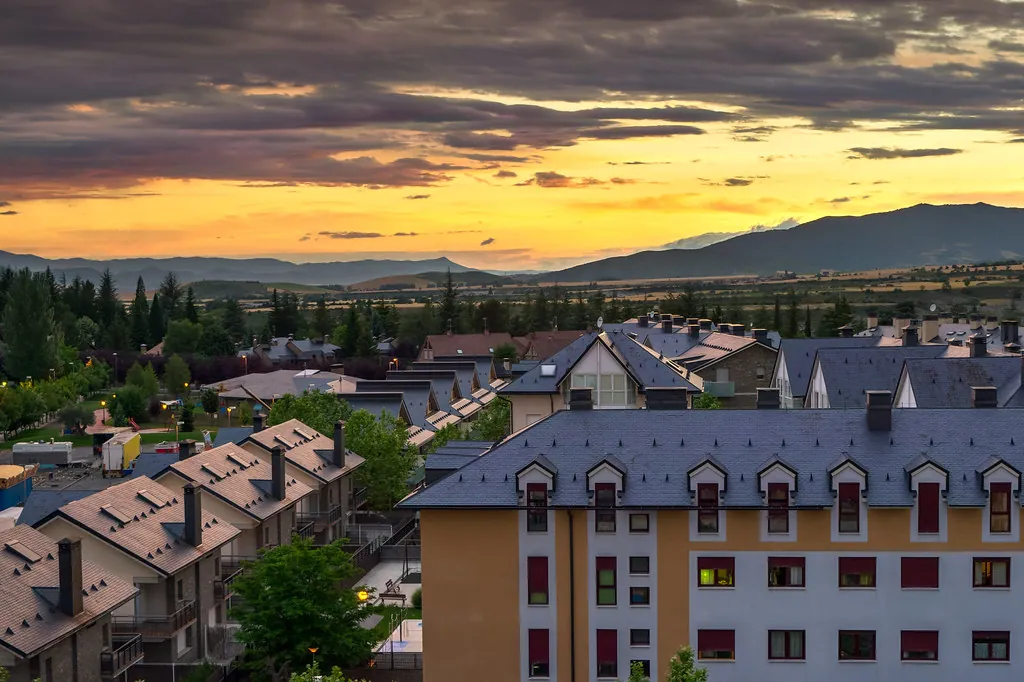
The church bell strikes seven and the only other sound is a tractor coughing to life. From the cemetery ridge above Letux you can watch the sun lift over sixty kilometres of empty cereal fields until the horizon blurs with the slate-coloured sky. At 500 metres above sea level the air is thin enough to make the morning light feel sharp, almost metallic. This is not a landscape that flatters; it simply is—dry, wide, unfiltered—and it explains the village before you even reach it.
Letux sits at the southern edge of Campo de Belchite, a plateau famous among Spanish Civil War historians for ruined ghost towns and famous among almost nobody else. The municipality counts barely four hundred souls, yet it refuses to be called abandoned. Wheat, almonds and olives still pay the bills, and the pace of life is dictated less by tourism than by when the soil is dry enough to drive on.
Stone, Brick and the Smell of Bread
The centre is a tight knot of two-storey houses the colour of toasted bread. Granite cornerstones, timber galleries and the odd coat-of-arms remind you that people here once had cash to spare, but no one bothered to show off. The parish church of San Pedro Apóstol keeps watch from the highest point; its square tower is the reference beam for every local direction—“from the tower, take the third lane on the left”. Step inside and the temperature drops five degrees. Baroque gilding is thin on the ground—Aragón prefers stone that has something to say rather than gold that merely glitters—yet a sixteenth-century Romanesque font and a fragile sixteenth-century Flemish panel of the Crucifixion repay the climb up the nave. The door is normally locked; ask for the key at the ayuntamiento (open 09:00-14:00 weekdays) and leave a €1 donation in the box.
There is no ticket office, no audioguide, no gift shop. That absence is either disarming or disconcerting, depending on your temperament. If you need constant stimulus, bring a sketchbook or binoculars; the town’s architecture is best studied in fragments—an iron balcony bracket shaped like a pomegranate, a fading black-and-white photo of the 1956 floods taped inside a window. Letux rewards the patient, not the checklist traveller.
Walking the Dry Ocean
Leave by any unpaved lane and within five minutes the village sinks behind a rise and you are alone with larks and the smell of wild thyme. A lattice of farm tracks links Letux with Belchite (ruined civil-war town, 9 km east) and Lécera (has a petrol station and a Saturday market, 7 km south). None is shaded; in July the ground temperature can touch 45 °C, so start early, carry two litres of water and wear a brimmed hat—baseball caps don’t cut it. Spring is kinder: green wheat ripples like the sea and almond blossom flickers white against red soil. Autumn brings stubble fires and the sweet, almost acrid scent of burning olive branches.
Serious hikers can stitch together a 17-km loop south to the ruined ermita of San Cristóbal and back, but the middle section crosses private land; close every gate and expect to ford two dry stream beds that turn into torrents after storms. Mountain-bikers enjoy the hard-packed surface, yet the same dryness that makes it fast also makes it unforgiving—pack a repair kit because the nearest bike shop is in Zaragoza.
What Arrives on the Back of a Lorry
Local food is exactly what you would expect in a place where the menu has changed twice in fifty years. Lunch at the only bar (no nameboard, everyone calls it “el bar”) runs to migas—fried breadcrumbs laced with garlic, grapes and thick rashers of pancetta—followed by cordero asado, milk-fed lamb roasted until the skin resembles burnt parchment. Vegetarians get eggs with pisto, a ratatouille-ish stew that tastes mainly of good olive oil. Prices hover around €12 for a three-course menú del día, wine included, but the kitchen shuts when the last regular goes home, rarely later than 16:00. Dinner isn’t served; buy fruit and cheese in the morning if your accommodation lacks cooking facilities.
The village has no bank and no cash machine. Plastic is accepted grudgingly, if the telephone line is working, so bring euros. Thursday sees a mobile van selling fresh fish from the Mediterranean 120 km away; locals queue for hake and tiny red shrimp that end up in paella on Friday. If you are self-catering, the almond cooperative in Lécera sells 250 ml bottles of peppery early-harvest oil—good luck getting it through UK customs in one piece.
When the Place Fills Up
August turns the social volume to eleven. Emigrants who left for Zaragoza or Barcelona in the 1960s return with grandchildren, and the population triples for a week. Brass bands rehearse at midnight, the plaza hosts a public paella for 600, and someone inevitably sets off fireworks between the houses. Rooms at the solitary hostal, Hotel Marqués de Lazán (six doubles, €55 with breakfast), are booked months ahead; if you dislike communal singing, aim for the second week of September instead.
Winter is the mirror image. Mist hangs in the valley until noon, the thermometer can dip to –5 °C, and the wind that scoured the battlefields in 1938 still feels capable of flaying skin. Yet the clarity of light is extraordinary; on calm days you can pick out the snow-capped Moncayo 80 km to the north. Heating in village houses is by butane or olive-wood stoves—romantic until you have to fetch logs at dusk—so check whether your rental includes central heating before you commit.
Driving In, Driving Out
Zaragoza airport, served by Ryanair from London-Stansted and seasonal easyJet from Manchester, is 60 km away. Collect a hire car, take the A-68 south-east to the Belchite exit, then follow the C-222 for the final 17 km. The last stretch is single-track; pull in for oncoming lorries laden with grain. Petrol stations are scarce—fill up at Venta de Santa Ana before you turn off. There is no bus service at weekends and only one school-day bus each morning to Zaragoza, timed for teachers, not tourists.
The Bottom Line
Letux will never compete with the Pyrenees or the Costa Blanca, and that, paradoxically, is its appeal. You come for silence wide enough to hear your own pulse, for skies uncluttered by contrails, for the realisation that Spain still contains places where the bank opens two mornings a week and everyone knows whether you take sugar in your coffee. If that sounds like deprivation, book elsewhere. If it sounds like breathing space, drive carefully, shut the gate, and be ready to wave back—because the single hardest thing to fake in travel is ordinary human courtesy, and Letux has never needed to try.