Full Article
about Longas
Ocultar artículo Leer artículo completo
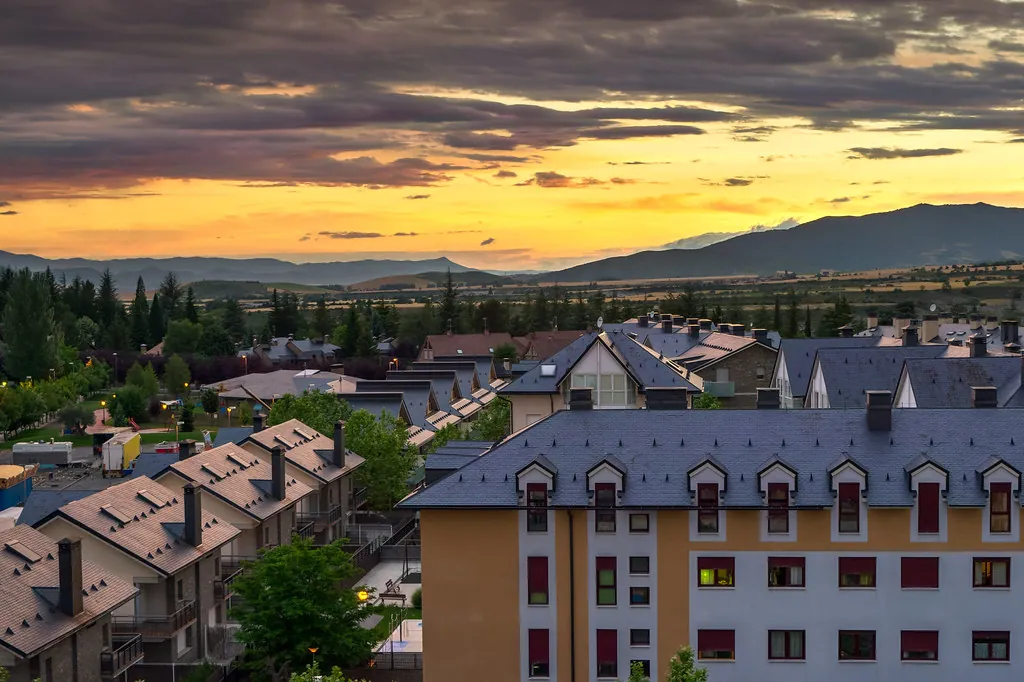
The bell tower appears first. Rising from wheat-coloured hills eighty kilometres north-west of Zaragoza, it’s the only vertical element in a landscape that otherwise rolls like a gentle swell towards the Pyrenees. From the approach road the tower seems to float—an optical trick that announces Longas long before the village itself comes into view. At 840 metres above sea level, this is the moment when the Ebro valley’s heat loosens its grip and the air acquires the thin clarity more often associated with the neighbouring mountain range.
Longas keeps the statistics that thrill certain travellers: thirty-six registered inhabitants, a single bar that opens when the owner feels like it, and a postcode shared with more sheep than people. Yet dismissal as a ghost village would miss the point. The place functions—slowly, seasonally, stubbornly—according to rhythms that pre-date cheap flights and weekend breaks. Wheat ripens, pigs are slaughtered, the church bell still tolls the agricultural hours. Outsiders are noticed immediately, but not fussed over; the village has survived since at least the twelfth century without needing to be liked.
Stone walls the colour of weathered parchment line lanes barely wide enough for a tractor. Most houses retain original Romanesque doorways—half-moon arches carved from single blocks—while upper balconies twist under the weight of centuries. Notice the wooden granaries perched on mushroom-shaped stilts: medieval rodent control, still working. Renovation projects dot the periphery, usually second homes belonging to Zaragoza families who arrive in August and spend three weeks discussing water pressure. Prices for a full restoration hover around €60,000, though locals warn the real cost is finding a builder willing to travel this far for less than a fortnight’s work.
Walking the Dry Mosaic
The surrounding countryside behaves like a calendar you can walk across. From April the plateau turns an almost violent green, striped by yellow mustard and punctuated with blood-red poppies. By July the palette shifts to gold, the wheat stubble sharp enough to slice open walking boots. Autumn brings a brief, theatrical purple as wild thyme flowers, then everything surrenders to ochre until the next spring. Marked footpaths exist, but the more honest approach is to follow the farm tracks that connect Longas with its even smaller neighbours—Velilla de Cinco Villas, Luesia, Biel—each four to six kilometres apart and visible as pale smudges on distant ridges.
Dawn walks reward early risers with sightings of little bustards and the occasional golden eagle riding thermals above the cereal ocean. The GR-1 long-distance trail skirts the village, though most hikers tackle the five-kilometre loop that climbs to the abandoned windmills on Alto de Longas. From the crest the view stretches south across the Ebro depression; on very clear days the silvery flash of the river itself appears, forty kilometres away yet looking close enough to touch. Take water—there’s no café, no fountain, and summer temperatures can reach 38 °C despite the altitude.
What Passes for Lunch
The village bar, Casa Ramón, unlocks around 11 a.m. provided Ramón isn’t needed to help a neighbour with the harvest. Coffee comes in glasses, brandy is measured by finger-width, and the menu depends on what his sister has cooked that morning. Expect migas—fried breadcrumbs scattered with grapes and thick bacon—or a bowl of pochas, pale haricot beans stewed with chorizo and pig’s ear. A plate costs €8, wine included, though payment protocol remains mysterious: sometimes money changes hands, sometimes produce is swapped. Ramón refuses cards; the nearest cash machine is eighteen kilometres away in Ejea de los Caballeros, so fill your wallet before arrival.
For self-caterers, the Saturday market in Ejea supplies Manchego at €14 a kilo and seasonal vegetables sold by the same hands that picked them. Longas itself hides two communal bread ovens; ask at the ayuntamiento for the key, then buy dough from the bakery in neighbouring Biota. The ritual—firing the oven, sliding loaves with a wooden peel, waiting while wheat fields glow in the setting sun—feels closer to sacrament than supper.
When the Village Remembers It’s Spanish
Festivity here is less organised programme than collective decision to stop work. The fiesta mayor shifts each year according to the wheat harvest, usually the second weekend of August. Suddenly the population quadruples: cars with Zaragoza number plates clog lanes never designed for them, grandparents supervise grandchildren who’ve never seen a sky this dark, and Ramón’s bar acquires a queue. Evenings revolve around the plaza: paper lanterns strung between houses, a sound system playing forgettable pop at neighbour-worrying volume, and long tables loaded with lamb roasted in a pit dug the previous night. By Monday morning the village exhales; empty wine cartons pile like modern cairns, and the silence feels thicker than before.
Holy Week proceeds at the opposite tempo. A dozen residents carry the paso—a sixteenth-century Christ barely eighty centimetres long—along the single street, footsteps amplified by stone walls. No brass band, no incense cloud, just the creak of timber and the occasional cough echoing off medieval masonry. Outsiders are welcome to follow, but the ceremony refuses to become a spectacle; cameras feel intrusive, applause unthinkable.
Getting Here, Staying Put
Public transport stops at Ejea; from there a Monday-to-Friday bus reaches Biota, seven kilometres distant, but the afternoon return leaves before you’ve finished lunch. Renting a car in Zaragoza costs around €35 a day and turns the journey into ninety minutes of ever-narrowing roads. The final twelve kilometres twist through pine plantations where wild boar occasionally wander; dusk driving requires patience and functioning brakes. Winter can bring snow—rarely heavy, but enough to make the pass from Luesia impassable for a day or two. April and October offer the best compromise: mild days, cold nights, and wheat either sprouting or turning bronze.
Accommodation options fit on one hand. Posada OsTablaus occupies a restored farmhouse at the village edge: four doubles from €70 including breakfast (homemade jam, local honey, coffee strong enough to stain the cup). The owners, a couple who escaped Barcelona’s marketing industry, speak serviceable English and can arrange guided walks or a visit to the pig farm that supplies their chorizo. Alternatively, two village houses rent by the week; expect stone floors, wood-burning stoves, and Wi-Fi that flickers whenever the wind blows from the north. Bring slippers—nights remain chilly even in June—and remember to shut shutters before bed; dawn arrives abruptly at 6:30 a.m. and the windows face east.
The Honest Exit
Longas will not suit everyone. Shoppers will be miserable, nightlife means watching stars migrate across an unpolluted sky, and anyone needing instant validation should stay elsewhere. The village offers instead a masterclass in scaled-down living: how thirty-six people maintain a place that once supported ten times that number, how bread still matters, how silence can feel companionable rather than spooky. Drive away at dusk and the bell tower shrinks in the rear-view mirror until only the silhouette remains, a punctuation mark against the horizon. Twenty minutes later the motorway appears, headlights multiply, and the twentieth century reasserts itself. The transition feels sharper than any castle or cathedral—proof that edges still exist in Europe, and that some of them are worth the detour.